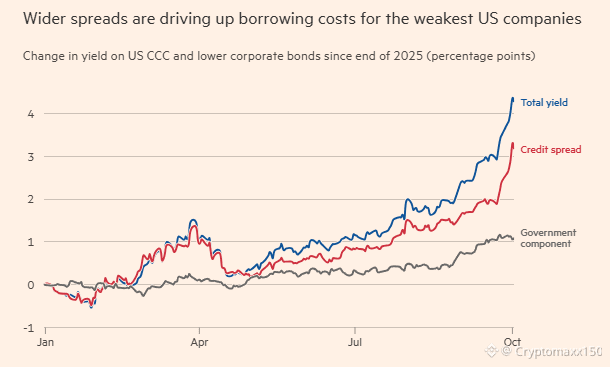

Borrowing costs for the riskiest U.S. companies have reached 17%, their highest level since the COVID-19 pandemic.
The Financial Times reports that a wave of sell-offs in U.S. bonds is driving up borrowing costs across corporate America.
Here’s what’s happening: The yield on 10-year U.S. Treasury bonds reached its highest level since 2002 last week.
Bank of America cut its forecast for investment-grade bond sales this month to $110 billion, from around $160 billion. Paramount’s $52 billion in bonds, which were part of its acquisition of Warner Bros., sold out immediately after they were issued.
A record $1.45 trillion in U.S. investment-grade debt is due for repayment between 2026 and 2030, according to Moody’s.
The last time borrowing costs were this high, the Federal Reserve cut interest rates to nearly zero. This time, traders expect another three to four rate hikes by early 2028.
The Financial Times reports that a wave of sell-offs in U.S. bonds is driving up borrowing costs across corporate America.
Here’s what’s happening: The yield on 10-year U.S. Treasury bonds reached its highest level since 2002 last week.
Bank of America cut its forecast for investment-grade bond sales this month to $110 billion, from around $160 billion. Paramount’s $52 billion in bonds, which were part of its acquisition of Warner Bros., sold out immediately after they were issued.
A record $1.45 trillion in U.S. investment-grade debt is due for repayment between 2026 and 2030, according to Moody’s.
The last time borrowing costs were this high, the Federal Reserve cut interest rates to nearly zero. This time, traders expect another three to four rate hikes by early 2028.