

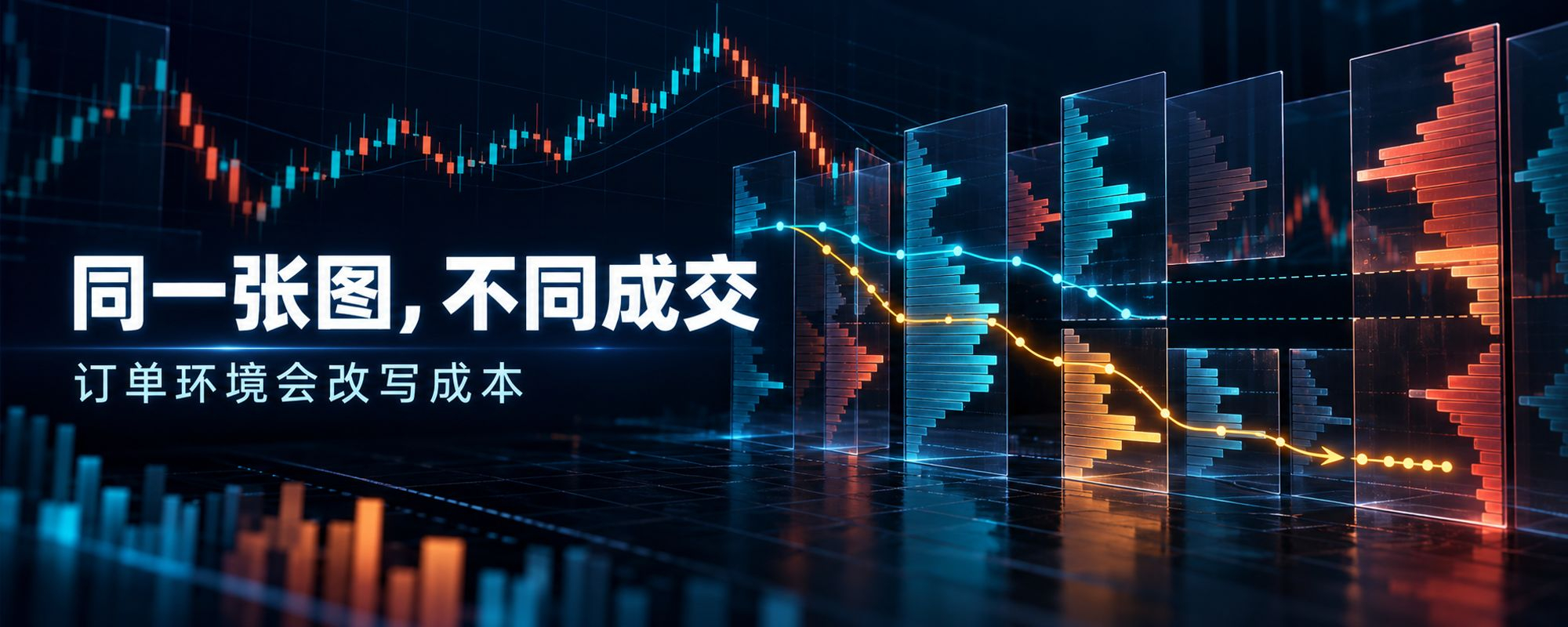

The most noteworthy thing at midday today isn’t that BTC slipped back from around $85,000 toward the $84,000 range, or that ETH and SOL weakened slightly along with it. It’s that many traders may misjudge one thing in a market that “hasn’t fallen all that sharply”: the chart may not have changed much, but the trading environment may already have shifted.
Same Chart, Different Execution: How the Trading Environment Changes the Cost of a Trade
From morning to midday, BTC slid from around $85,000 toward the $84,000 range, while ETH also returned to around $2,600. On the surface, this looks like a normal pullback in major coins, with no especially dramatic signals on the candlesticks. But anyone who has actually placed an order knows that the cost isn’t determined solely by the price shown in a screenshot. It’s shaped by the quote levels, depth across the top few levels, spread, trigger conditions, and execution path at the moment you press the button.
When reviewing a trade, many people only ask: Did I get the direction wrong?
But in perpetual trading, another question is more practical: When the direction is more or less right, why do some traders experience only slight slippage while others end up paying more for the entire order?
The answer is often hidden in the order environment.
The first difference is thinner quote depth.
When the market is hot, there seem to be plenty of limit orders. But once prices start pulling back, liquidity at the top levels may disappear faster than prices move. The chart shows 84,100, but the actual average fill may come several levels deeper. This difference may not seem alarming on a single trade, but with frequent trading, larger positions, or accelerating volatility, it can turn into a persistent drift in execution costs.
The second difference is a widening spread.
When the market cools or volatility picks up, the bid-ask spread is often the first thing to look ugly. Many people watch only the latest traded price and overlook the gap between the current quotes. You think you're following the price, but in reality, you're paying for an uneven quote book. On the chart, it looks like just a small pullback, but your fill has already incurred another layer of hidden costs.
The third difference is what happens after a trigger.
At the same trigger price, some venues can still absorb orders at the top levels, while on others, a triggered order may sweep straight through thinner levels. The thing traders most often overlook is this: the trigger price is only the beginning, not the final fill price. Especially during midday, when the market lacks a clear direction and sentiment is somewhat scattered, slippage often happens not before the decision, but after the trigger.
The fourth difference is fragmented liquidity.
Perpetual markets increasingly resemble a network of roads running side by side. On the surface, they may all be the same trading pair, but behind the scenes they have different depth structures, fee rules, quote refresh speeds, and risk controls. As a result, the same candlestick chart does not mean the same execution quality. Traders see the same price range, but encounter different order environments.
That's why I'm increasingly reluctant to judge a trade solely by whether the market call was right.
Market direction certainly matters, but execution quality determines how much room for error a trade has. Direction gives you probability; the order environment determines how much you pay for it. Especially in a market where BTC is repeatedly struggling around $84,000 and ETH is pulling back more sharply, the real question isn't “Can I jump in now?” but whether the quote depth, liquidity, spread, and post-trigger absorption along the route are still solid.
Put more directly: the same chart, different fills—it's not magic, it's a difference in the order environment.
Before placing an order, a mature trader should treat “comparing routes” as part of the trading process. First choose the asset, then compare depth, spreads, fees, trigger conditions, and risk buffers across execution venues, and only then decide which route to take. That's also where the value of an execution-comparison perspective like PerpEX comes in: it reminds traders not to focus only on direction, but to factor execution quality into their pre-trade assessment.
Markets like today's can most easily lull you into complacency. Prices haven't collapsed, sentiment hasn't blown up, and the candlestick chart still looks explainable. But if quote depth has thinned, spreads have widened, and post-trigger absorption has deteriorated, costs have already started moving.
Getting the direction right is only the first step.
Don't let the order environment turn a trade that should have been acceptable into an increasingly expensive fill.
#BTC #ETH