In the past, inscriptions and runes were basically NFT listings.
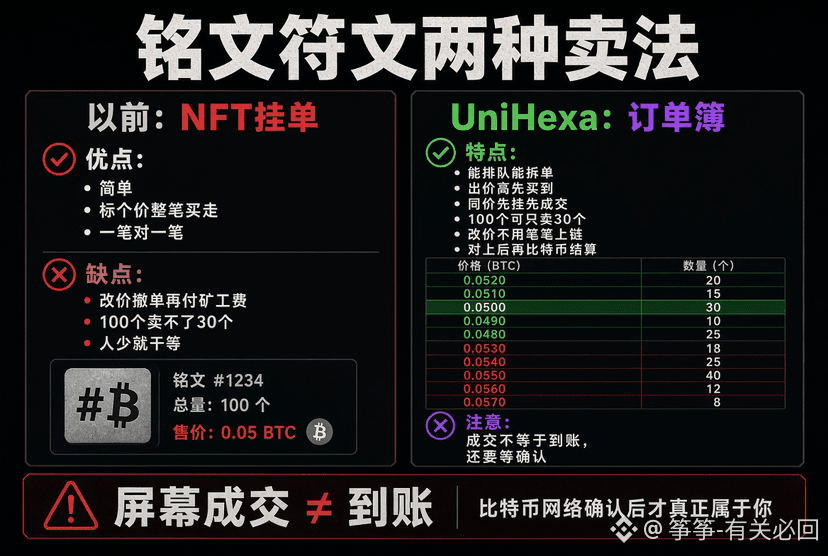
The upside was simplicity. Set a price, and someone else could buy the whole lot. It was easy to understand at a glance. Each trade was basically one-to-one, with a short process.
The downside was inflexibility. Changing the price or canceling an order often meant paying miner fees again. You couldn’t split the quantity: if someone wanted only 30 and you listed 100, the trade couldn’t go through. When there weren’t many people around, you just had to wait.
Something like UniHexa is more like an exchange order book.
The upside is that orders can queue and be filled in parts. Higher bids get matched first, lower-priced asks get filled first, and at the same price, the order placed first gets filled first. You can sell just 30 out of 100. You can change the price in the order book without putting every single change on-chain; once an order is matched, it’s settled on Bitcoin.
$ORDI
The upside was simplicity. Set a price, and someone else could buy the whole lot. It was easy to understand at a glance. Each trade was basically one-to-one, with a short process.
The downside was inflexibility. Changing the price or canceling an order often meant paying miner fees again. You couldn’t split the quantity: if someone wanted only 30 and you listed 100, the trade couldn’t go through. When there weren’t many people around, you just had to wait.
Something like UniHexa is more like an exchange order book.
The upside is that orders can queue and be filled in parts. Higher bids get matched first, lower-priced asks get filled first, and at the same price, the order placed first gets filled first. You can sell just 30 out of 100. You can change the price in the order book without putting every single change on-chain; once an order is matched, it’s settled on Bitcoin.
$ORDI