In the 21st century, the greatest biological threat facing humanity may be neither nuclear weapons nor armies in the traditional sense.
It may be biological laboratories.
Especially as artificial intelligence begins to dissect genomes, protein structures, and biological systems in ever-greater detail, humanity is gaining unprecedented capabilities in bioengineering.
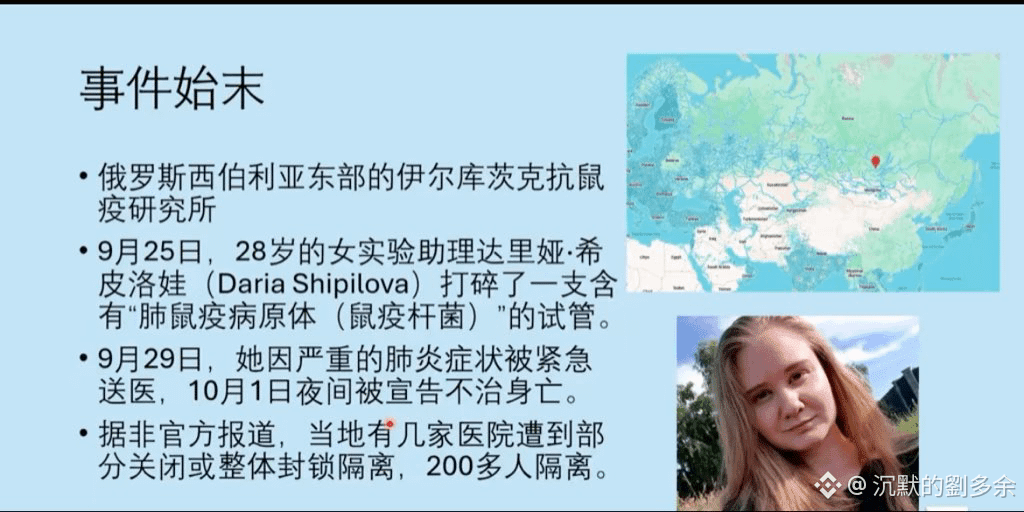
The news about the plague in Russia may well be nothing more than a panic-inducing rumor.
But what’s interesting is that throughout human history, the threats that have truly exacted a huge toll on entire civilizations have often been neither guns nor nuclear weapons.
They have been viruses. Wars require people to actively press a button; viruses don’t. More concerning still, humanity today is no longer merely facing viruses shaped by natural evolution passively—we are gradually gaining the ability to intervene in, modify, and even design biological systems.
AI lowers the barrier to understanding; biotechnology lowers the barrier to experimentation.
Once these two things truly come together, humanity may no longer be facing just “the next natural pandemic.” We may be entering an entirely new era of biosecurity.
Nuclear weapons gave humanity, for the first time, the physical ability to destroy civilization. AI + biotechnology may bring us closer, for the first time, to having the ability to alter life itself.
Perhaps this is what we should truly be wary of in the 21st century. If two years ago we were merely concerned that AI made it too easy to dissect biological systems, now we should put the probability of facing a large-scale “biological crisis” in the future at 99.99%.
Let’s hope that an apocalyptic reckoning like the Black Death in Europe never comes. At the very least, the viruses of the 14th century still evolved naturally; anything that emerges in the 21st century could be far more devastating.
The plague outbreak in Russia this time is probably just a small, localized event. But as accidents become more and more frequent, a true “black swan” will inevitably appear.
$BTC $ETH #btc #eth
It may be biological laboratories.
Especially as artificial intelligence begins to dissect genomes, protein structures, and biological systems in ever-greater detail, humanity is gaining unprecedented capabilities in bioengineering.
The news about the plague in Russia may well be nothing more than a panic-inducing rumor.
But what’s interesting is that throughout human history, the threats that have truly exacted a huge toll on entire civilizations have often been neither guns nor nuclear weapons.
They have been viruses. Wars require people to actively press a button; viruses don’t. More concerning still, humanity today is no longer merely facing viruses shaped by natural evolution passively—we are gradually gaining the ability to intervene in, modify, and even design biological systems.
AI lowers the barrier to understanding; biotechnology lowers the barrier to experimentation.
Once these two things truly come together, humanity may no longer be facing just “the next natural pandemic.” We may be entering an entirely new era of biosecurity.
Nuclear weapons gave humanity, for the first time, the physical ability to destroy civilization. AI + biotechnology may bring us closer, for the first time, to having the ability to alter life itself.
Perhaps this is what we should truly be wary of in the 21st century. If two years ago we were merely concerned that AI made it too easy to dissect biological systems, now we should put the probability of facing a large-scale “biological crisis” in the future at 99.99%.
Let’s hope that an apocalyptic reckoning like the Black Death in Europe never comes. At the very least, the viruses of the 14th century still evolved naturally; anything that emerges in the 21st century could be far more devastating.
The plague outbreak in Russia this time is probably just a small, localized event. But as accidents become more and more frequent, a true “black swan” will inevitably appear.
$BTC $ETH #btc #eth