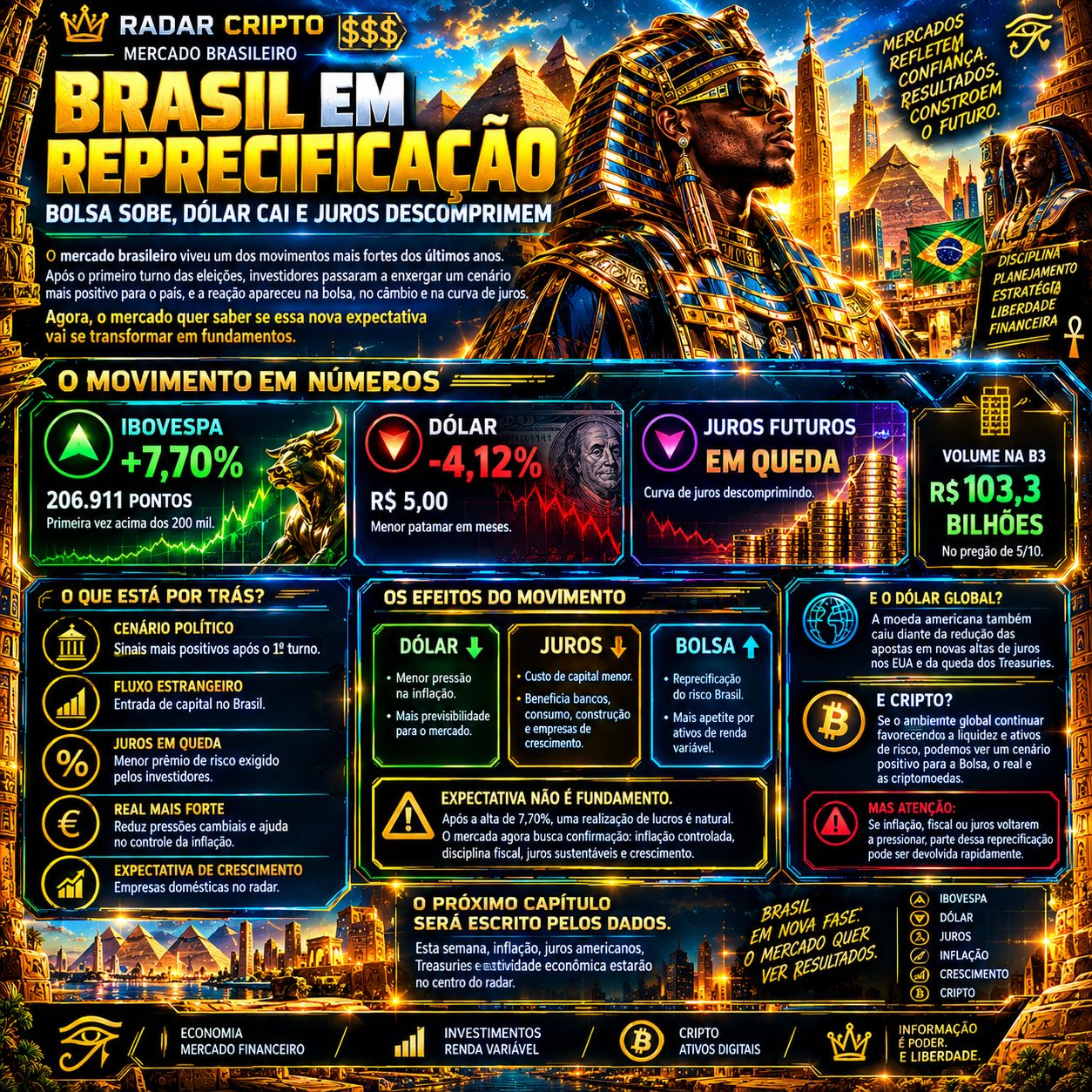

BRAZIL REPRICED: STOCKS RISE, THE DOLLAR FALLS, AND INTEREST RATES EASE
The Brazilian market has just made one of its strongest moves in recent years.
On October 5, the Ibovespa surged 7.70%, closing at 206,911 points and topping the 200,000 mark for the first time. In the same trading session, the dollar plunged 4.12% to approximately R$5.00.
But there’s a third move that’s just as important as the other two: a sharp drop in futures interest rates.
What’s happening?
The market is repricing Brazilian risk.
After the first round of elections, investors began to see a different possibility for the political and fiscal outlook. The reaction showed up simultaneously in stocks, the currency market, and the yield curve, with capital inflows and a lower risk premium demanded by investors.
And that creates a powerful effect.
DOLLAR ↓ INTEREST RATES ↓ STOCKS ↑
A stronger real eases currency-related inflationary pressures and could improve the environment for domestic companies.
Lower future interest rates reduce the cost of capital, benefiting rate-sensitive sectors such as banks, consumer goods, construction, and growth companies.
And the stock market begins to price in a lower risk premium.
But there’s one important detail:
EXPECTATIONS ARE NOT FUNDAMENTALS.
After a 7.70% gain in a single trading session, some profit-taking is entirely natural. This Tuesday, the Ibovespa briefly hit a new all-time high near 209,500 points before losing momentum.
A different phase begins now.
The market will look for confirmation.
Controlled inflation. Fiscal discipline. Sustainable interest rates. Foreign inflows. Economic growth. And above all, the ability to turn expectations into results.
The dollar falling below R$ 5 also deserves attention. The U.S. currency doesn’t depend only on Brazil: the dollar has also weakened globally as bets on further U.S. rate hikes have eased and Treasury yields have recently fallen.
And there’s a direct connection to equities and cryptocurrencies.
If the global environment continues to favor liquidity and risk assets, while Brazil lowers its risk premium, we could see an interesting outlook for stocks, the real, and higher-beta assets.
But if inflation, fiscal concerns, or interest rates come under pressure again, some of this repricing could quickly be reversed.
The big question now isn’t:
“Why did the stock market rally?”
It is:
“How much of this new optimism can the market still turn into reality?”
The next chapter will be written by the data.
And this week, inflation, U.S. interest rates, Treasuries, and economic activity will be in the spotlight.
Brazil has entered a new repricing phase.
Now the market wants to know whether it’s here to stay.
.
.
#Ibovespa #B3 #Dollar #Real #Economy #InterestRates #Investments #BrazilianStockMarket #FinancialMarkets #Brazil #Inflation #FiscalPolicy #WallStreet #Bitcoin #Cryptocurrencies