

How does someone become a victim of a crypto scam?
In the Web3 ecosystem, cybercriminals almost never hack the blockchain or break your wallet’s encryption; instead, they hack your mind.
Scammers follow this psychological sequence:
The Bait (Fake Airdrop / Fake Support DM): They contact you on social media, promising guaranteed returns, an exclusive airdrop, or pretending to be technical support for wallets or exchanges.
False Urgency: They pressure you to act quickly with phrases like “last 5 minutes to claim” or “your account requires immediate verification.” By making you fear missing out (FOMO) or losing access, they cloud or override your judgment.
The malicious signature, or “wallet drainer”: You’re directed to a cloned website and asked to sign a “free transaction.” When you click “Accept,” you aren’t claiming anything; you’re actually giving the smart contract unlimited permission to move all your funds.
Within seconds, automated smart contracts drain your funds and mix them through privacy protocols. Remember, once you’ve approved permissions on the blockchain, there’s no “cancel transaction” button.


You may be wondering: How can I avoid getting scammed?
To reduce the risk of falling victim to this type of scam, you can take the following precautions:
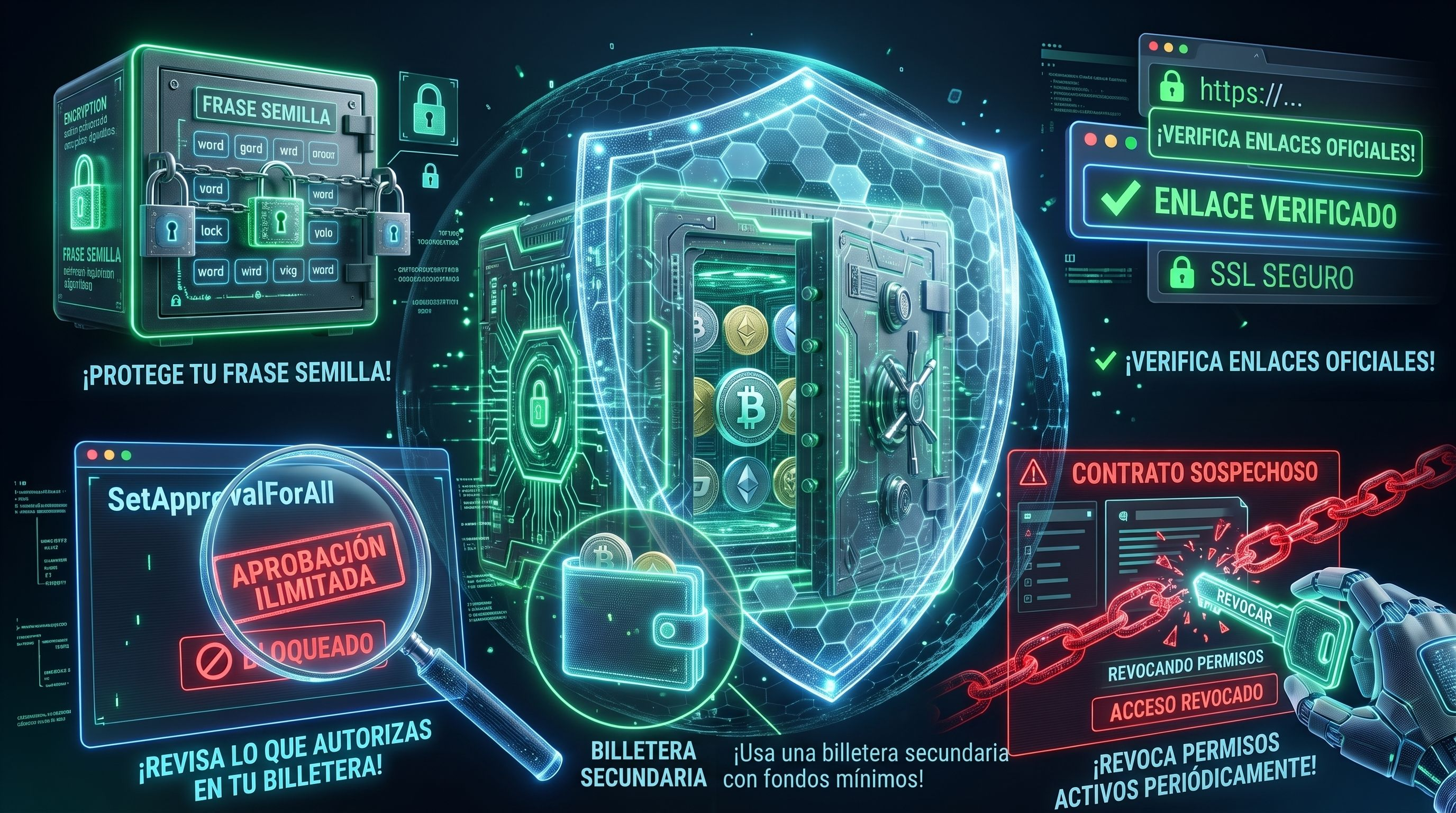
Never, under any circumstances, enter your seed phrase or private key on a website. No one from a protocol’s support team will ever message you first in a private message.
Carefully read what you’re approving in MetaMask or another wallet. If it requests unlimited approval (SetApprovalForAll), be wary. You can also use a secondary wallet with minimal funds—never your main wallet—and always avoid granting it unlimited access.
Make sure the links, addresses, contracts, protocols, and similar items you use are official and verified by the community.
*Regularly clearing permissions granted to protocols or smart contracts on the network is another vital layer of protection, especially if you’ve previously interacted with one considered high-risk.
*There are tools that let you cancel active authorizations for contracts you no longer use. Some wallets compatible with blockchains that run the Ethereum Virtual Machine $ETH (EVM) let you revoke these permissions directly from the wallet.
It’s important to note that revoking permissions must be verified on the blockchain, which means paying the network fee to complete this action.

Personally, I’ve read and watched videos about various cases where new users, using a decentralized wallet for the first time, innocently reveal or leave their passwords or seed phrases visible. Within seconds or minutes, someone imports their wallet onto another device and makes transactions, draining their funds to other wallets or addresses.
On the other hand, users of centralized exchanges (CEXs) such as Binance can easily fall for the common fake tech support or special promotion scam. This happens more often than you might think.
Now that you know some of the methods scammers use and how to avoid them, tell me:
Have you ever had to deal with an attempted crypto scam?
What was the red flag or warning sign that made you realize in time?

We’ve reached the end of this Informed Investor article. Let me know if you’d like more content like this, and don’t forget to support the content so more users can learn about these important topics. I’m @Lance_52 and I’ll see you in the next article.