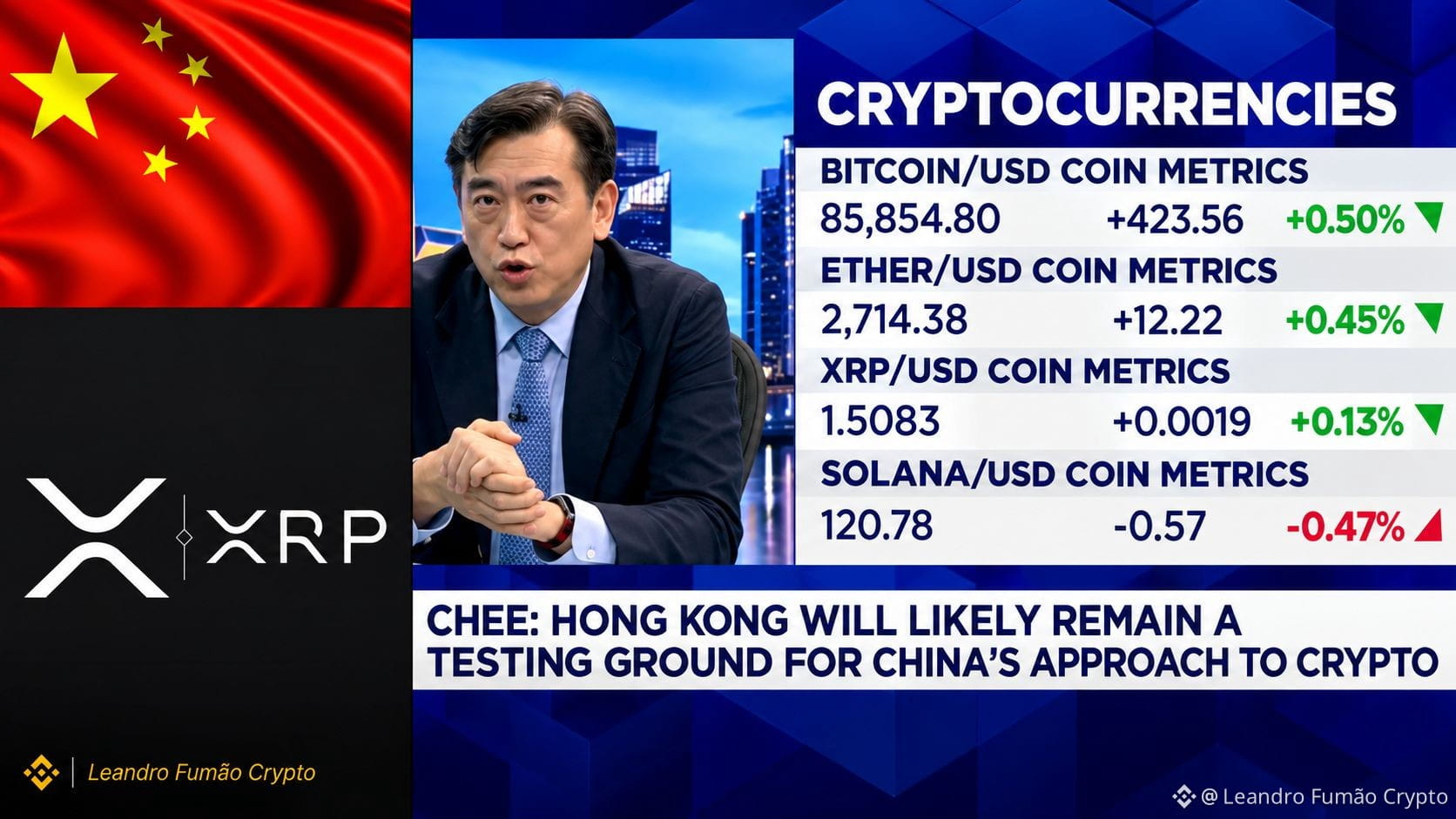
˗ˋˏ⛩️ˎˊ˗ 🥡⟡落🥢⋆ HONG KONG + CHINA ➜ THE CATALYST THE MARKET HASN’T PRICED INTO CRYPTO YET $XRP 𓏲๋࣭࣪˖🎐
The obvious version of the thesis would be simple: “China reopens crypto, XRP rises.” But something more interesting is happening: Hong Kong is becoming the regulated bridge between mainland China and global digital assets—and XRP is already positioned within it.
📊 Hong Kong has built a regulated crypto market: a digital economy of ~US$192.2 billion, institutional activity up 87% year over year, representing 16% of service flows (nearly 3x the East Asian average), with ~US$24 billion in B2B flows.
📊 In mainland China, despite restrictions, Chainalysis estimates a crypto economy of ~US$176.3 billion, with US$104.1 billion moved in self-custodied stablecoins alone—unique P2P wallets grew 43x between Q1 2024 and Q2 2026.
Hong Kong is already positioning itself as a “superconnector”: the HKMA connected digital trade systems with Shanghai via CargoX, involving 5 major banks and already generating 10 trade finance loans (HK$180 million).
And XRP is already part of this structure:
✅ Ripple Payments operates in China (via CN_CFXPS) and Hong Kong (via HK_BANK_PAYOUT/CHATS)
✅ OSL HK listed XRP for retail trading in July 2026 (XRP/USD and XRP/HKD pairs)
✅ RLUSD has been listed on OSL HK since February 2026 (RLUSD/HKD, RLUSD/USDT)
✅ Ripple has already worked with the HKMA on the e-HKD pilot, using XRPL-based technology
With the Stablecoins Ordinance (Aug 2025) and licenses for HSBC and Anchorpoint, multiple forms of digital money (HKD, USD, RLUSD, e-CNY) will coexist, creating the routing problem that XRPL was designed to solve.
The central thesis: it’s not about “China allowing retail crypto,” but about cross-border corporate trade going digital, with $XRP serving as temporary liquidity between assets, without companies needing to “invest” in the token.
✨💡📚 Study Before You Invest.
#Xrp🔥🔥 #RLUSD #RipplePayments
The obvious version of the thesis would be simple: “China reopens crypto, XRP rises.” But something more interesting is happening: Hong Kong is becoming the regulated bridge between mainland China and global digital assets—and XRP is already positioned within it.
📊 Hong Kong has built a regulated crypto market: a digital economy of ~US$192.2 billion, institutional activity up 87% year over year, representing 16% of service flows (nearly 3x the East Asian average), with ~US$24 billion in B2B flows.
📊 In mainland China, despite restrictions, Chainalysis estimates a crypto economy of ~US$176.3 billion, with US$104.1 billion moved in self-custodied stablecoins alone—unique P2P wallets grew 43x between Q1 2024 and Q2 2026.
Hong Kong is already positioning itself as a “superconnector”: the HKMA connected digital trade systems with Shanghai via CargoX, involving 5 major banks and already generating 10 trade finance loans (HK$180 million).
And XRP is already part of this structure:
✅ Ripple Payments operates in China (via CN_CFXPS) and Hong Kong (via HK_BANK_PAYOUT/CHATS)
✅ OSL HK listed XRP for retail trading in July 2026 (XRP/USD and XRP/HKD pairs)
✅ RLUSD has been listed on OSL HK since February 2026 (RLUSD/HKD, RLUSD/USDT)
✅ Ripple has already worked with the HKMA on the e-HKD pilot, using XRPL-based technology
With the Stablecoins Ordinance (Aug 2025) and licenses for HSBC and Anchorpoint, multiple forms of digital money (HKD, USD, RLUSD, e-CNY) will coexist, creating the routing problem that XRPL was designed to solve.
The central thesis: it’s not about “China allowing retail crypto,” but about cross-border corporate trade going digital, with $XRP serving as temporary liquidity between assets, without companies needing to “invest” in the token.
✨💡📚 Study Before You Invest.
#Xrp🔥🔥 #RLUSD #RipplePayments