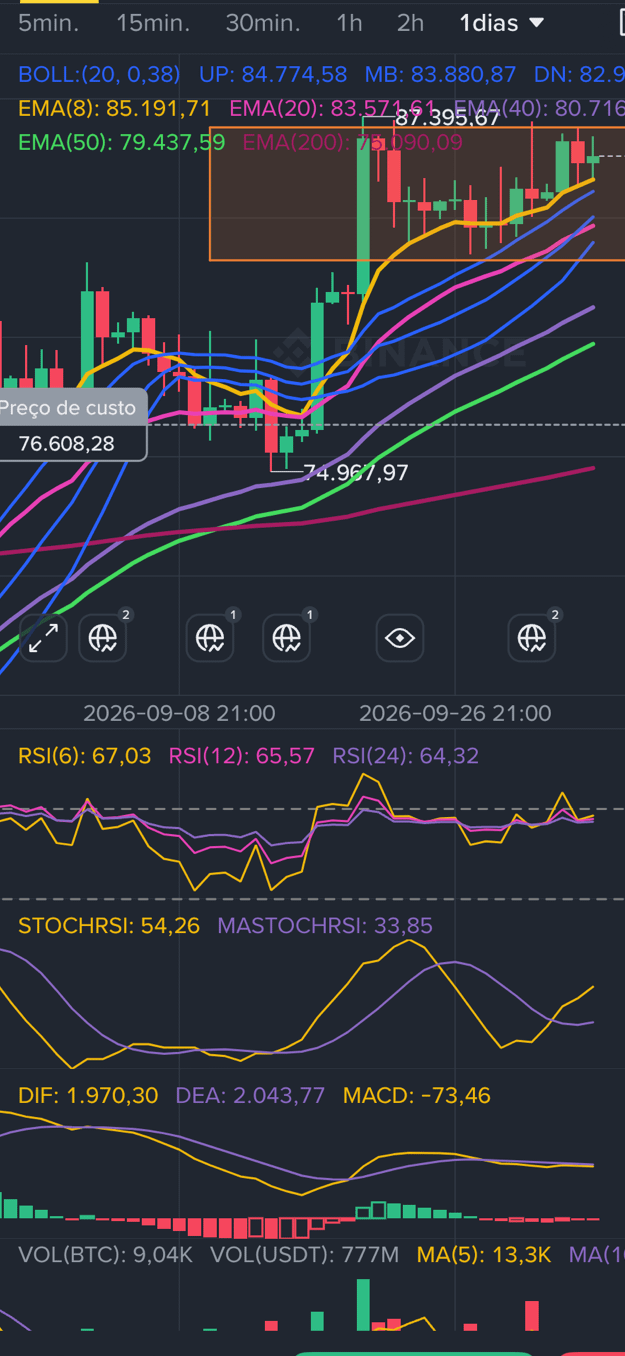
There will be an auction today at 12:30 Brasília time. Could it impact BTC?
U.S. Treasury auctions and operations (such as debt issuance, settlements, and Treasury buyback programs) directly affect Bitcoin.
How this affects Bitcoin:
• Liquidity and Risk Appetite: When the U.S. government issues a large volume of new securities (such as billion-dollar note or bill auctions), this can drain liquidity in the short term. Less liquidity tends to put pressure on risk assets.
• Interest Rates and Yields: If demand at auctions is weak, government bond yields rise, making fixed-income investments more attractive and weakening capital flows into volatile assets such as cryptocurrencies.
• Buyback Operations: When the Treasury conducts large bond buyback auctions (such as the expansions carried out in mid-2026), it lowers long-term rates and can temporarily boost gold, stocks, and Bitcoin.
• Deficit and Scarcity Thesis: On the other hand, increased debt issuance reinforces the argument that fiat currencies lose value over the long term, supporting the narrative that Bitcoin functions as a scarce store of value outside the sovereign system.
U.S. Treasury auctions and operations (such as debt issuance, settlements, and Treasury buyback programs) directly affect Bitcoin.
How this affects Bitcoin:
• Liquidity and Risk Appetite: When the U.S. government issues a large volume of new securities (such as billion-dollar note or bill auctions), this can drain liquidity in the short term. Less liquidity tends to put pressure on risk assets.
• Interest Rates and Yields: If demand at auctions is weak, government bond yields rise, making fixed-income investments more attractive and weakening capital flows into volatile assets such as cryptocurrencies.
• Buyback Operations: When the Treasury conducts large bond buyback auctions (such as the expansions carried out in mid-2026), it lowers long-term rates and can temporarily boost gold, stocks, and Bitcoin.
• Deficit and Scarcity Thesis: On the other hand, increased debt issuance reinforces the argument that fiat currencies lose value over the long term, supporting the narrative that Bitcoin functions as a scarce store of value outside the sovereign system.