

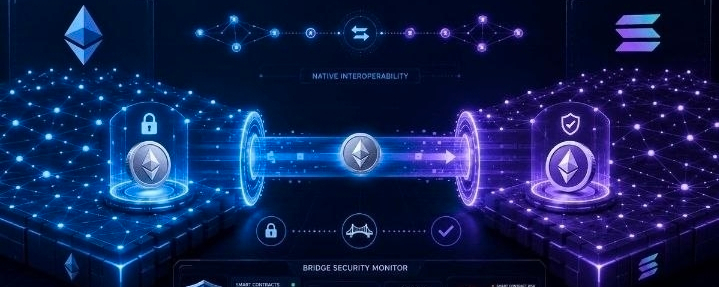

How do blockchain networks communicate with one another?
If you have USDT on BNB Chain and want to use it on Solana, you can’t simply “send” the currency from one network to another.
Why?
Each blockchain has its own rules, transaction execution mechanism, accounts, and runtime environment.
🔹 BNB Smart Chain
EVM-compatible, it uses a model similar to Ethereum’s environment for handling smart contracts and transactions, while BNB is used to pay network fees.
🔹 Solana
It has a radically different model; a transaction consists of signed instructions that specify which accounts and data will be affected by execution.
This is where Cross-Chain Bridges come in 🌉
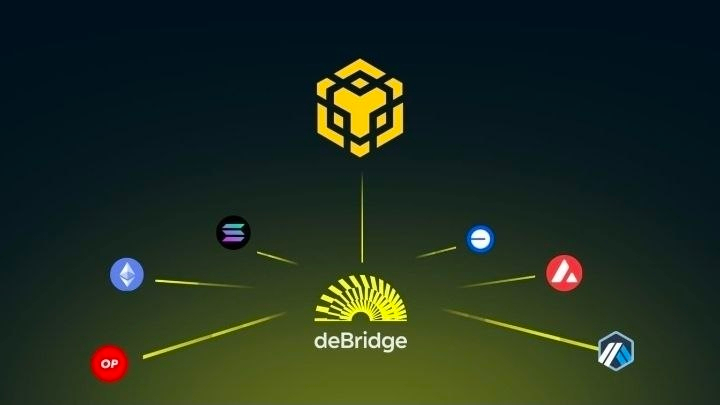
A bridge acts as a communication layer between networks and can use several models, the most prominent of which are:
Lock & Mint
The asset is locked on the first network, then a representation of it is issued on the second network.
Burn & Mint
The representation is burned on the first network, then the corresponding asset is issued on the second network.
Atomic Swap
Assets are exchanged between two parties through an atomic mechanism, without needing to move the asset itself between chains.
📌 A simple example:
You have USDT on BNB Chain
⬇️
Uses a bridge
⬇️
The transaction is verified
⬇️
You see an equivalent asset on Solana
⬇️
You can use it within Solana apps.
But there’s a very important point here:
The token you see on the second network isn’t necessarily the same as the original asset.
It may be a token representing the asset on the other network.
And this is the essence of interoperability:
The goal isn’t to make all blockchains alike, but to enable different networks to exchange assets, messages, and data despite their differing systems.
⚠️ This is why bridges are considered one of the most important parts of Web3 infrastructure, but they also carry risks such as smart contract bugs, hacks, and risks associated with the verification mechanism itself.
The most important question for the future:
Will the future of Web3 consist of hundreds of separate networks connected by bridges?
Or will users ultimately not even know which network their transaction is being processed on?
📚 Educational and informational content only; not financial advice or an investment recommendation.