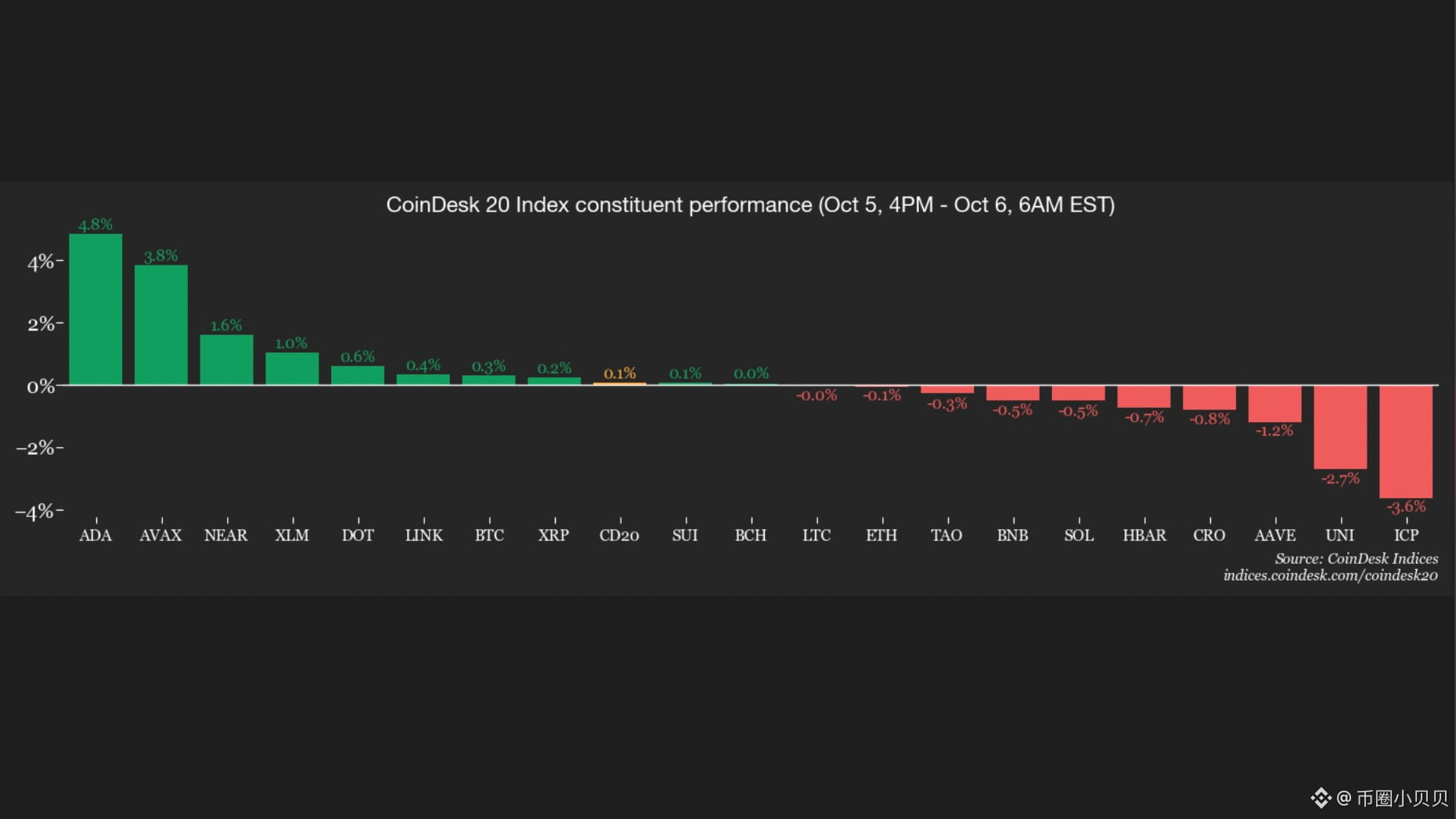
The whole market is waiting for Bitcoin to pick a direction—will it break below 84,000? But the money that was really moving over the past 24 hours wasn’t in this order book at all.
🔄 进群看资金动向
Most people are watching BTC, stuck around 85,900 after touching a low of 85,000 today. Analyst Kuptsikevich put it bluntly: a break below 84,000 would mean the bears have won; below 83,000 would pretty much confirm it, and Bitcoin could soon head for 80,000.
But at the same time, small-cap coins have been quietly taking off. Bitway’s BTW gained 25% in 24 hours and is up 170% over the past 30 days. It’s a Bitcoin-compatible L1 with PoS and DeFi. Filecoin’s FIL also gained 12%, LayerZero’s ZRO rose 10%—both are up more than 50% over the past four weeks—and Midnight’s NIGHT added 8%.
There’s a detail many people have missed: BTC open interest on exchanges has stayed nearly flat at $21.9 billion, while funding rates have fallen from a 4–10% range to an annualized 0–5%. In other words, this rally wasn’t fueled by piling on leverage; existing capital is changing positions. The money hasn’t left the market—it’s simply moved from the large-cap leaders to the smaller names in search of more upside.
Even within the smaller-cap segment, there’s a clear pecking order. Privacy coins have held steady rather than falling over the past couple of days: Monero rose to $557, and Zcash reclaimed $1,350. NEAR gained 4.5% in a day to $5.25. By contrast, RAIN fell more than 5% on token unlocks and profit-taking, making it the day’s biggest loser. In the same rotation, some coins are gaining while others are just getting dragged down along the way.
Two price levels are really worth watching. One is 84,000: if Bitcoin breaks below it first, the highest-beta small coins are often the first to give back their gains, and this independent rally could unwind within days. The other is 87,150, marked on the liquidation heatmap, where a lot of positions are clustered. If price breaks above that level first, the capital rotation could spread back from smaller coins to the broader market.
So the question now isn’t whether Bitcoin will fall, but how long this wave of capital intends to stay in smaller coins. When the broader market moves sideways, money always seems to seek out the far end of the market for more upside—but volatility cuts both ways.
🔄 进群看资金动向
Most people are watching BTC, stuck around 85,900 after touching a low of 85,000 today. Analyst Kuptsikevich put it bluntly: a break below 84,000 would mean the bears have won; below 83,000 would pretty much confirm it, and Bitcoin could soon head for 80,000.
But at the same time, small-cap coins have been quietly taking off. Bitway’s BTW gained 25% in 24 hours and is up 170% over the past 30 days. It’s a Bitcoin-compatible L1 with PoS and DeFi. Filecoin’s FIL also gained 12%, LayerZero’s ZRO rose 10%—both are up more than 50% over the past four weeks—and Midnight’s NIGHT added 8%.
There’s a detail many people have missed: BTC open interest on exchanges has stayed nearly flat at $21.9 billion, while funding rates have fallen from a 4–10% range to an annualized 0–5%. In other words, this rally wasn’t fueled by piling on leverage; existing capital is changing positions. The money hasn’t left the market—it’s simply moved from the large-cap leaders to the smaller names in search of more upside.
Even within the smaller-cap segment, there’s a clear pecking order. Privacy coins have held steady rather than falling over the past couple of days: Monero rose to $557, and Zcash reclaimed $1,350. NEAR gained 4.5% in a day to $5.25. By contrast, RAIN fell more than 5% on token unlocks and profit-taking, making it the day’s biggest loser. In the same rotation, some coins are gaining while others are just getting dragged down along the way.
Two price levels are really worth watching. One is 84,000: if Bitcoin breaks below it first, the highest-beta small coins are often the first to give back their gains, and this independent rally could unwind within days. The other is 87,150, marked on the liquidation heatmap, where a lot of positions are clustered. If price breaks above that level first, the capital rotation could spread back from smaller coins to the broader market.
So the question now isn’t whether Bitcoin will fall, but how long this wave of capital intends to stay in smaller coins. When the broader market moves sideways, money always seems to seek out the far end of the market for more upside—but volatility cuts both ways.