

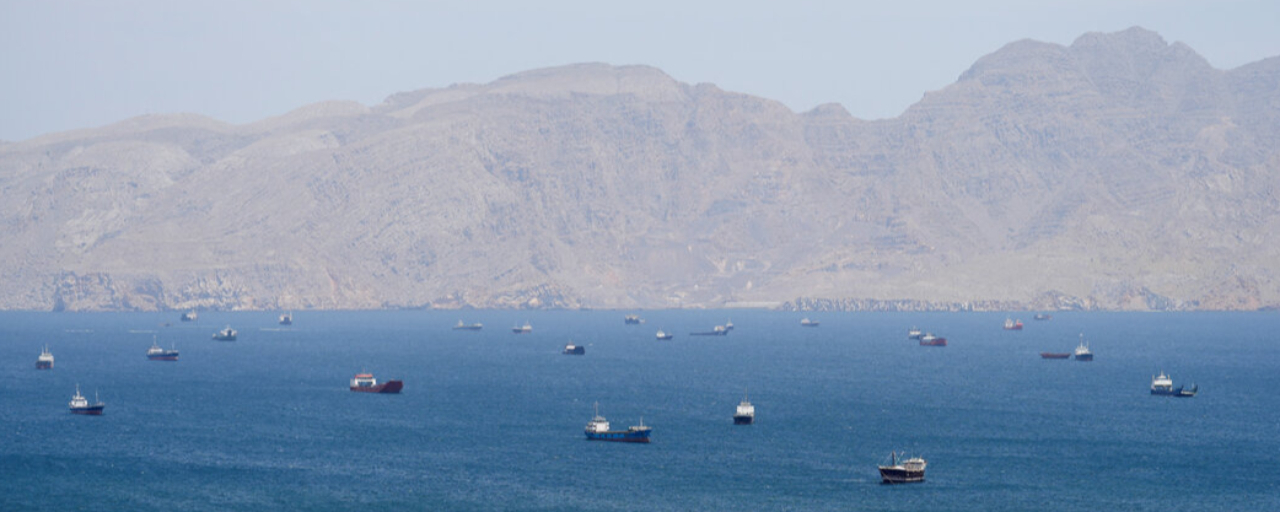


Brent crude fell again today.
It fell to $100.19 per barrel, down 2% on the day.
Meanwhile, Iranian Parliament Speaker Mohammad Bagher Ghalibaf publicly stated: “The Strait of Hormuz will not be opened unless all seven conditions are met.”
In plain English:
It’s not a question of whether it opens, but what the price is.
What does Iran actually want?
Seven conditions, with four key ones:
First, the U.S. must lift its naval blockade of Iranian ports and vessels.
Second, immediately return Iran’s frozen overseas assets.
Third, waive sanctions on Iranian oil exports.
Fourth, stop fighting on all fronts.
This isn’t a “do or die” ultimatum. It’s a list of negotiable terms.
Lifting the blockade and returning frozen funds—these are “negotiable.”
Exemptions from oil export sanctions—this is where the U.S. is least willing to compromise.
The disagreement isn’t over “whether to open up,” but over “who gives ground first.”
In late September, Iran submitted a “seven-day confidence-building plan” through Qatari mediators. On October 1, Iran confirmed that it had received an official response from the U.S. Trump publicly said, “I rejected it,” but left room for indirect talks to continue and did not rule out renewed hostilities.
Rejected, but the door wasn’t shut.
This is the clearest sign of a “manageable crisis.”
Brent crude has retreated from above $130 at the height of the conflict and is now fluctuating in the $100–$102 range.
Why didn’t it keep surging?
Because the G7 stepped in. On October 2, the G7 announced that it would release up to 100 million barrels of diesel and crude oil reserves over the next four months, coordinated through the IEA, with the initial 20 days focused on accelerating diesel releases. IEA Executive Director Birol said that around 325 million barrels had already been released, calling it “the largest collective action in the agency’s history.”
Meanwhile, seven OPEC+ countries have decided to keep November production at September levels, marking a second consecutive month without an increase. Their next meeting is scheduled for November 1.
Reserves are being released, but production increases are on hold.
On one side, consuming nations are trying to put out the fire; on the other, oil-producing nations are holding back and watching.
Both sides are waiting for the outcome of the negotiations, rather than pricing in a prolonged war.
Diesel exports from Gulf countries are currently only a little over a quarter of their pre-U.S.-Iran war levels. European diesel prices have doubled since the war broke out in late February.
Diesel is the real pain point.
It’s not crude oil—it’s diesel. That’s why the first phase of G7 reserve releases prioritizes diesel.
But analysts have also been candid: at most, this “buys time”; global diesel supply is still falling short of demand.
BTC is around $85,690 today, down a marginal 0.29% over 24 hours. It closed last week at $86,532, its highest weekly close since late January. Overall, it’s fluctuating around $85,000.
Oil staying at $100 instead of surging to $130 means inflation expectations haven’t been fully ignited by Hormuz. If inflation expectations don’t spiral out of control, pressure to raise interest rates won’t become extreme. And if that pressure doesn’t become extreme, risk assets won’t face systemic liquidity drains.
Every round of progress in the Hormuz negotiations—not a breakdown, not a resolution, but “talks will continue”—is an invisible cushion for the crypto market.
The most dangerous moment for the market isn’t when negotiations break down.
It was when everyone thought the negotiations were bound to succeed.
Brent is at $100 now, and the market is pricing in a “manageable crisis that will eventually be resolved.”
But if there is still no substantial progress in the negotiations at the November 1 OPEC+ meeting, while the impact of G7 reserve releases starts to diminish at the margin—
Then the word “manageable” may no longer apply.