

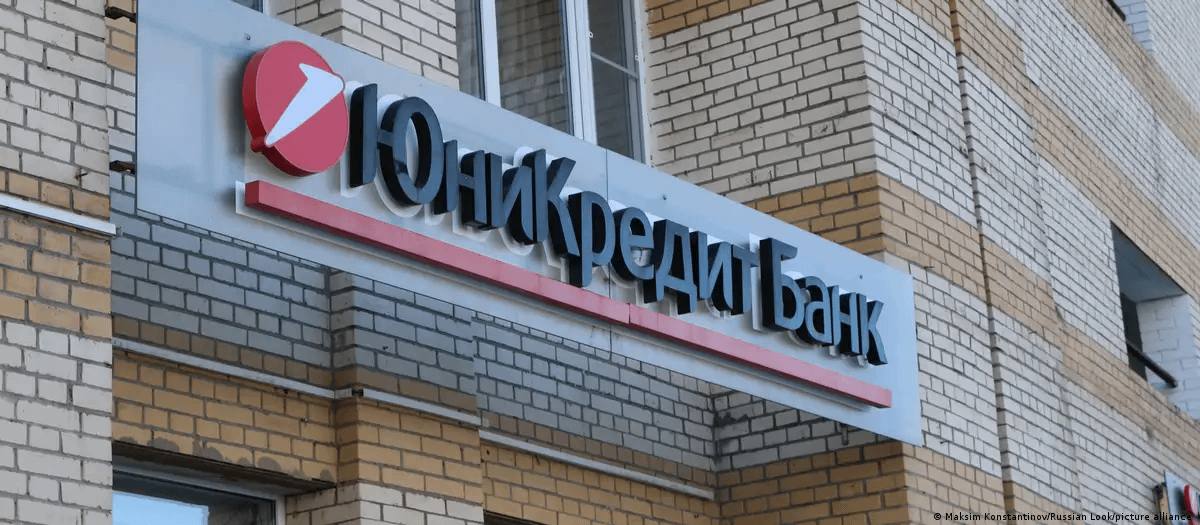
Russian President Vladimir Putin signed an “order on a special decision regarding the reorganization” of the Russian-registered joint-stock company UniCredit Bank, part of the Italian financial group UniCredit. A copy of the document was published on Russia’s legal information portal on Monday, October 5.
Under a decree issued by Putin, a company may be spun off from UniCredit Bank, with all its shares owned by UniCredit S.p.A. The decree allows 100% of the Russian bank’s shares to be sold without requiring additional approval from the authorities.
UniCredit wanted to sell its assets to people linked to Alfa-Bank
In May 2025, several media outlets, including Reuters, citing a submission to Italy’s Ministry of Finance, reported that three companies registered in the UAE—Asas Capital, Mada Capital, and Inweasta—had offered to buy UniCredit Group’s Russian business.
According to publicly available information, Inweasta was founded by Andrey Elinson, who was managing partner of A1, the investment division of Alfa Group, until 2023. The newspaper Kommersant also wrote that Russia’s Alfa Group could have been the ultimate beneficiary of the change in ownership of UniCredit Bank. However, the media did not report any further developments in the story.
In the past, “reorganizations” of Western businesses in Russia that were approved or initiated by the Russian authorities often resulted in those assets ending up in the hands of people close to the Kremlin.
UniCredit stayed in Russia, fearing asset confiscation
In 2022, following the start of Russia’s full-scale invasion of Ukraine, dozens of major Western companies decided to leave Russia or halt the development of their businesses in the country. The Kremlin decided to prevent this by introducing new laws.
For example, the Russian authorities classified the businesses of Italy’s UniCredit and Austria’s Raiffeisen Bank International as “systemically important credit institutions in the country.” This prohibited the sale of the companies’ assets without Putin’s personal approval. In addition, Western companies had to sell their Russian assets at a discount of at least 60 percent of their market value. Companies were also required to pay 35 percent of the assets’ market value into the Russian budget as a contribution, which the Russian authorities nevertheless called “voluntary.”
As a result, after selling its assets in Russia, a foreign owner could receive only 5–10 percent of their value. At the same time, UniCredit’s business in Russia remained profitable even after 2022.
The European Central Bank pressured UniCredit over its withdrawal from Russia, but the financial group said this would be difficult, partly because of new Russian laws. An alternative for UniCredit could have been to wind down its business in Russia, but in that case the company’s assets would effectively have been confiscated by the Russian authorities.
#FinancialNews , #GlobalEconomicNews
In our group, after monitoring dozens of news websites and print publications, we try to bring you only the most interesting news from the world of financial markets. Enjoy reading, and have a great day! No advice or recommendations. Each reader will draw their own conclusions before making financial decisions!