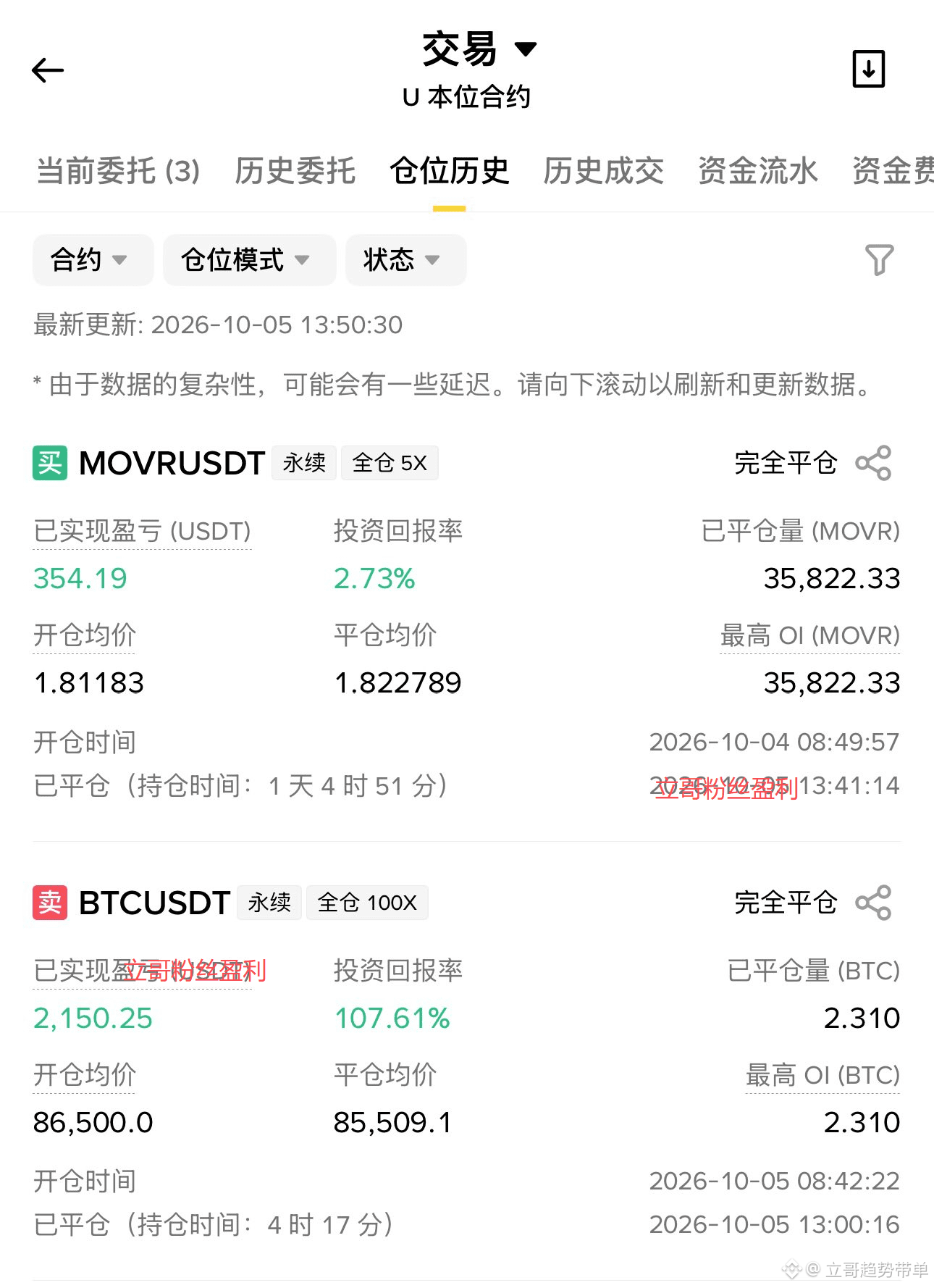
If you have less than 3,000 U in capital and go all in on BTC as soon as you enter the market, chances are you won’t last long.
It’s not that Bitcoin is bad—it’s just not suited to trading this way at your current stage. If you put a few hundred U into BTC, a 1% rise earns you a few U, and a 1% drop loses you a few U. The price swings are too small to make much difference to you. You won’t be able to build up profits that way, and you’re more likely to lose patience. You can watch the charts all day while BTC moves within a 1% range, and your small amount of capital will barely feel it.
Patience is exactly what small traders have the least of. Once you start thinking, “This is too slow,” you’ll get itchy fingers and start making random moves—often losing more than you would by doing nothing.
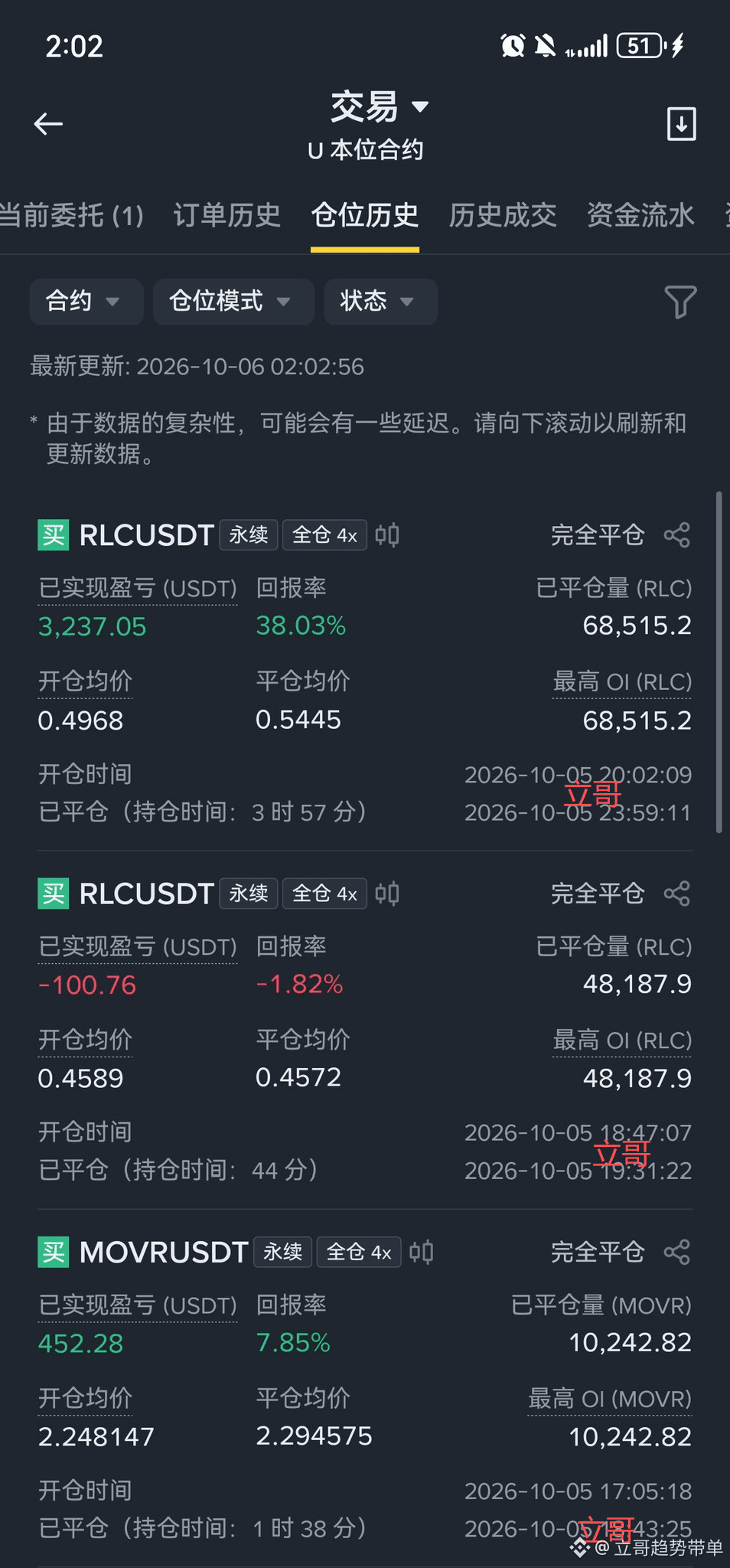
What really suits small accounts isn’t stubbornly fighting BTC. It’s finding coins with moderate volatility and good liquidity, then trading the swings. With a small amount of capital, you have more flexibility. Your goal should be to find profits in volatility, not waste time waiting in a stable market.
BTC is suited to holding as a core position with large amounts of capital. Small accounts need volatility to grow.
But volatility doesn’t mean gambling.
Choose assets with volume, clear price structure, and a sound rationale—not some random altcoin being pumped. With a high-volume coin, you can get in and out without being trapped by poor liquidity. A coin with clear structure lets you identify a stop-loss level, instead of moving erratically and making risk management impossible. And when there’s a sound rationale behind a coin, you can hold your position without panicking over every one- or two-point move.
When trading with a small account, first be clear about your advantage: flexibility.
You can exit at any time and adjust your position quickly. Large traders have to consider liquidity every time they enter or exit; you can close your position with one tap. Use your flexibility to pursue profits instead of gambling your capital on a direction.
That distinction matters. You make money through quick reactions and reading the market’s rhythm—not by pushing your account to the edge of a cliff and betting that the price won’t fall.
You may think a few thousand U is too little and that it would take forever to build profits with BTC. But look at it the other way: there’s no need to keep grinding away at BTC. Your goal isn’t to find the “safest” asset; it’s to find the one that best fits the size of your account right now. With a small account, look for opportunities you can actually take advantage of, rather than competing with the big players for a slice of the pie.
If you’re still stubbornly holding on with BTC, come talk to me. I’ll tell you how small accounts can trade more effectively.
It’s not that Bitcoin is bad—it’s just not suited to trading this way at your current stage. If you put a few hundred U into BTC, a 1% rise earns you a few U, and a 1% drop loses you a few U. The price swings are too small to make much difference to you. You won’t be able to build up profits that way, and you’re more likely to lose patience. You can watch the charts all day while BTC moves within a 1% range, and your small amount of capital will barely feel it.
Patience is exactly what small traders have the least of. Once you start thinking, “This is too slow,” you’ll get itchy fingers and start making random moves—often losing more than you would by doing nothing.
What really suits small accounts isn’t stubbornly fighting BTC. It’s finding coins with moderate volatility and good liquidity, then trading the swings. With a small amount of capital, you have more flexibility. Your goal should be to find profits in volatility, not waste time waiting in a stable market.
BTC is suited to holding as a core position with large amounts of capital. Small accounts need volatility to grow.
But volatility doesn’t mean gambling.
Choose assets with volume, clear price structure, and a sound rationale—not some random altcoin being pumped. With a high-volume coin, you can get in and out without being trapped by poor liquidity. A coin with clear structure lets you identify a stop-loss level, instead of moving erratically and making risk management impossible. And when there’s a sound rationale behind a coin, you can hold your position without panicking over every one- or two-point move.
When trading with a small account, first be clear about your advantage: flexibility.
You can exit at any time and adjust your position quickly. Large traders have to consider liquidity every time they enter or exit; you can close your position with one tap. Use your flexibility to pursue profits instead of gambling your capital on a direction.
That distinction matters. You make money through quick reactions and reading the market’s rhythm—not by pushing your account to the edge of a cliff and betting that the price won’t fall.
You may think a few thousand U is too little and that it would take forever to build profits with BTC. But look at it the other way: there’s no need to keep grinding away at BTC. Your goal isn’t to find the “safest” asset; it’s to find the one that best fits the size of your account right now. With a small account, look for opportunities you can actually take advantage of, rather than competing with the big players for a slice of the pie.
If you’re still stubbornly holding on with BTC, come talk to me. I’ll tell you how small accounts can trade more effectively.