【CJ Advanced Series, Part 04/30 · No. 32 Overall】
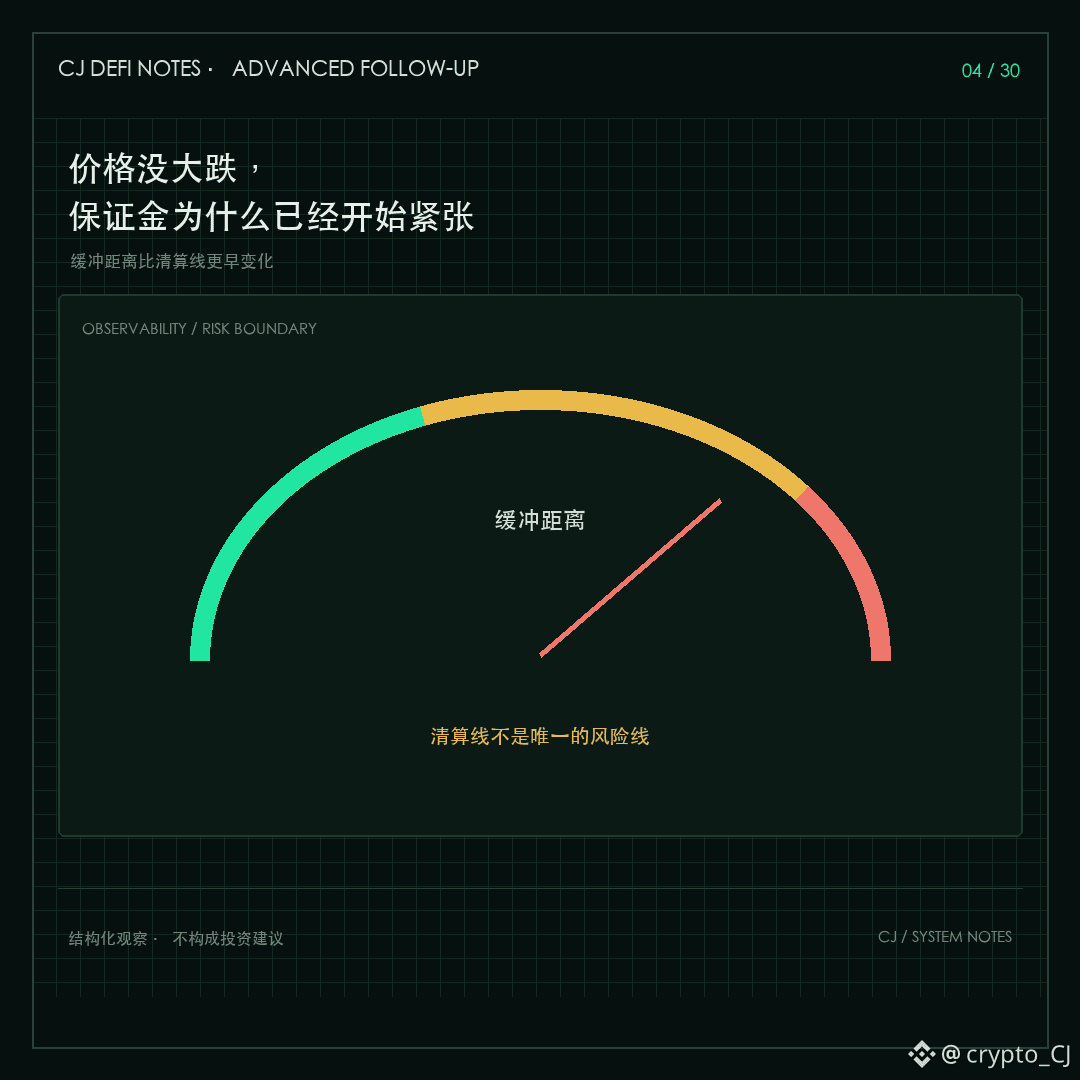
The liquidation threshold hasn’t been reached yet, but that doesn’t mean risk isn’t getting closer. What many positions lose first is their buffer.
A portfolio that appears directionally neutral may face several sources of pressure at once: collateral haircuts, a widening basis between hedging legs, rising borrowing rates, withdrawal restrictions on a platform, or multiple strategies needing to use margin at the same time. Prices may not move dramatically, yet available balances can be slowly squeezed.
That’s why “how far away is liquidation?” is not a complete risk management metric. You also need to know how much liquidity is required to exit normally, which leg is likely to lose depth first, and whether you can reduce your positions if a platform is delayed.
It’s especially important to distinguish book equity from margin available right now. Even if profits and losses roughly offset across different platforms, profits may not be transferred in time to the side that needs a bigger buffer. The overall books may look balanced while an individual account is already under pressure—that’s an easy-to-miss aspect of portfolio risk.
A truly useful stress test doesn’t just move prices down by a set amount. It combines price, liquidity, interest rates, and platform availability in a worst-case scenario. A safety buffer isn’t a percentage on your screen; it’s whether you still have options when things go wrong.
Next: One-to-many increases capital efficiency, but also increases correlation risk.
#保证金 #DeFiRiskManagement
The liquidation threshold hasn’t been reached yet, but that doesn’t mean risk isn’t getting closer. What many positions lose first is their buffer.
A portfolio that appears directionally neutral may face several sources of pressure at once: collateral haircuts, a widening basis between hedging legs, rising borrowing rates, withdrawal restrictions on a platform, or multiple strategies needing to use margin at the same time. Prices may not move dramatically, yet available balances can be slowly squeezed.
That’s why “how far away is liquidation?” is not a complete risk management metric. You also need to know how much liquidity is required to exit normally, which leg is likely to lose depth first, and whether you can reduce your positions if a platform is delayed.
It’s especially important to distinguish book equity from margin available right now. Even if profits and losses roughly offset across different platforms, profits may not be transferred in time to the side that needs a bigger buffer. The overall books may look balanced while an individual account is already under pressure—that’s an easy-to-miss aspect of portfolio risk.
A truly useful stress test doesn’t just move prices down by a set amount. It combines price, liquidity, interest rates, and platform availability in a worst-case scenario. A safety buffer isn’t a percentage on your screen; it’s whether you still have options when things go wrong.
Next: One-to-many increases capital efficiency, but also increases correlation risk.
#保证金 #DeFiRiskManagement