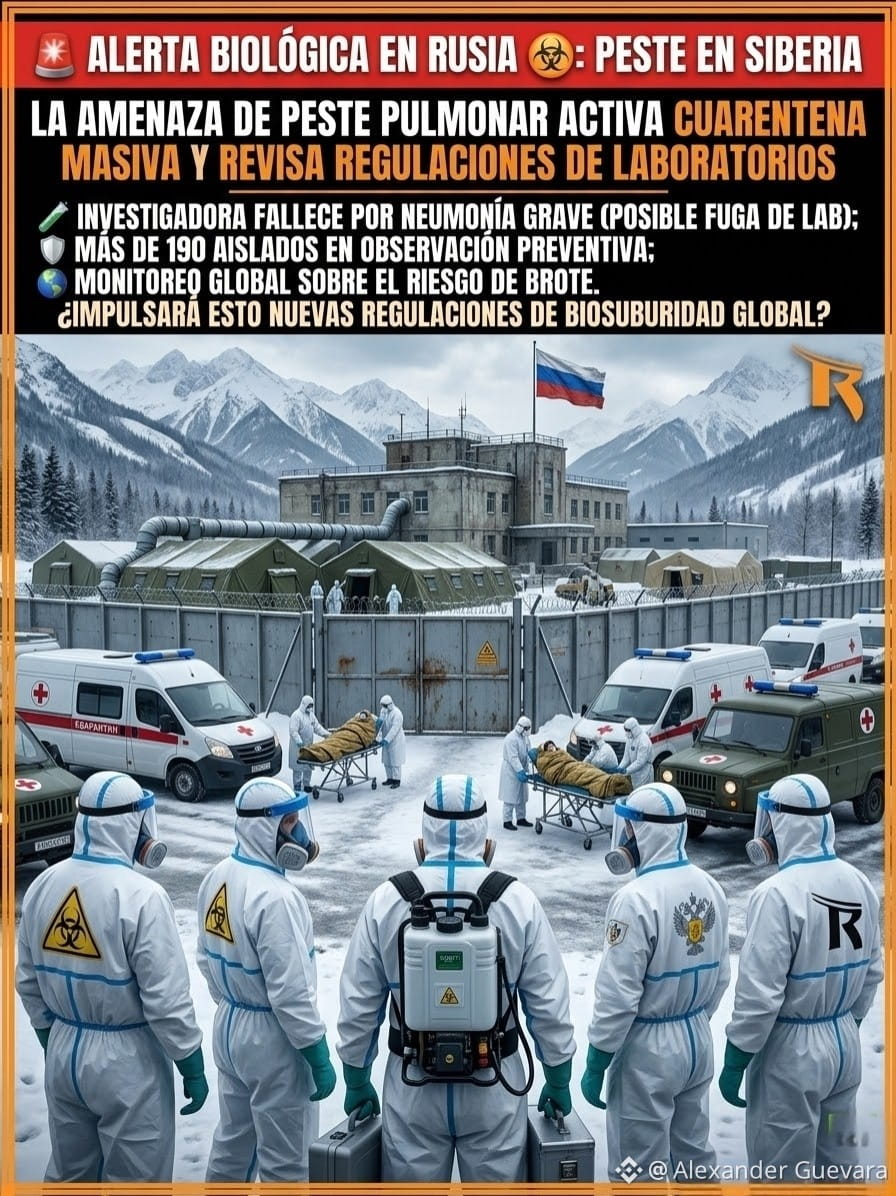
This incident in Irkutsk once again highlights the risks associated with high-containment biological laboratories and biosafety protocols.
The initial lack of transparency surrounding events of this kind often reignites international debate about the need for stricter oversight in the handling of high-risk pathogens.
Biosafety tensions in Siberia:
Is it time to regulate laboratories globally?
The recent death of a researcher in the Siberian region of Irkutsk after she developed severe pneumonia symptoms has triggered health alerts and drawn the attention of the international community.
While the Kremlin is urging calm and referring exclusively to official information from Rospotrebnadzor—dismissing warnings about pneumonic plague—more than 190 people remain in preventive isolation, and several healthcare facilities are operating under strict access restrictions.
The fact that the patient worked at the Plague Research Institute raises immediate questions about the risks of working with highly dangerous pathogens and the containment mechanisms in place in the event of potential leaks or laboratory accidents.
Events of this nature show that biological incidents know no borders. Strengthening international biosafety frameworks, auditing pathogen-handling protocols, and ensuring transparency between nations are not merely regulatory options, but fundamental requirements for preventing future emergencies with global reach.
#virus病毒 #Rusia #russia #BiologyNews #BinanceSquareFamily $BTC
The initial lack of transparency surrounding events of this kind often reignites international debate about the need for stricter oversight in the handling of high-risk pathogens.
Biosafety tensions in Siberia:
Is it time to regulate laboratories globally?
The recent death of a researcher in the Siberian region of Irkutsk after she developed severe pneumonia symptoms has triggered health alerts and drawn the attention of the international community.
While the Kremlin is urging calm and referring exclusively to official information from Rospotrebnadzor—dismissing warnings about pneumonic plague—more than 190 people remain in preventive isolation, and several healthcare facilities are operating under strict access restrictions.
The fact that the patient worked at the Plague Research Institute raises immediate questions about the risks of working with highly dangerous pathogens and the containment mechanisms in place in the event of potential leaks or laboratory accidents.
Events of this nature show that biological incidents know no borders. Strengthening international biosafety frameworks, auditing pathogen-handling protocols, and ensuring transparency between nations are not merely regulatory options, but fundamental requirements for preventing future emergencies with global reach.
#virus病毒 #Rusia #russia #BiologyNews #BinanceSquareFamily $BTC