‼️ $XAU : HOW TO SPOT & USE A RESISTANCE REJECTION
Price reaches resistance… but instead of breaking through, sellers push it back down.
That’s a Resistance Rejection—and it can give traders an important clue about where selling pressure is entering the market.
A Resistance Rejection happens when price tests a resistance area but struggles to move above it.
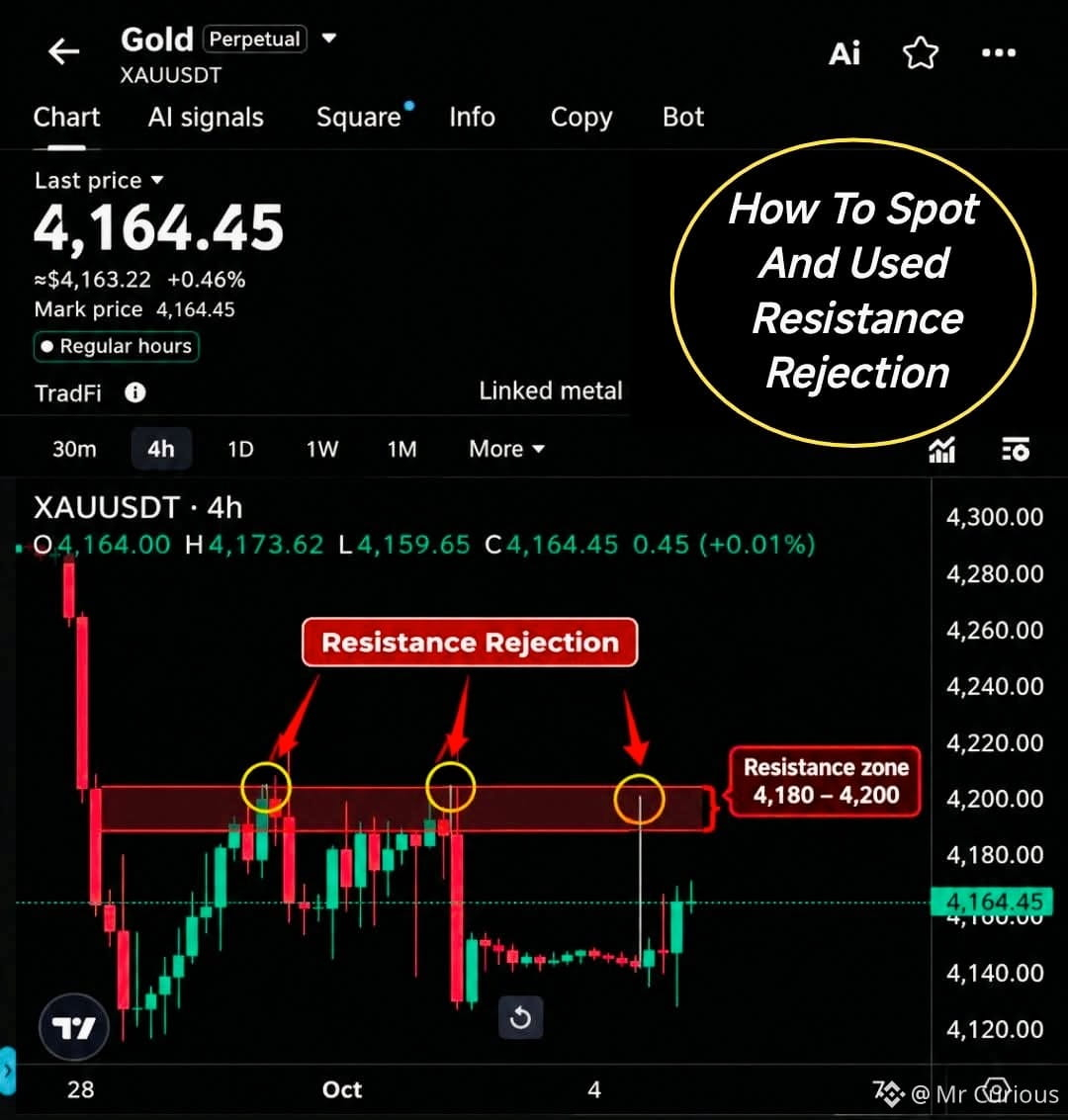
On the $XAU /USDT 4H chart, price repeatedly approached the 4,180–4,200 zone, leaving upper wicks and failing to sustain trading above the area.
The rejection becomes more noticeable when price moves away from resistance with stronger bearish candles.
What does it represent?
It represents seller response at a level where buyers are struggling to push price higher. However, a rejection is not automatically a sell signal—it needs confirmation.
🎯 When you spot resistance rejection:
1. Mark the resistance zone, not just one exact price.
2. Watch for upper wicks or failed breakouts.
3. Look for bearish confirmation after the rejection.
4. Avoid entering solely because of one wick.
5. Manage risk and wait for your trading setup to confirm.
The key idea is simple:
Resistance rejection = price tried to go higher, but selling pressure pushed it back.
💬 QUESTION
If you saw this rejection at 4,180–4,200, would you wait for bearish confirmation before entering a trade, or would you stay out and wait for a confirmed breakout? 👇
$XAUT
Price reaches resistance… but instead of breaking through, sellers push it back down.
That’s a Resistance Rejection—and it can give traders an important clue about where selling pressure is entering the market.
A Resistance Rejection happens when price tests a resistance area but struggles to move above it.
On the $XAU /USDT 4H chart, price repeatedly approached the 4,180–4,200 zone, leaving upper wicks and failing to sustain trading above the area.
The rejection becomes more noticeable when price moves away from resistance with stronger bearish candles.
What does it represent?
It represents seller response at a level where buyers are struggling to push price higher. However, a rejection is not automatically a sell signal—it needs confirmation.
🎯 When you spot resistance rejection:
1. Mark the resistance zone, not just one exact price.
2. Watch for upper wicks or failed breakouts.
3. Look for bearish confirmation after the rejection.
4. Avoid entering solely because of one wick.
5. Manage risk and wait for your trading setup to confirm.
The key idea is simple:
Resistance rejection = price tried to go higher, but selling pressure pushed it back.
💬 QUESTION
If you saw this rejection at 4,180–4,200, would you wait for bearish confirmation before entering a trade, or would you stay out and wait for a confirmed breakout? 👇
$XAUT