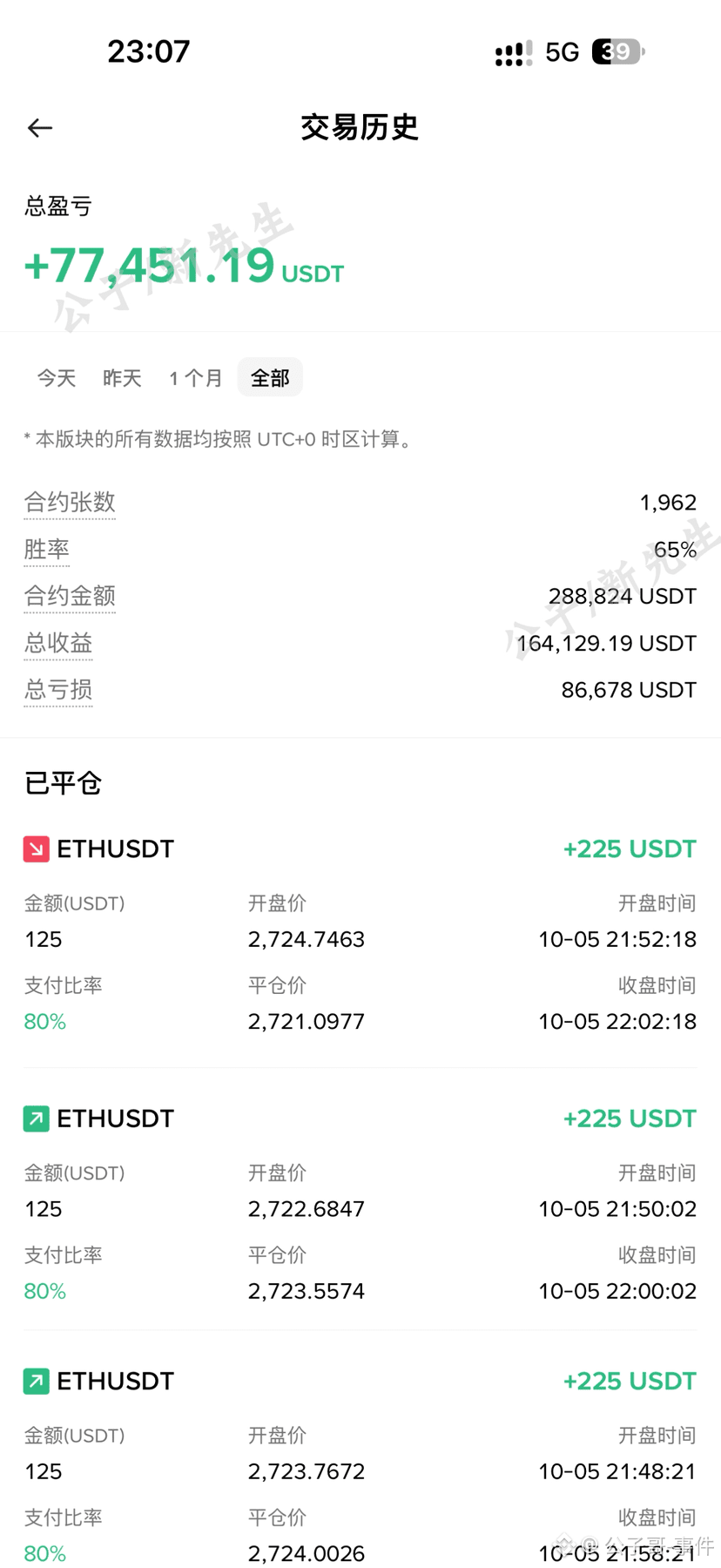
When you're trading in the wrong direction, the more frequently you trade, the faster you lose. When you're on the right side, only time can gradually turn into profit.
The same goes for event contracts. Short-term gains come from volatility, but lasting consistency comes down to probability and execution. The market never lacks opportunities; what it lacks are people who can wait for them and then follow their strategy strictly.
Many people get impatient and open trades recklessly before a move even begins. After a few losses in a row, they rush to place more trades to make up for them. Then, when the move finally starts, they begin to doubt themselves. By the time the trend becomes clear, they’re willing to chase it. In the end, they don’t lose to the market—they lose to their own emotions.
What really wears you down isn’t one or two sharp rises or falls, but the long wait. The market spends most of its time testing your patience, while the truly profitable opportunities tend to appear only in brief moments.
That’s why I’ve come to prefer letting AI-driven quantitative trading handle execution. It won’t open a trade before the set price is reached, add to a position just because of a winning streak, or rush to recover losses after a losing streak.
The greatest value of AI-driven quantitative trading isn’t predicting every move up or down. It’s helping you filter out low-quality opportunities and stick to your strategy.
In the end, trading isn’t about who can guess every trade correctly. It’s about who can manage their position size, stay patient, and act decisively when the right opportunity appears.
Direction, probability, discipline, and execution will always matter more than predicting the next candlestick. #事件合约 #AI量化 .
The same goes for event contracts. Short-term gains come from volatility, but lasting consistency comes down to probability and execution. The market never lacks opportunities; what it lacks are people who can wait for them and then follow their strategy strictly.
Many people get impatient and open trades recklessly before a move even begins. After a few losses in a row, they rush to place more trades to make up for them. Then, when the move finally starts, they begin to doubt themselves. By the time the trend becomes clear, they’re willing to chase it. In the end, they don’t lose to the market—they lose to their own emotions.
What really wears you down isn’t one or two sharp rises or falls, but the long wait. The market spends most of its time testing your patience, while the truly profitable opportunities tend to appear only in brief moments.
That’s why I’ve come to prefer letting AI-driven quantitative trading handle execution. It won’t open a trade before the set price is reached, add to a position just because of a winning streak, or rush to recover losses after a losing streak.
The greatest value of AI-driven quantitative trading isn’t predicting every move up or down. It’s helping you filter out low-quality opportunities and stick to your strategy.
In the end, trading isn’t about who can guess every trade correctly. It’s about who can manage their position size, stay patient, and act decisively when the right opportunity appears.
Direction, probability, discipline, and execution will always matter more than predicting the next candlestick. #事件合约 #AI量化 .