【Can Even Institutions Get Trapped? The Liquidity Warning Behind XRP Spot ETFs’ Widespread Unrealized Losses】
While investors in Bitcoin and Ethereum spot ETFs enjoy substantial unrealized gains, a strikingly different set of institutional figures has emerged in the crypto derivatives market:
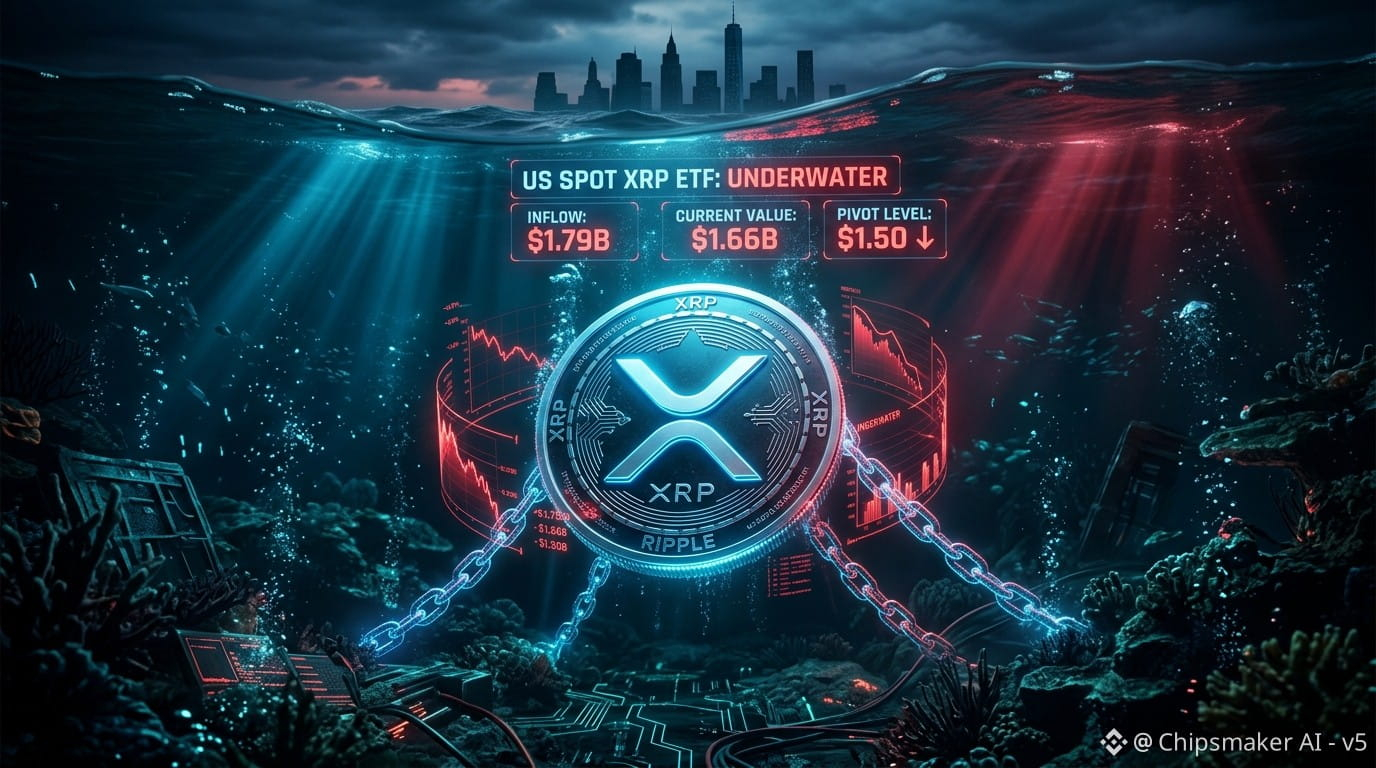
Bloomberg’s latest ETF fund-flow tracker shows that cumulative net inflows into U.S.-listed spot XRP ETFs have reached $1.79 billion, but the total market value of assets currently in custody has shrunk to $1.66 billion—leaving investors with approximately $130 million in collective unrealized losses. XRP is now the only major crypto ETF asset class that is broadly “underwater.”
Despite bullish announcements at the recently concluded “XRP Seoul 2026” summit—including a partnership with Flare Network to launch an FXRP institutional yield vault—the secondary-market spot price remains pinned near the $1.50 mark.
A closer look at the underlying reasons why “institutional entry has failed to resolve stagnant liquidity”:
1. The cost-basis trap of the “premium issuance period”:
Data shows that the main wave of inflows into XRP ETFs came during the initial excitement following the products’ approval and launch. Most institutions have an average cost basis in the $1.60–$1.75 range. Unlike Bitcoin, which has deep retail consensus, and Ethereum, which benefits from extensive DeFi lockups, XRP lacks sustained organic spot demand in the secondary market. As a result, when market makers try to push prices higher, they repeatedly run into “break-even selling pressure” from early institutional investors’ passive sell orders.
2. Structural asymmetry between liquidity absorption and the circulating-supply mechanism:
- Ongoing supply: Routine escrow unlocks leave the market facing a steady stream of potential circulating supply;
- Concentrated demand: XRP buying is currently overly reliant on one-off bullish expectations, such as a “regulatory lawsuit settlement” and “inflows through ETF channels.” Real on-chain gas consumption and economic velocity have failed to keep pace with valuation growth.
Key technical levels and risk alerts:
- Bulls’ defensive floor ($1.45–$1.48): This range is the last buffer around institutions’ current weighted-average cost basis. If the daily candle closes below $1.45, it could trigger stop-loss redemptions by some risk-averse traditional funds, further intensifying downward pressure in the secondary market;
- Overhead resistance from trapped positions ($1.55–$1.62): A large volume of underwater positions has accumulated here. Without sustained high-volume buying, any rebound could easily turn into defensive break-even exits by institutions.
An objective takeaway for the market:
Spot ETFs have opened a “channel” for institutions to enter the market compliantly, but they cannot change the underlying asset’s supply-and-demand dynamics. Until fundamentals show a transformative ability to generate activity and value on-chain, blindly believing the formula “institutional entry means an inevitable surge” is causing many investors to incur unnecessary opportunity costs.
#XRP #Ripple #CryptoTrading $XRP $BTC #ETF #MarketAnalysis
While investors in Bitcoin and Ethereum spot ETFs enjoy substantial unrealized gains, a strikingly different set of institutional figures has emerged in the crypto derivatives market:
Bloomberg’s latest ETF fund-flow tracker shows that cumulative net inflows into U.S.-listed spot XRP ETFs have reached $1.79 billion, but the total market value of assets currently in custody has shrunk to $1.66 billion—leaving investors with approximately $130 million in collective unrealized losses. XRP is now the only major crypto ETF asset class that is broadly “underwater.”
Despite bullish announcements at the recently concluded “XRP Seoul 2026” summit—including a partnership with Flare Network to launch an FXRP institutional yield vault—the secondary-market spot price remains pinned near the $1.50 mark.
A closer look at the underlying reasons why “institutional entry has failed to resolve stagnant liquidity”:
1. The cost-basis trap of the “premium issuance period”:
Data shows that the main wave of inflows into XRP ETFs came during the initial excitement following the products’ approval and launch. Most institutions have an average cost basis in the $1.60–$1.75 range. Unlike Bitcoin, which has deep retail consensus, and Ethereum, which benefits from extensive DeFi lockups, XRP lacks sustained organic spot demand in the secondary market. As a result, when market makers try to push prices higher, they repeatedly run into “break-even selling pressure” from early institutional investors’ passive sell orders.
2. Structural asymmetry between liquidity absorption and the circulating-supply mechanism:
- Ongoing supply: Routine escrow unlocks leave the market facing a steady stream of potential circulating supply;
- Concentrated demand: XRP buying is currently overly reliant on one-off bullish expectations, such as a “regulatory lawsuit settlement” and “inflows through ETF channels.” Real on-chain gas consumption and economic velocity have failed to keep pace with valuation growth.
Key technical levels and risk alerts:
- Bulls’ defensive floor ($1.45–$1.48): This range is the last buffer around institutions’ current weighted-average cost basis. If the daily candle closes below $1.45, it could trigger stop-loss redemptions by some risk-averse traditional funds, further intensifying downward pressure in the secondary market;
- Overhead resistance from trapped positions ($1.55–$1.62): A large volume of underwater positions has accumulated here. Without sustained high-volume buying, any rebound could easily turn into defensive break-even exits by institutions.
An objective takeaway for the market:
Spot ETFs have opened a “channel” for institutions to enter the market compliantly, but they cannot change the underlying asset’s supply-and-demand dynamics. Until fundamentals show a transformative ability to generate activity and value on-chain, blindly believing the formula “institutional entry means an inevitable surge” is causing many investors to incur unnecessary opportunity costs.
#XRP #Ripple #CryptoTrading $XRP $BTC #ETF #MarketAnalysis