


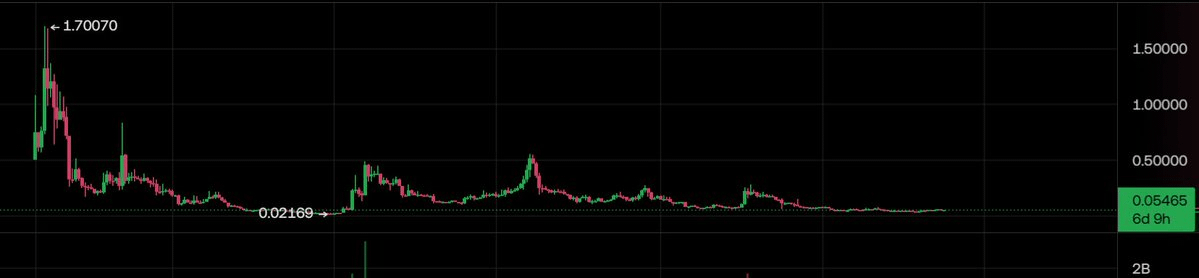
The technology was developed by the team led by Turing Award laureate and academician Yao Qizhi. It is positioned as the only compliant, permissionless public blockchain in mainland China, with Hong Kong serving as a gateway to Web3. On paper, Tree-Graph Conflux and CFX seem like the obvious choice among China’s homegrown public blockchains. But the price tells a different story: it’s currently just over five cents, with a market cap of under $300 million. It’s down about 64% over the past year and 96% from its 2021 all-time high of $1.7.
The technology is on fire; the token price is flat.
1. Technology: A flurry of upgrades, with v3.1.0 as the year’s major highlight
The v3.0 Tree-Graph upgrade is fully rolled out: TPS has increased to 15,000, with native support for on-chain AI agents.
April 9: v3.0.3 node upgrade activated CIP-166’s new opcodes (bringing them in line with Ethereum standards) and fixed seven critical node bugs
PoW block reward halving completed this year: improved issuance sustainability, with miner revenue becoming more sensitive
August 25: v3.1.0 hard fork activated (the most important upgrade of the year). Seven CIPs went live at once, significantly improving eSpace’s EVM compatibility and adding Passkey fingerprint/face authentication—wallets can now authorize transactions like logging into an app, without relying on seed phrases. Also includes a private security patch; details were disclosed only after activation to prevent front-running and exploitation.
2. Ecosystem: shifting from DeFi to real-world payments (PayFi)
July: USDT0 surpassed $10 million on eSpace; new partners, including Infini, joined;
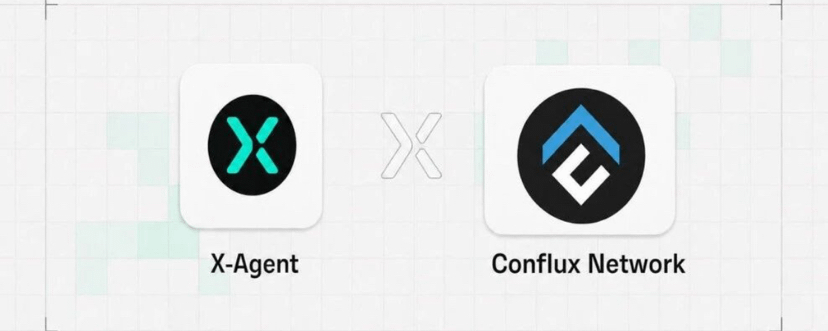
August: partnered with X-Agent to explore AI agent-powered on-chain applications; co-founder Yuanjie Zhang discussed compliant RWA infrastructure; Hong Kong-based Linquilty launched its first film RWA project;
Q3: Infini Earn integration (up to 8% APY on USDT/USDC) and Infini Card expansion, enabling direct stablecoin spending and CFX fee payments;
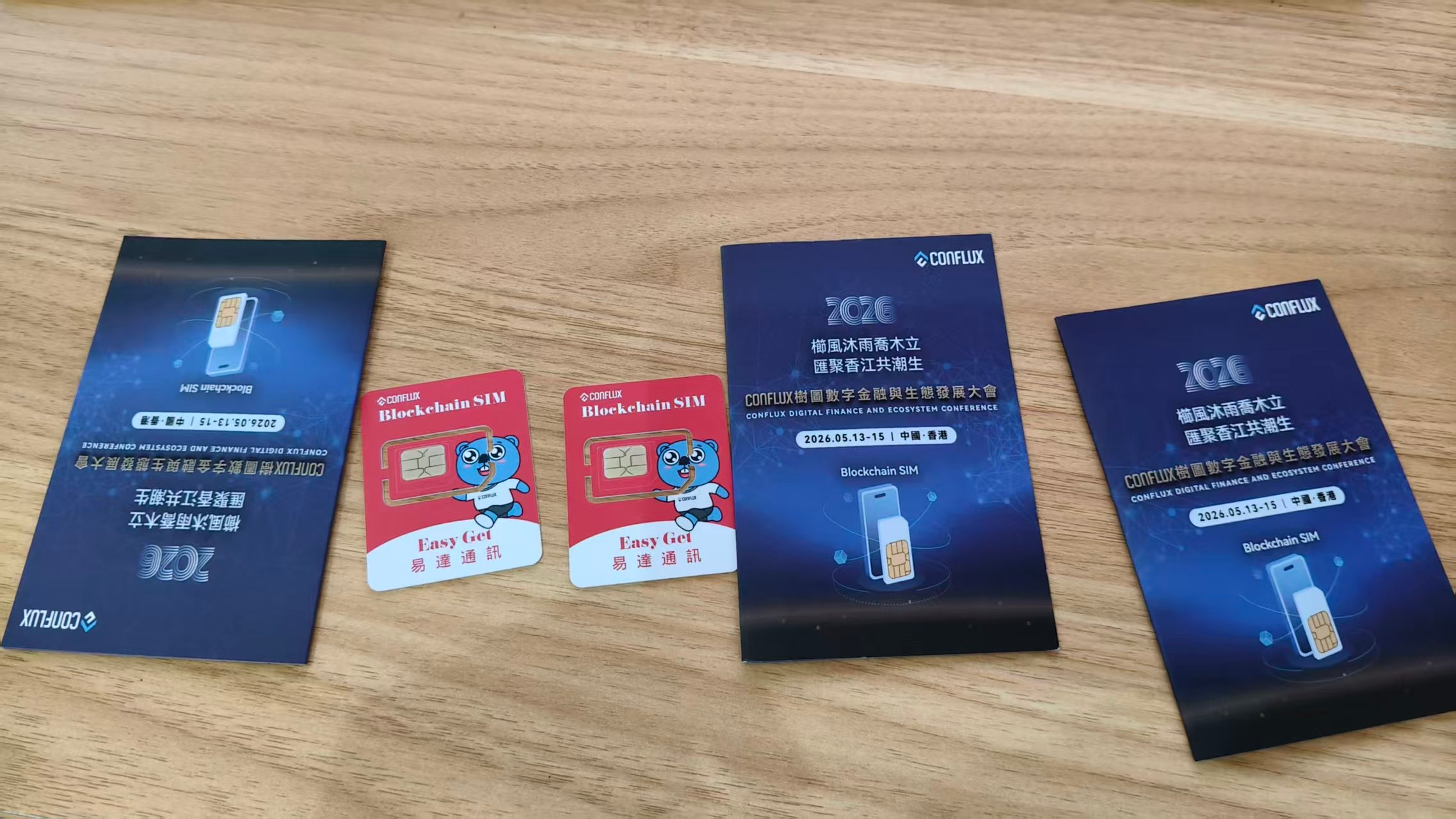
Ongoing progress: BSIM blockchain SIM cards × China Telecom are now live in Hunan, offering phone numbers and quantum-secure encryption; carbon data × China Telecom and Onewo, with over 560,000 verifiable on-chain records; cross-border offshore RMB payment tests have been conducted in real-world settings by Zoomlion and LongShine International.
3. Capital and markets: two milestones yet to be realized
Q4 plan: Fireblocks institutional custody integration—connecting institutions and funds to secure custody services; one of the most anticipated real-world deployments this year;
Q4 plan: Advance the AxCNH offshore RMB stablecoin under Hong Kong’s regulatory framework—Conflux’s biggest and most distinctive narrative;
Note: Upbit deposits and withdrawals are now restricted to the eSpace network (recovering Core Space deposits may require a lengthy manual process). The listing was also delayed at one point, weighing on short-term sentiment.

4. The cold, hard data: the other side of the impressive specs
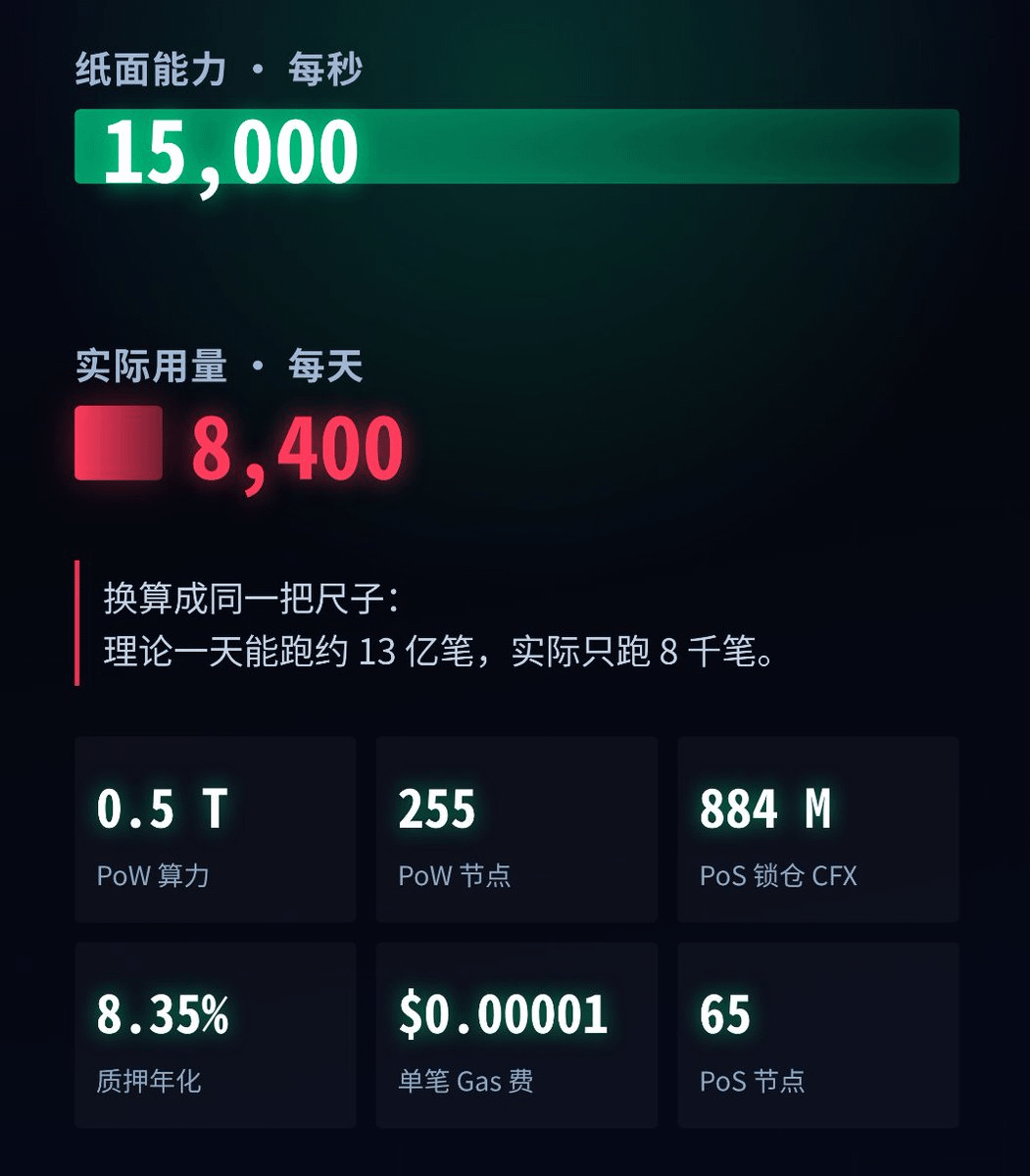
On-chain snapshot (August 2026): around 8,300 daily transactions, gas fees < $0.00001, 884 million CFX locked in PoS, and a theoretical annualized yield of 8.35%. 15,000 TPS alongside just 8,000 daily transactions—the gap is Conflux’s most tangible weakness.
5. Risk checklist
🔴 Token price continues to underperform the broader market (−64% over the past year, −96% from ATH);
🔴 Highly concentrated holdings: the top five addresses hold nearly 60% of the circulating supply;
🟡 No hard cap + ongoing issuance through both PoW and PoS, leading to long-term dilution;
🟡 Highly dependent on policies in China and Hong Kong; domestic virtual currency trading and speculation are not protected by law;
🟡 Ecosystem adoption is slow, with most partnerships still in pilot stages; the narrative is heavily tied to AxCNH;
🟢 Average daily trading volume is only a few million dollars, with thin liquidity; large trades can cause sharp volatility.