#drift黑客受害者启动索赔
👉 索赔进度怎么看,币安聊天室跟进
Drift’s claims portal is now open.
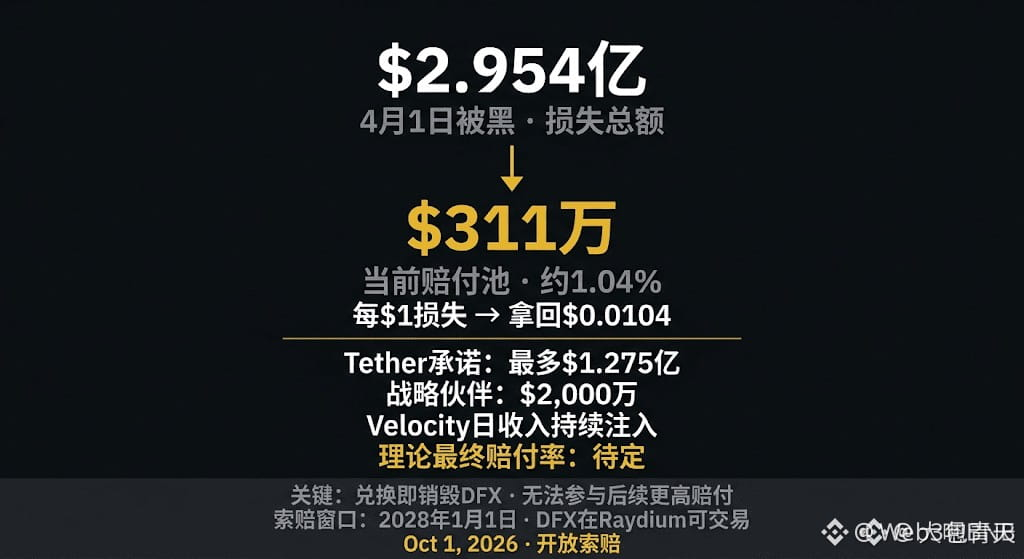
The April hack caused $295.4 million in losses.
Victims can now claim DFX.
That works out to about 1 cent recovered for every dollar lost.
There’s currently $3.11 million in the compensation pool.
Converted to DFX, that’s about 299.5 million tokens.
The initial recovery rate is only about 1%.
That figure stings.
But it’s not the end—it’s the starting point.
Every dollar added to the pool going forward will raise that rate.
More funds are still coming in.
Tether has pledged up to $127.5 million.
Strategic partners are contributing another $20 million.
Revenue from the restructured protocol will also continue to flow in.
Recovered assets will go into the pool too.
If all of these funds come through, the recovery rate could rise.
Until then, what you hold is more like a call option.
In crypto, how a project handles the aftermath says more about the industry’s maturity than the incident itself.
The recovery rate is a measure of trust.
How much you actually get back depends on the funds recovered.
Do you think this 1% is just the beginning? Let’s discuss in the comments.
👉 索赔进度怎么看,币安聊天室跟进
Drift’s claims portal is now open.
The April hack caused $295.4 million in losses.
Victims can now claim DFX.
That works out to about 1 cent recovered for every dollar lost.
There’s currently $3.11 million in the compensation pool.
Converted to DFX, that’s about 299.5 million tokens.
The initial recovery rate is only about 1%.
That figure stings.
But it’s not the end—it’s the starting point.
Every dollar added to the pool going forward will raise that rate.
More funds are still coming in.
Tether has pledged up to $127.5 million.
Strategic partners are contributing another $20 million.
Revenue from the restructured protocol will also continue to flow in.
Recovered assets will go into the pool too.
If all of these funds come through, the recovery rate could rise.
Until then, what you hold is more like a call option.
In crypto, how a project handles the aftermath says more about the industry’s maturity than the incident itself.
The recovery rate is a measure of trust.
How much you actually get back depends on the funds recovered.
Do you think this 1% is just the beginning? Let’s discuss in the comments.