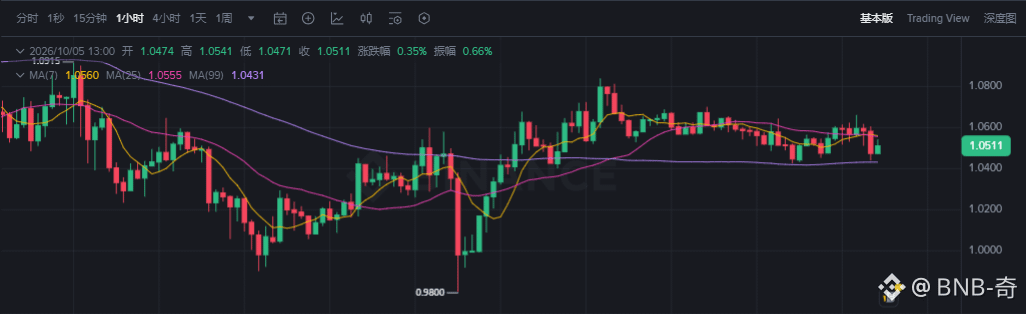
$FIL Current price is around 1.05; the short-term technical outlook is weak. However, the pricing power is not currently on either the long or short side. MA5 has already crossed below MA20 to form a dead cross. The MACD histogram is still below the zero line, and the RSI is hovering around 49.7 in the neutral zone.
What really matters is not today’s candlestick, but the changes in the supply structure on October 15. On that day, the six-year vesting period between Protocol Labs and the Filecoin Foundation ended.
Previously, these two parts released approximately 66.7 million FIL into the market each year. Combined with storage provider block rewards of about 21.7 million FIL, the total annual new supply was roughly 88.4 million FIL.
After the vesting ends, the primary new source is basically only block rewards—about 22 million FIL per year, a drop of around 75%. This is the largest supply contraction since the mainnet went live.
The key is to separate three things logically:
First, what stops on October 15 is “new inflows,” not “existing supply being destroyed.” Therefore, the circulating supply on that day will not decrease as a result.
Second, slowing supply growth does not automatically mean the price will rise immediately; the impact depends on whether the market gradually absorbs the lower release pace over the following months.
Third, net supply ultimately depends on burn and the amount of tokens locked as collateral. The end of vesting only determines total issuance; it does not, by itself, determine deflation.
For the medium term, the question is whether the supply slowdown can translate into changes in the holding structure over the next few months—rather than treating a single date as a necessary condition for a price increase.
$FIL
What really matters is not today’s candlestick, but the changes in the supply structure on October 15. On that day, the six-year vesting period between Protocol Labs and the Filecoin Foundation ended.
Previously, these two parts released approximately 66.7 million FIL into the market each year. Combined with storage provider block rewards of about 21.7 million FIL, the total annual new supply was roughly 88.4 million FIL.
After the vesting ends, the primary new source is basically only block rewards—about 22 million FIL per year, a drop of around 75%. This is the largest supply contraction since the mainnet went live.
The key is to separate three things logically:
First, what stops on October 15 is “new inflows,” not “existing supply being destroyed.” Therefore, the circulating supply on that day will not decrease as a result.
Second, slowing supply growth does not automatically mean the price will rise immediately; the impact depends on whether the market gradually absorbs the lower release pace over the following months.
Third, net supply ultimately depends on burn and the amount of tokens locked as collateral. The end of vesting only determines total issuance; it does not, by itself, determine deflation.
For the medium term, the question is whether the supply slowdown can translate into changes in the holding structure over the next few months—rather than treating a single date as a necessary condition for a price increase.
$FIL