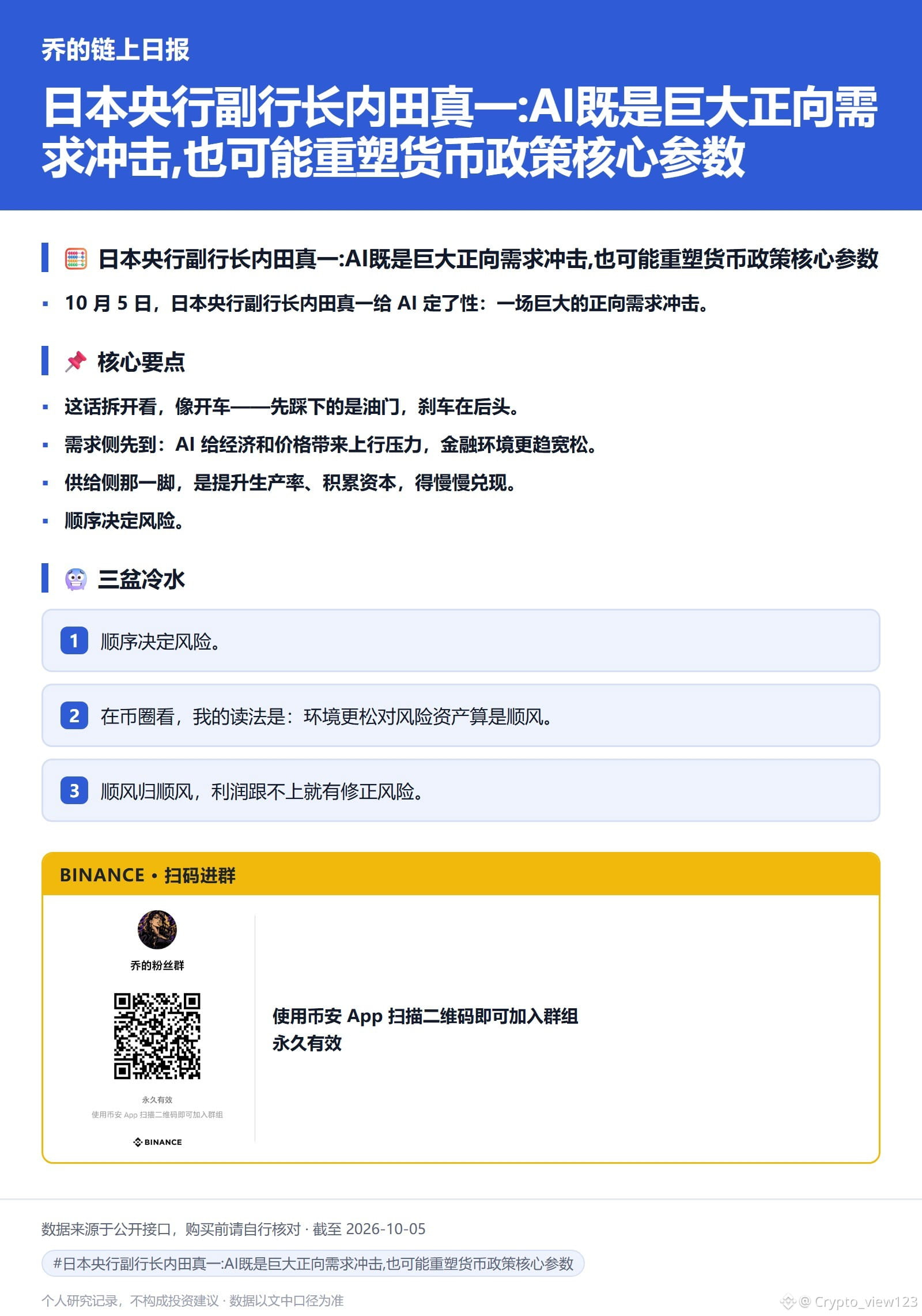
On October 5, Japan’s central bank vice governor Shinichi Uchida characterized AI as: “A massive positive demand shock.” If you break that statement down, it’s like driving—what you step on first is the accelerator, while the brakes come later.
The demand side arrives first: AI brings upward pressure to the economy and prices, and financial conditions become even more accommodative. On the supply side, the other “push” is to raise productivity and accumulate capital, and that takes time to be realized.
Sequence determines risk. If demand shows up first and you hit the accelerator first, and corporate profits can’t keep up, the market often looks like a rally topping out—prices surge but volume fails to follow.
In crypto markets, my interpretation is: a looser environment is generally a tailwind for risk assets. Tailwinds aside, if profits don’t keep up, there is still a risk of correction.
Once corporate profits can’t keep up, this demand-side wave becomes invalid.
#Fed probability of rate hikes in October drops to 17%
The demand side arrives first: AI brings upward pressure to the economy and prices, and financial conditions become even more accommodative. On the supply side, the other “push” is to raise productivity and accumulate capital, and that takes time to be realized.
Sequence determines risk. If demand shows up first and you hit the accelerator first, and corporate profits can’t keep up, the market often looks like a rally topping out—prices surge but volume fails to follow.
In crypto markets, my interpretation is: a looser environment is generally a tailwind for risk assets. Tailwinds aside, if profits don’t keep up, there is still a risk of correction.
Once corporate profits can’t keep up, this demand-side wave becomes invalid.
#Fed probability of rate hikes in October drops to 17%