

易琳Ten
161 Posts

易琳Ten
交易是修行,盈利是结果,纪律是信仰。🐺📈
66 Following
23.2K+ Followers
10.1K+ Liked
Posts
All
Quotes
Videos
PINNED

PINNED


Sara_ k
·
--
Top crypto narratives right now ▶️.
.
claim here 👈🧧🧧🧧🧧🧧
.
claim 2 👈🧧🧧🧧🧧🧧
.
.
claim here 👈🧧🧧🧧🧧🧧
.
claim 2 👈🧧🧧🧧🧧🧧
.


Leo - F0
·
--
Bullish🧧🧧🔥GOOD MORNING FROM DUBAİ, FAMİLY.🔥🧧🧧
I told you to buy $NEAR 💙 when it was at $1.5
As I told you before, $NEAR 💙 will be $20.💎
BTTC🔥🔥🧧🧧 $BTC
#1688家族family 💚 @周周1688 #DriftHackVictimsBeginClaims #EthereumValidatorExitQueueJumps392% #BitcoinRejectedAt$87K #xrp
I told you to buy $NEAR 💙 when it was at $1.5
As I told you before, $NEAR 💙 will be $20.💎
BTTC🔥🔥🧧🧧 $BTC
#1688家族family 💚 @周周1688 #DriftHackVictimsBeginClaims #EthereumValidatorExitQueueJumps392% #BitcoinRejectedAt$87K #xrp



Shaheen 69
·
--
Crypto moves fast, but there is no need to chase every candle.
I prefer waiting for confirmation, support, and a clear invalidation level.
Patience is part of trading.
$NIGHT $SAND $GALA
I prefer waiting for confirmation, support, and a clear invalidation level.
Patience is part of trading.
$NIGHT $SAND $GALA


Sofi紫藤
·
--
Red envelopes🧧🧧🧧🧧🧧 waiting for you to take
You can never truly understand a person until you put on his shoes and walk around in them, standing in his perspective. But when you’ve walked down his road, even passing by it makes you sad. — —《To Kill a Mockingbird》
#币安广场 #Sol
You can never truly understand a person until you put on his shoes and walk around in them, standing in his perspective. But when you’ve walked down his road, even passing by it makes you sad. — —《To Kill a Mockingbird》
#币安广场 #Sol


拔剑心茫然
·
--
Fans to 30,000—draw 10U rewards in the group. Friends, come join us!



圣克斯Lucky1688
·
--
🧧🎁🌹🧧🎁🌹
Regulatory and Policy Developments
The U.S. introduces a major digital asset tax bill (ADAPT Act)
On October 1, U.S. Senator Steve Daines officially introduced the 56-page “Act to Align Digital Assets and Tax Principles” (ADAPT Act). The bill aims to establish clear tax rules for stablecoin payments, network fees (gas fees), staking, and lending. It also proposes that digital assets used to pay network, transaction, or gas fees of $10 or less be exempt from recognizing gains or losses. In addition, it provides tax exemptions or simplified reporting for compliant purchases of goods and services using U.S. dollar stablecoins.
Market Trends and Institutional Updates
Macroeconomy and Market Performance
Entering October, the market is closely watching the U.S. September jobs report (non-farm payrolls), CPI data, and the Federal Reserve’s monetary policy direction. Although the crypto market has recently seen an inflow of funds and a quarterly rebound (such as Bitcoin recovering somewhat over the past quarter), analyses indicate that most mainstream assets still face pressure from macro high interest rates (e.g., U.S. Treasury yields remaining at relatively elevated levels) when viewed against their year-to-date trend. The market is overall searching for direction amid “fragmented repairs” and a shift toward compliance.
RWA tokenization platform listed
OpenWorld and VerifyMe have officially announced the completion of their business merger, forming a digital tokenization platform for real-world assets. They began trading on Nasdaq on October 1 under the code “OPNW,” advancing institutional-grade RWA tokenization.
Follow me and take Answer 1 to take away the $SOL 红包!
Regulatory and Policy Developments
The U.S. introduces a major digital asset tax bill (ADAPT Act)
On October 1, U.S. Senator Steve Daines officially introduced the 56-page “Act to Align Digital Assets and Tax Principles” (ADAPT Act). The bill aims to establish clear tax rules for stablecoin payments, network fees (gas fees), staking, and lending. It also proposes that digital assets used to pay network, transaction, or gas fees of $10 or less be exempt from recognizing gains or losses. In addition, it provides tax exemptions or simplified reporting for compliant purchases of goods and services using U.S. dollar stablecoins.
Market Trends and Institutional Updates
Macroeconomy and Market Performance
Entering October, the market is closely watching the U.S. September jobs report (non-farm payrolls), CPI data, and the Federal Reserve’s monetary policy direction. Although the crypto market has recently seen an inflow of funds and a quarterly rebound (such as Bitcoin recovering somewhat over the past quarter), analyses indicate that most mainstream assets still face pressure from macro high interest rates (e.g., U.S. Treasury yields remaining at relatively elevated levels) when viewed against their year-to-date trend. The market is overall searching for direction amid “fragmented repairs” and a shift toward compliance.
RWA tokenization platform listed
OpenWorld and VerifyMe have officially announced the completion of their business merger, forming a digital tokenization platform for real-world assets. They began trading on Nasdaq on October 1 under the code “OPNW,” advancing institutional-grade RWA tokenization.
Follow me and take Answer 1 to take away the $SOL 红包!


Sherry长得帅不如跑的快1688
·
--
🚨 $6.34B flowed into spot Bitcoin ETFs in Q3 — yet BTC is still struggling to clear resistance.
That’s the real story.
💰 Strongest ETF quarter of 2026
🏦 Institutional demand returned
📈 BTC had a powerful Q3
🔥 October opened with fresh ETF inflows
Yet resistance remains.
So here’s the question:
If billions keep entering Bitcoin, who is still selling?
Either supply above the market is heavier than expected…
or institutions are quietly absorbing it before the next move.
Forget the next candle.
Watch the money.
🟢 INSTITUTIONS ACCUMULATING
🔴 SUPPLY STILL TOO HEAVY
#BTC #ETH #BNB
That’s the real story.
💰 Strongest ETF quarter of 2026
🏦 Institutional demand returned
📈 BTC had a powerful Q3
🔥 October opened with fresh ETF inflows
Yet resistance remains.
So here’s the question:
If billions keep entering Bitcoin, who is still selling?
Either supply above the market is heavier than expected…
or institutions are quietly absorbing it before the next move.
Forget the next candle.
Watch the money.
🟢 INSTITUTIONS ACCUMULATING
🔴 SUPPLY STILL TOO HEAVY
#BTC #ETH #BNB

灼见Cryptosighted
·
--
Bitcoin Spot ETFs Saw $6.34 Billion in Net Inflows in Q3
🚨 $6.34 billion.
That was the net inflow into Bitcoin spot ETFs in the third quarter.
But what’s really worth paying attention to isn’t just how big that number is—it’s who’s buying.
💰 ETFs continue to absorb BTC supply
🏦 Institutional capital keeps flowing in
🔥 The available supply on the market is steadily being absorbed
👀 BTC is becoming more deeply integrated into traditional finance
This brings me to a key question:
What happens if institutions keep buying while fewer and fewer BTC holders are willing to sell?
The phase of a bull market that’s truly worth watching often isn’t when everyone is shouting about prices going up.
It’s when money has already moved in, before prices go parabolic.
$6.34 billion is just one quarter’s data, but the signal it sends is worth watching closely:
Is Wall Street only just starting to allocate to BTC, or have expectations already gone too far?
🟢 Only just getting started
🔴 Expectations have already gone too far
Which side are you on?
#BTC #ETH #BNB
🚨 $6.34 billion.
That was the net inflow into Bitcoin spot ETFs in the third quarter.
But what’s really worth paying attention to isn’t just how big that number is—it’s who’s buying.
💰 ETFs continue to absorb BTC supply
🏦 Institutional capital keeps flowing in
🔥 The available supply on the market is steadily being absorbed
👀 BTC is becoming more deeply integrated into traditional finance
This brings me to a key question:
What happens if institutions keep buying while fewer and fewer BTC holders are willing to sell?
The phase of a bull market that’s truly worth watching often isn’t when everyone is shouting about prices going up.
It’s when money has already moved in, before prices go parabolic.
$6.34 billion is just one quarter’s data, but the signal it sends is worth watching closely:
Is Wall Street only just starting to allocate to BTC, or have expectations already gone too far?
🟢 Only just getting started
🔴 Expectations have already gone too far
Which side are you on?
#BTC #ETH #BNB

易琳Ten
·
--
Cute☺?
易琳Ten
·
--
Take a look at how people trapped under heavy pressure tidy themselves up, slowly steady themselves—well worth reading.


橙子Joyce
·
--
BullishTrump is strongly pushing for the Sunshine Protection Act to be signed into law, abolishing the U.S. practice of changing clocks twice a year (switching between daylight saving time and standard time).
1. Core dispute: Trump vs. Senator Tom Cotton
Trump’s position: He argues that most Americans want longer daylight hours in the afternoon. He complains that clock changes cause people to be late for meetings, affect golf, and believes extending daylight reduces crime. Trump even urged the public on Truth Social to call Republican Sen. Tom Cotton to oppose the bill and apply pressure.
Cotton’s position: He firmly opposes permanent daylight saving time. He points out that the U.S. has tried permanent daylight saving time multiple times in history, but each time it was scrapped because winter sunrise comes too late (kids going to school in the dark, commuters heading out in the dark), creating safety risks.
2. Current progress of the bill
House of Representatives: The bill passed a vote in July.
U.S. Senate: There is enormous resistance, and opponents are not limited to Cotton. Senator John Kennedy said bluntly that the bill has “no hope” in the Senate, and he expects Majority Leader John Thune will not bring it to a vote.
3. Key focus of the debate over keeping vs. abolishing clock changes
Support abolishing clock changes: Frequent clock adjustments disrupt the body’s biological clock, increase risks of cardiovascular and cerebrovascular disease, and raise the incidence rate of traffic accidents.
Oppose permanent daylight saving time: Too many hours of winter darkness would seriously affect students’ commute and school safety in high-latitude regions and endanger commuters.
4. Practical impact on Chinese and U.S. stock investors
Current situation: From November to March each year, when the U.S. enters standard time, U.S. stock market opening time shifts from Beijing time 21:30 back to 22:30.
If the bill is passed: U.S. stock trading hours would be fixed year-round as Beijing time 21:30 to 04:00 the next day, so domestic investors would no longer need to adjust their routines and watching schedule with the seasons.
$NVDA.US
$SPCX.US
$GOOGL.US
1. Core dispute: Trump vs. Senator Tom Cotton
Trump’s position: He argues that most Americans want longer daylight hours in the afternoon. He complains that clock changes cause people to be late for meetings, affect golf, and believes extending daylight reduces crime. Trump even urged the public on Truth Social to call Republican Sen. Tom Cotton to oppose the bill and apply pressure.
Cotton’s position: He firmly opposes permanent daylight saving time. He points out that the U.S. has tried permanent daylight saving time multiple times in history, but each time it was scrapped because winter sunrise comes too late (kids going to school in the dark, commuters heading out in the dark), creating safety risks.
2. Current progress of the bill
House of Representatives: The bill passed a vote in July.
U.S. Senate: There is enormous resistance, and opponents are not limited to Cotton. Senator John Kennedy said bluntly that the bill has “no hope” in the Senate, and he expects Majority Leader John Thune will not bring it to a vote.
3. Key focus of the debate over keeping vs. abolishing clock changes
Support abolishing clock changes: Frequent clock adjustments disrupt the body’s biological clock, increase risks of cardiovascular and cerebrovascular disease, and raise the incidence rate of traffic accidents.
Oppose permanent daylight saving time: Too many hours of winter darkness would seriously affect students’ commute and school safety in high-latitude regions and endanger commuters.
4. Practical impact on Chinese and U.S. stock investors
Current situation: From November to March each year, when the U.S. enters standard time, U.S. stock market opening time shifts from Beijing time 21:30 back to 22:30.
If the bill is passed: U.S. stock trading hours would be fixed year-round as Beijing time 21:30 to 04:00 the next day, so domestic investors would no longer need to adjust their routines and watching schedule with the seasons.
$NVDA.US
$SPCX.US
$GOOGL.US

蒋雅琪1368
·
--
Stay composed
$BNB 🧧
Only then can you embrace the boundless beauty of the world
$BNB 🧧
Only then can you embrace the boundless beauty of the world

灼见Cryptosighted
·
--
🚨 Zcash spot ETF sees its first weekly net outflow.
Net outflows over the week are about $93.6 million.
What really matters isn’t how big this number is—it’s two words:
first time.
Earlier, capital kept flowing in, strengthening the institutional narrative around ZEC.
But now, for the first time, the inflows have hit the brakes at the weekly level.
What does that mean?
💰 Are early investors starting to take profits?
🏦 Is institutional allocation demand cooling off?
📉 Or is it simply normal rebalancing after a rally?
I think the most critical thing ahead isn’t whether ZEC rises or falls in the short term.
It’s whether next week’s funds continue to flow out.
If it’s only a one-week pullback, it may just be a normal cooldown.
But if it turns negative for two to three straight weeks—
then the market will have to reconsider one question:
Has the institutional story that previously drove ZEC been paused… or is it already starting to reverse?
The first outflow is just a signal.
In the second week, you’ll get the real answer.
🟢 If profits are taken, the money will come back
🔴 Institutional withdrawal has just begun
Which side are you on?
#BTC #ETH #BNB
Net outflows over the week are about $93.6 million.
What really matters isn’t how big this number is—it’s two words:
first time.
Earlier, capital kept flowing in, strengthening the institutional narrative around ZEC.
But now, for the first time, the inflows have hit the brakes at the weekly level.
What does that mean?
💰 Are early investors starting to take profits?
🏦 Is institutional allocation demand cooling off?
📉 Or is it simply normal rebalancing after a rally?
I think the most critical thing ahead isn’t whether ZEC rises or falls in the short term.
It’s whether next week’s funds continue to flow out.
If it’s only a one-week pullback, it may just be a normal cooldown.
But if it turns negative for two to three straight weeks—
then the market will have to reconsider one question:
Has the institutional story that previously drove ZEC been paused… or is it already starting to reverse?
The first outflow is just a signal.
In the second week, you’ll get the real answer.
🟢 If profits are taken, the money will come back
🔴 Institutional withdrawal has just begun
Which side are you on?
#BTC #ETH #BNB


奋斗Hustle1688
·
--
$BNB Here’s a basic overview of the crypto market for everyone:
1. If you want to control risk as much as possible and achieve stable profits in the crypto world, first focus on the top-cap coins. The core is to choose from BTC, ETH, SOL, BNB.
2. After selecting the target, assess the trend of the long-term (major) cycle and hold long term. One major cycle often takes 2–3 years, with expected returns of about 3–5x.
3. After you understand the 2–3-year major cycle, if you want to further amplify returns, you can learn basic candlestick patterns, or refer to the thinking of experienced traders. Then, within the major cycle, do mid-level swing trades to boost the original 3–5x行情 to 5–10x.
4. When you confirm that the major cycle outlook is favorable, you can use a small position to allocate to potential “sector-leading” coins, aiming for 10x or more returns.
5. Key point: When the major cycle is nearing its end, take profit in a timely manner. Lock in gains and protect your profits to avoid them being given back significantly.
1. If you want to control risk as much as possible and achieve stable profits in the crypto world, first focus on the top-cap coins. The core is to choose from BTC, ETH, SOL, BNB.
2. After selecting the target, assess the trend of the long-term (major) cycle and hold long term. One major cycle often takes 2–3 years, with expected returns of about 3–5x.
3. After you understand the 2–3-year major cycle, if you want to further amplify returns, you can learn basic candlestick patterns, or refer to the thinking of experienced traders. Then, within the major cycle, do mid-level swing trades to boost the original 3–5x行情 to 5–10x.
4. When you confirm that the major cycle outlook is favorable, you can use a small position to allocate to potential “sector-leading” coins, aiming for 10x or more returns.
5. Key point: When the major cycle is nearing its end, take profit in a timely manner. Lock in gains and protect your profits to avoid them being given back significantly.

AbdullRauf
·
--
339+69= ?🎁💐😉


king Gulfam
·
--
Bullish#Futures_Signals
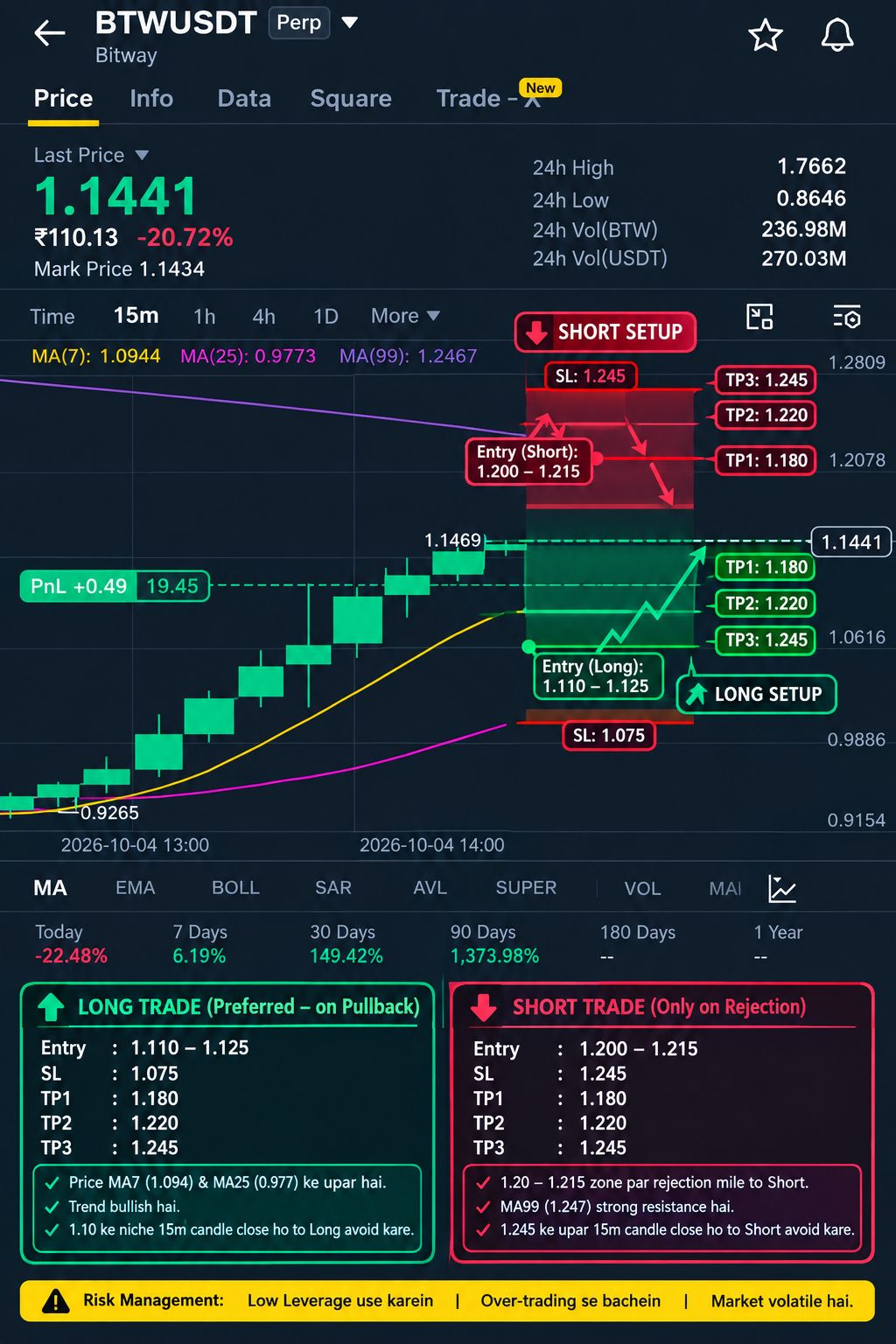
@BTW/USDT
📈 Preferred Long Setup
Entry: 1.110 – 1.125
SL: 1.075
TP1: 1.180
TP2: 1.220
TP3: 1.245 ke aas-paas
👇🏻 Are you ready
$BTW
$BR
$S
@BTW/USDT
📈 Preferred Long Setup
Entry: 1.110 – 1.125
SL: 1.075
TP1: 1.180
TP2: 1.220
TP3: 1.245 ke aas-paas
👇🏻 Are you ready
$BTW
$BR
$S
拔剑心茫然
·
--
Fans to 30,000—draw 10U rewards in the group. Friends, come join us!

Ahmed Ali Nizamani
·
--
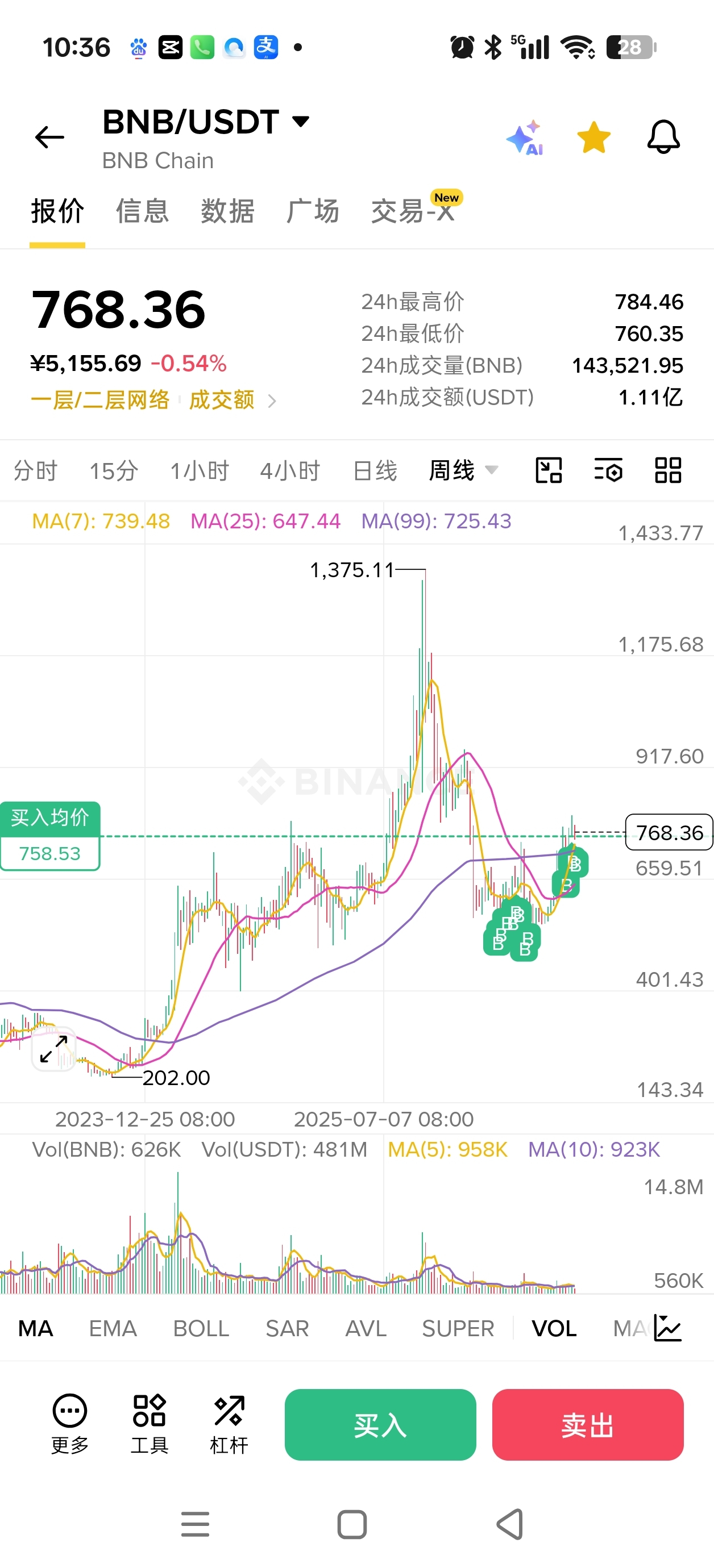
BNB ALL TIME HIGH IS _?
Write answer = 🎁🎁🎁🎁🎁🎁🎁
Write answer = 🎁🎁🎁🎁🎁🎁🎁

Log in to explore more content