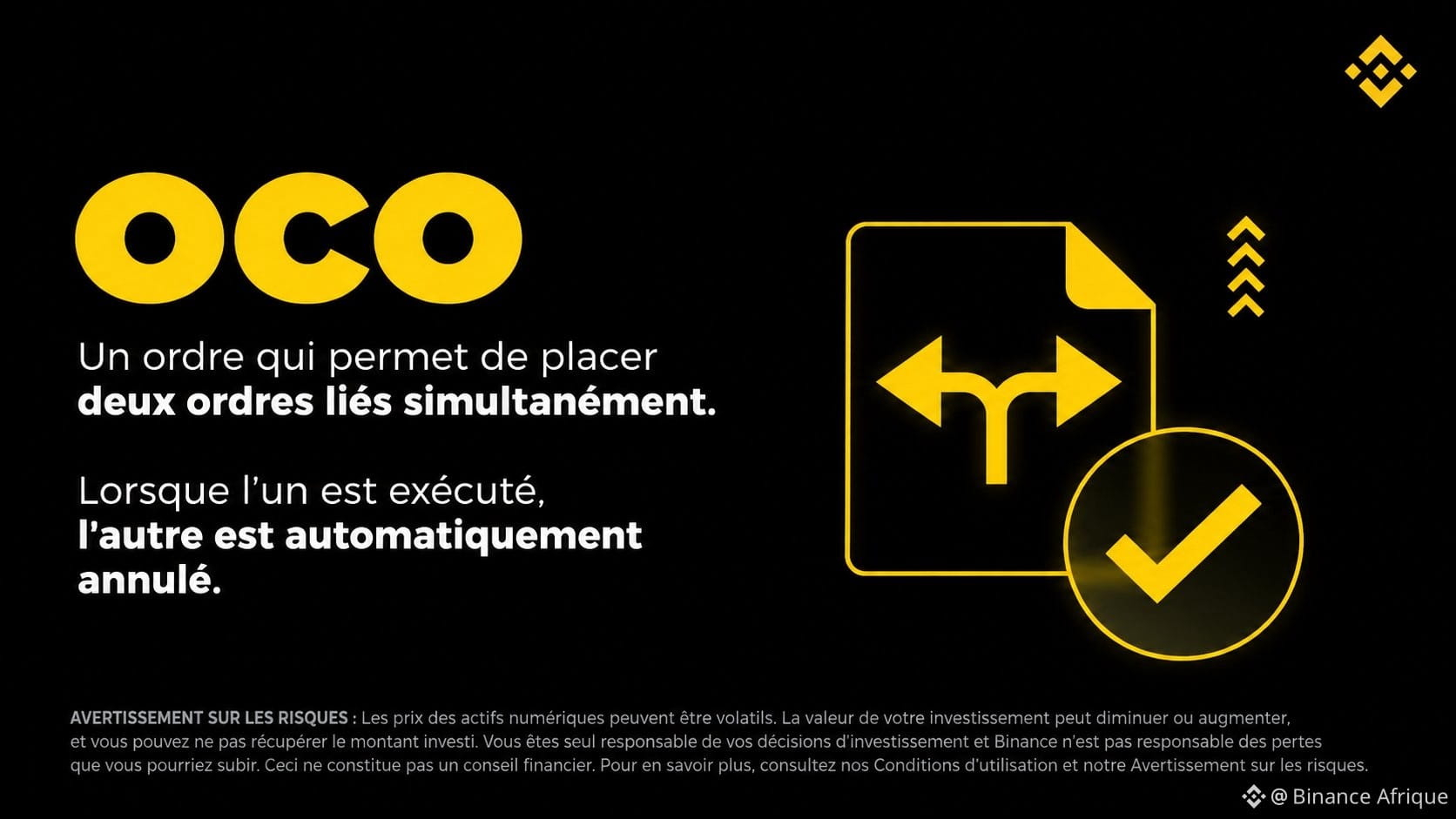

OCO solves a problem: you don’t know where the price will go, but you want protection in both directions.
Structure: you place a buy order and a sell order simultaneously. The two are linked. When the first one executes, the second one is automatically canceled.
Example: Bitcoin at $40,000. You think it’s going to move a lot, but you don’t know which direction. You place an OCO:
Order 1: buy if Bitcoin reaches 42 000$ (bullish scenario)
Order 2: sell if Bitcoin drops to 38 000$ (bearish scenario)
If Bitcoin rises to $42,000, order 1 executes. Order 2 disappears. You’re in the bullish position.
If Bitcoin falls to 38 000$ first, order 2 executes. Order 1 disappears. You’ve limited your loss.
Only one possible outcome at a time. No ambiguity. The two orders can never execute together.
Use case: high volatility where you want two protections without constant monitoring. A decision made in advance, executed automatically.
Structure: you place a buy order and a sell order simultaneously. The two are linked. When the first one executes, the second one is automatically canceled.
Example: Bitcoin at $40,000. You think it’s going to move a lot, but you don’t know which direction. You place an OCO:
Order 1: buy if Bitcoin reaches 42 000$ (bullish scenario)
Order 2: sell if Bitcoin drops to 38 000$ (bearish scenario)
If Bitcoin rises to $42,000, order 1 executes. Order 2 disappears. You’re in the bullish position.
If Bitcoin falls to 38 000$ first, order 2 executes. Order 1 disappears. You’ve limited your loss.
Only one possible outcome at a time. No ambiguity. The two orders can never execute together.
Use case: high volatility where you want two protections without constant monitoring. A decision made in advance, executed automatically.