

灼见Cryptosighted
972 Posts
灼见Cryptosighted
灼见|K线只是表象,人心才是博弈的终点。
13年实战沉淀,拒绝废话,只做最硬核的技术拆解与宏观透视。帮你看清下一步。如果你厌倦了噪音,这里是你的最后一站。
Open Trade

BTC Holder
Occasional Trader
8.5 Years
659 Following
28.9K+ Followers
10.6K+ Liked
Posts
Portfolio
All
Quotes
Videos

圣克斯Lucky1688
·
--
🧧🎁🌹🧧🎁🌹
Regulatory and Policy Developments
The U.S. introduces a major digital asset tax bill (ADAPT Act)
On October 1, U.S. Senator Steve Daines officially introduced the 56-page “Act to Align Digital Assets and Tax Principles” (ADAPT Act). The bill aims to establish clear tax rules for stablecoin payments, network fees (gas fees), staking, and lending. It also proposes that digital assets used to pay network, transaction, or gas fees of $10 or less be exempt from recognizing gains or losses. In addition, it provides tax exemptions or simplified reporting for compliant purchases of goods and services using U.S. dollar stablecoins.
Market Trends and Institutional Updates
Macroeconomy and Market Performance
Entering October, the market is closely watching the U.S. September jobs report (non-farm payrolls), CPI data, and the Federal Reserve’s monetary policy direction. Although the crypto market has recently seen an inflow of funds and a quarterly rebound (such as Bitcoin recovering somewhat over the past quarter), analyses indicate that most mainstream assets still face pressure from macro high interest rates (e.g., U.S. Treasury yields remaining at relatively elevated levels) when viewed against their year-to-date trend. The market is overall searching for direction amid “fragmented repairs” and a shift toward compliance.
RWA tokenization platform listed
OpenWorld and VerifyMe have officially announced the completion of their business merger, forming a digital tokenization platform for real-world assets. They began trading on Nasdaq on October 1 under the code “OPNW,” advancing institutional-grade RWA tokenization.
Follow me and take Answer 1 to take away the $SOL 红包!
Regulatory and Policy Developments
The U.S. introduces a major digital asset tax bill (ADAPT Act)
On October 1, U.S. Senator Steve Daines officially introduced the 56-page “Act to Align Digital Assets and Tax Principles” (ADAPT Act). The bill aims to establish clear tax rules for stablecoin payments, network fees (gas fees), staking, and lending. It also proposes that digital assets used to pay network, transaction, or gas fees of $10 or less be exempt from recognizing gains or losses. In addition, it provides tax exemptions or simplified reporting for compliant purchases of goods and services using U.S. dollar stablecoins.
Market Trends and Institutional Updates
Macroeconomy and Market Performance
Entering October, the market is closely watching the U.S. September jobs report (non-farm payrolls), CPI data, and the Federal Reserve’s monetary policy direction. Although the crypto market has recently seen an inflow of funds and a quarterly rebound (such as Bitcoin recovering somewhat over the past quarter), analyses indicate that most mainstream assets still face pressure from macro high interest rates (e.g., U.S. Treasury yields remaining at relatively elevated levels) when viewed against their year-to-date trend. The market is overall searching for direction amid “fragmented repairs” and a shift toward compliance.
RWA tokenization platform listed
OpenWorld and VerifyMe have officially announced the completion of their business merger, forming a digital tokenization platform for real-world assets. They began trading on Nasdaq on October 1 under the code “OPNW,” advancing institutional-grade RWA tokenization.
Follow me and take Answer 1 to take away the $SOL 红包!


@辛迪cindy
is speaking[LIVE] 🎙️ Monday’s ☀ BNB: is it bullish or bearish? Is today’s trading trend on the rise?
1.8k listens

灼见Cryptosighted
·
--
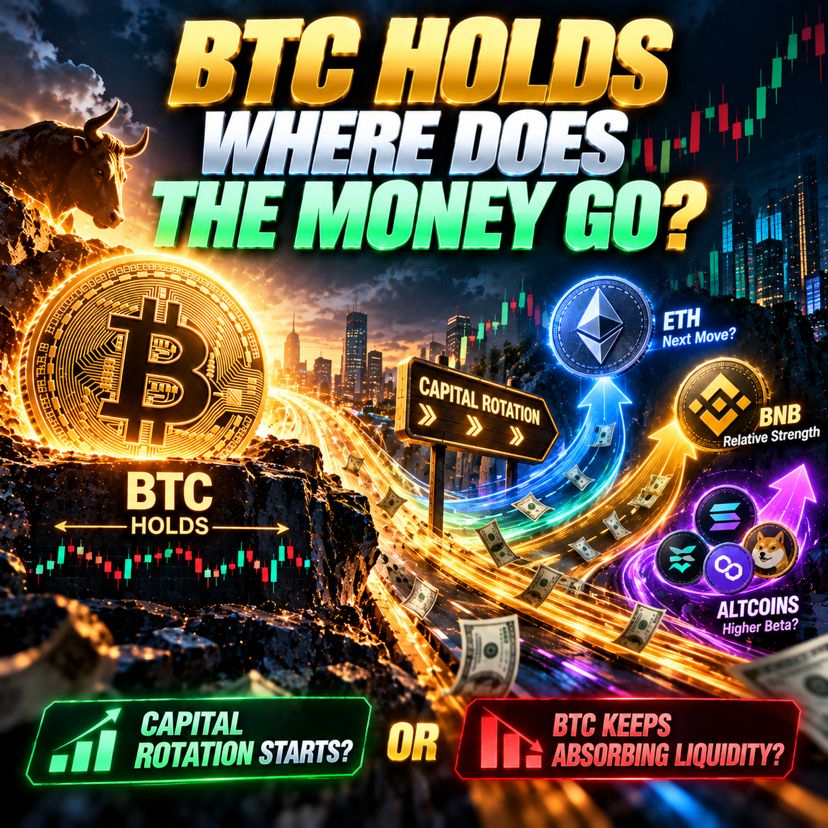
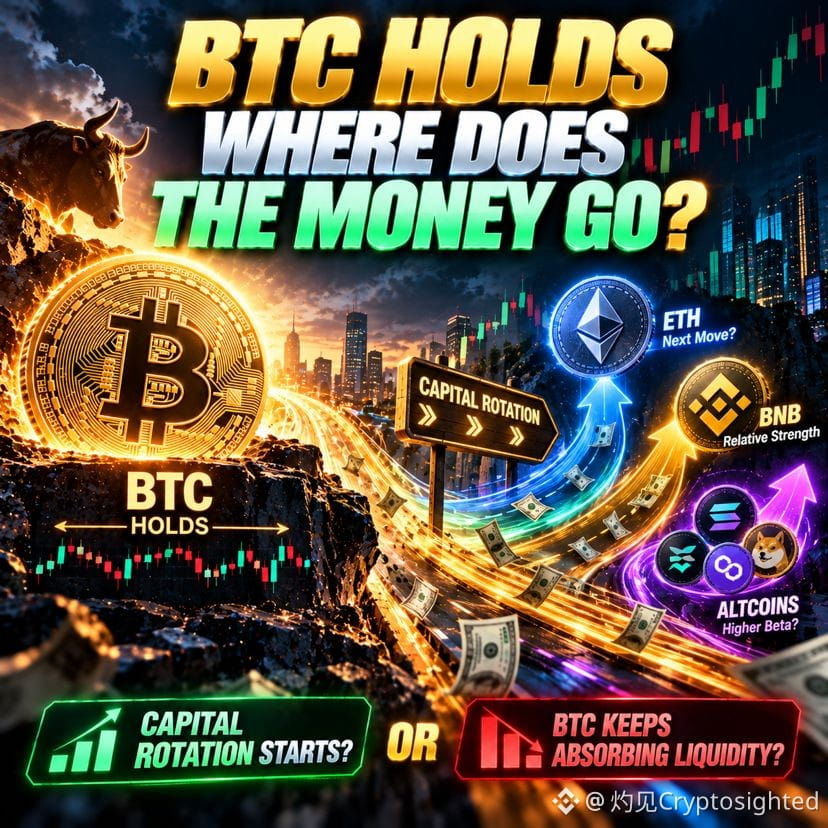
🚨 BTC didn’t keep surging, but this might be the stage where the market actually gets interesting.
Because once BTC stabilizes, capital typically starts asking the second question:
Who else hasn’t pumped enough yet?
Q3 crypto ETFs attracted around $10 billion in capital, but what’s interesting is that the growth rate of capital in some non-BTC assets is accelerating. (24/7 Wall St.)
Now the market is showing a structure worth watching:
🟠 BTC keeps the market stable
🔵 ETH waits for risk appetite to spread
🟡 BNB continues to watch relative strength
🔥 Higher-beta assets start competing for capital
A real altcoin rally has never meant “all coins go up together.”
Instead, capital moves from the safest places and gradually becomes more willing to take on higher risk.
So what I’m paying most attention to next isn’t whether BTC can rise a bit more.
It’s:
If BTC continues to range sideways, will the money start to move out?
If the answer is YES, the truly exciting part of October may still be ahead.
🟢 Capital rotation begins
🔴 BTC continues to absorb liquidity
#BTC #ETH #BNB
Because once BTC stabilizes, capital typically starts asking the second question:
Who else hasn’t pumped enough yet?
Q3 crypto ETFs attracted around $10 billion in capital, but what’s interesting is that the growth rate of capital in some non-BTC assets is accelerating. (24/7 Wall St.)
Now the market is showing a structure worth watching:
🟠 BTC keeps the market stable
🔵 ETH waits for risk appetite to spread
🟡 BNB continues to watch relative strength
🔥 Higher-beta assets start competing for capital
A real altcoin rally has never meant “all coins go up together.”
Instead, capital moves from the safest places and gradually becomes more willing to take on higher risk.
So what I’m paying most attention to next isn’t whether BTC can rise a bit more.
It’s:
If BTC continues to range sideways, will the money start to move out?
If the answer is YES, the truly exciting part of October may still be ahead.
🟢 Capital rotation begins
🔴 BTC continues to absorb liquidity
#BTC #ETH #BNB
灼见Cryptosighted
·
--
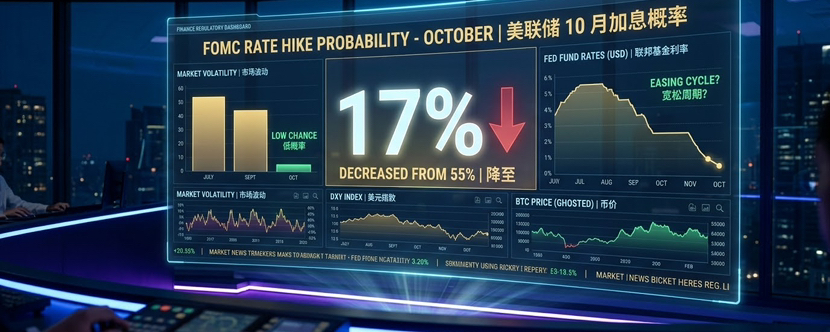
The Fed’s October rate-hike probability drops to 17%
🔥 The Fed’s October rate-hike probability drops to 17%: are we at a macro turning point, and is the crypto market ready to take off? 🔥
Brothers, the macro storyline has turned again! As soon as the latest data came out, it directly pushed the market’s rate-hike expectations down to a freezing low. According to the latest CME data, the probability of a Fed rate hike in October has plummeted to 17%, while the probability of holding steady has jumped to 83%!
What does that mean? The “tightening spell” hanging over the crypto market is finally starting to loosen!👇
📉 The truth behind the data: why 17%?
This time, the jobs report (nonfarm payrolls) sends a clear signal: the US labor market really is cooling down.
Brothers, the macro storyline has turned again! As soon as the latest data came out, it directly pushed the market’s rate-hike expectations down to a freezing low. According to the latest CME data, the probability of a Fed rate hike in October has plummeted to 17%, while the probability of holding steady has jumped to 83%!
What does that mean? The “tightening spell” hanging over the crypto market is finally starting to loosen!👇
📉 The truth behind the data: why 17%?
This time, the jobs report (nonfarm payrolls) sends a clear signal: the US labor market really is cooling down.




币安Binance华语
·
--
You received what appeared to be a normal USDT payment, and your wallet also shows “USDT”.
So, you completed the transaction without further verification. But this “USDT” might not be the USDT you think it is.
Scammers can create counterfeit tokens that look identical to legitimate ones. However, only when you try to exchange or sell them do you find that their actual value may be far lower than you expected.
Want to know how this fake-payment scam works? 👉 点击了解
So, you completed the transaction without further verification. But this “USDT” might not be the USDT you think it is.
Scammers can create counterfeit tokens that look identical to legitimate ones. However, only when you try to exchange or sell them do you find that their actual value may be far lower than you expected.
Want to know how this fake-payment scam works? 👉 点击了解


Sherry长得帅不如跑的快1688
·
--
🚨 BITCOIN’S BULL SCORE JUST HIT 90/100.
But there’s one problem:
WHERE ARE THE BUYERS?
BTC recently pushed to around $87.4K.
Now it’s back near $83K.
And underneath the price:
🟢 Bull Score → 90/100
📉 30-day spot demand → down ~170K BTC
⚡ Futures demand growth → down ~90% in 15 days
💰 Short-term unrealized profit → ~33%
That creates a fascinating contradiction:
THE MARKET LOOKS BULLISH.
BUT DEMAND IS COOLING.
So the real question isn’t:
“Is Bitcoin still in a bull market?”
It’s:
WHO BUYS THE NEXT LEG HIGHER?
Because a rally needs more than fewer sellers.
It needs:
FRESH DEMAND.
If new buyers return,
$87K could become another breakout level.
But if demand keeps fading,
highly profitable holders may start taking money off the table.
Now I’m watching:
💰 BTC spot demand
⚡ New futures positioning
📍 $80K–$83K zone
🧱 The recent ~$87K high
👇 Your take?
FRESH BUYERS RETURN 🟢
or
THE BULL MARKET NEEDS TO COOL 🔴?
#BTC #ETH #BNB
But there’s one problem:
WHERE ARE THE BUYERS?
BTC recently pushed to around $87.4K.
Now it’s back near $83K.
And underneath the price:
🟢 Bull Score → 90/100
📉 30-day spot demand → down ~170K BTC
⚡ Futures demand growth → down ~90% in 15 days
💰 Short-term unrealized profit → ~33%
That creates a fascinating contradiction:
THE MARKET LOOKS BULLISH.
BUT DEMAND IS COOLING.
So the real question isn’t:
“Is Bitcoin still in a bull market?”
It’s:
WHO BUYS THE NEXT LEG HIGHER?
Because a rally needs more than fewer sellers.
It needs:
FRESH DEMAND.
If new buyers return,
$87K could become another breakout level.
But if demand keeps fading,
highly profitable holders may start taking money off the table.
Now I’m watching:
💰 BTC spot demand
⚡ New futures positioning
📍 $80K–$83K zone
🧱 The recent ~$87K high
👇 Your take?
FRESH BUYERS RETURN 🟢
or
THE BULL MARKET NEEDS TO COOL 🔴?
#BTC #ETH #BNB


Binance Announcement
·
--
Binance Pay teams up with PayPay to bring PayPay QR payments to visitors to Japan—10% off for a limited time!
This is a general announcement. The product and services mentioned here may not be available in your region.
Dear users:
Binance Pay is now available for international visitors traveling to Japan to pay with cryptocurrency at millions of locations across Japan that support PayPay.
With this feature, travelers can scan the QR code of participating merchants, or show their own payment QR code for the merchant to scan, completing the payment directly from the cryptocurrency balance in their Binance account—no fuel fees.
To celebrate this launch, eligible international visitors to Japan who pay with Binance Pay at participating merchants that support PayPay can enjoy a limited-time 10% instant discount.
Dear users:
Binance Pay is now available for international visitors traveling to Japan to pay with cryptocurrency at millions of locations across Japan that support PayPay.
With this feature, travelers can scan the QR code of participating merchants, or show their own payment QR code for the merchant to scan, completing the payment directly from the cryptocurrency balance in their Binance account—no fuel fees.
To celebrate this launch, eligible international visitors to Japan who pay with Binance Pay at participating merchants that support PayPay can enjoy a limited-time 10% instant discount.

Log in to explore more content