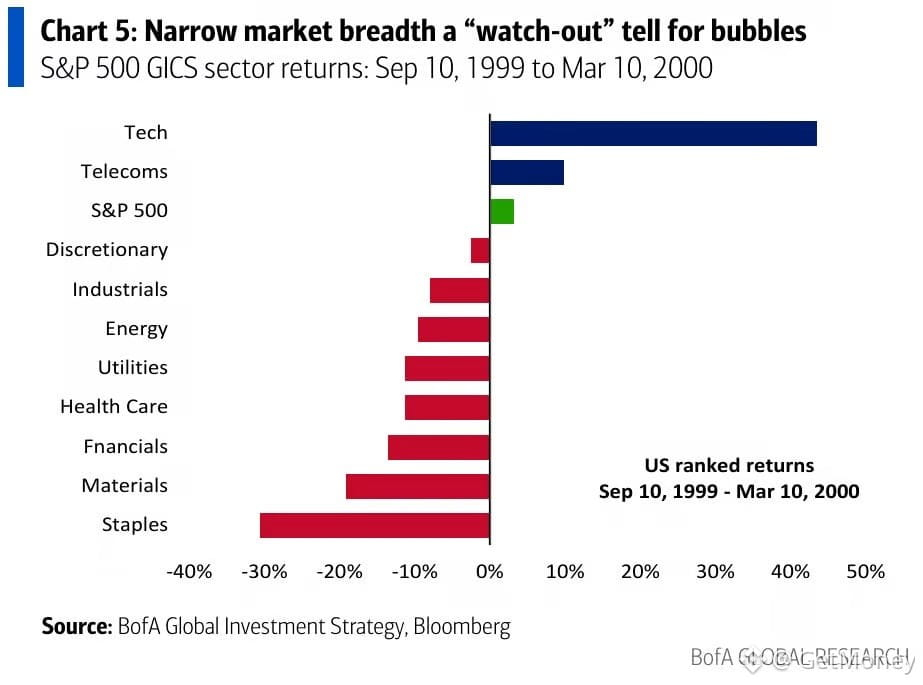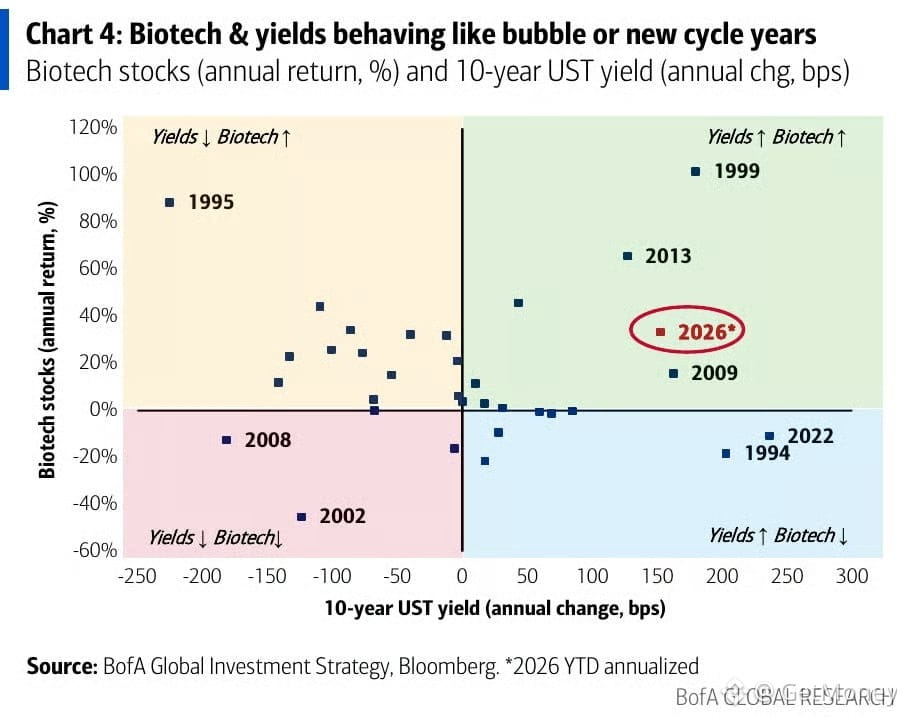
📰 Bank of America strategist Michael Hartnett again sounds the alarm: the current structure of the U.S. stock market looks similar to the six months before the peak of the 2000 dot-com bubble. The indexes are being propped up by a small number of AI giants, but the S&P 500 already has 400 constituents that have fallen below the 50-day moving average, and 300 below the 200-day moving average.
🔥 Even more striking is that the median of constituent stocks is down 16% from its peak, while Bank of America’s private client equity allocation has risen to a record level and the cash ratio has fallen to a historic low. To be honest, this kind of “fully loaded positioning, but very narrow upside” setup really does make people uneasy.
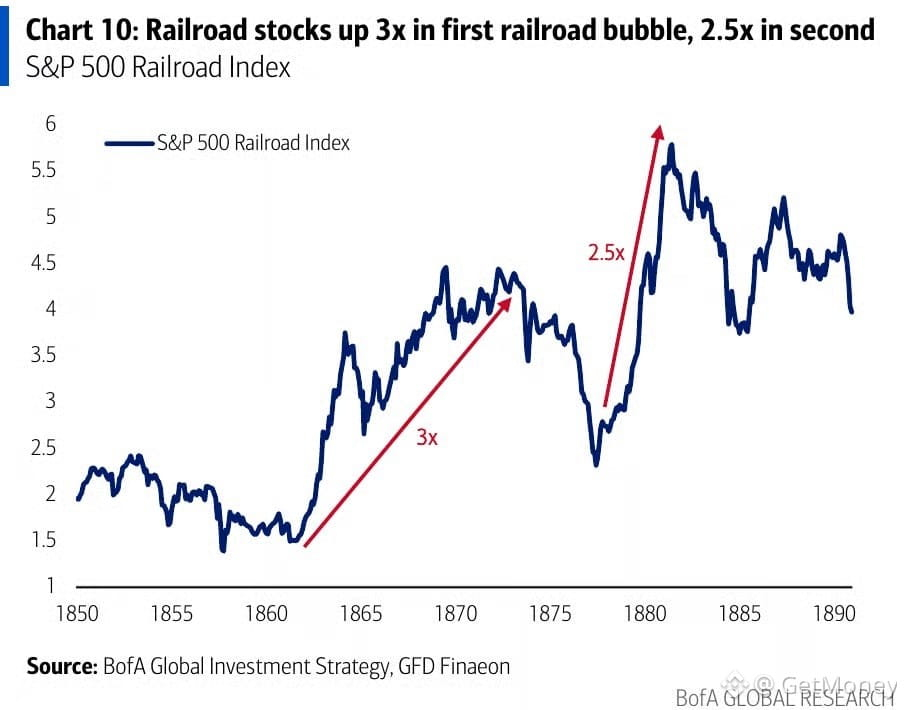
💡 Hartnett calls AI “the biggest bubble since the railroad era,” but he also admits they’re not entirely the same: cloud-computing giants are expected to spend around 3.5% to 4% of GDP in capital expenditures by 2027—below the railroad-era peak of 5%—and semiconductor prices are still rising.
👀 He’s instead starting to call for buying bonds. The yield on the 10-year U.S. Treasury has risen to 5.33%, while long-dated zero-coupon Treasuries have cumulatively fallen 65% from their March 2020 peak. That week, net bond inflows totaled $18.8 billion, including $7.4 billion in net inflows into long-dated bonds—signs that money may already be front-running a shift in holdings.
🤔 If the U.S. stock market really does transition from being propped up by “a few giants” to deleveraging, the crypto market likely won’t be able to fully escape. Will you keep betting on AI and crypto assets, or would you switch part of your position into bonds and cash first?
#美股 #人工智能 #美债 #Crypto market
🔥 Even more striking is that the median of constituent stocks is down 16% from its peak, while Bank of America’s private client equity allocation has risen to a record level and the cash ratio has fallen to a historic low. To be honest, this kind of “fully loaded positioning, but very narrow upside” setup really does make people uneasy.
💡 Hartnett calls AI “the biggest bubble since the railroad era,” but he also admits they’re not entirely the same: cloud-computing giants are expected to spend around 3.5% to 4% of GDP in capital expenditures by 2027—below the railroad-era peak of 5%—and semiconductor prices are still rising.
👀 He’s instead starting to call for buying bonds. The yield on the 10-year U.S. Treasury has risen to 5.33%, while long-dated zero-coupon Treasuries have cumulatively fallen 65% from their March 2020 peak. That week, net bond inflows totaled $18.8 billion, including $7.4 billion in net inflows into long-dated bonds—signs that money may already be front-running a shift in holdings.
🤔 If the U.S. stock market really does transition from being propped up by “a few giants” to deleveraging, the crypto market likely won’t be able to fully escape. Will you keep betting on AI and crypto assets, or would you switch part of your position into bonds and cash first?
#美股 #人工智能 #美债 #Crypto market