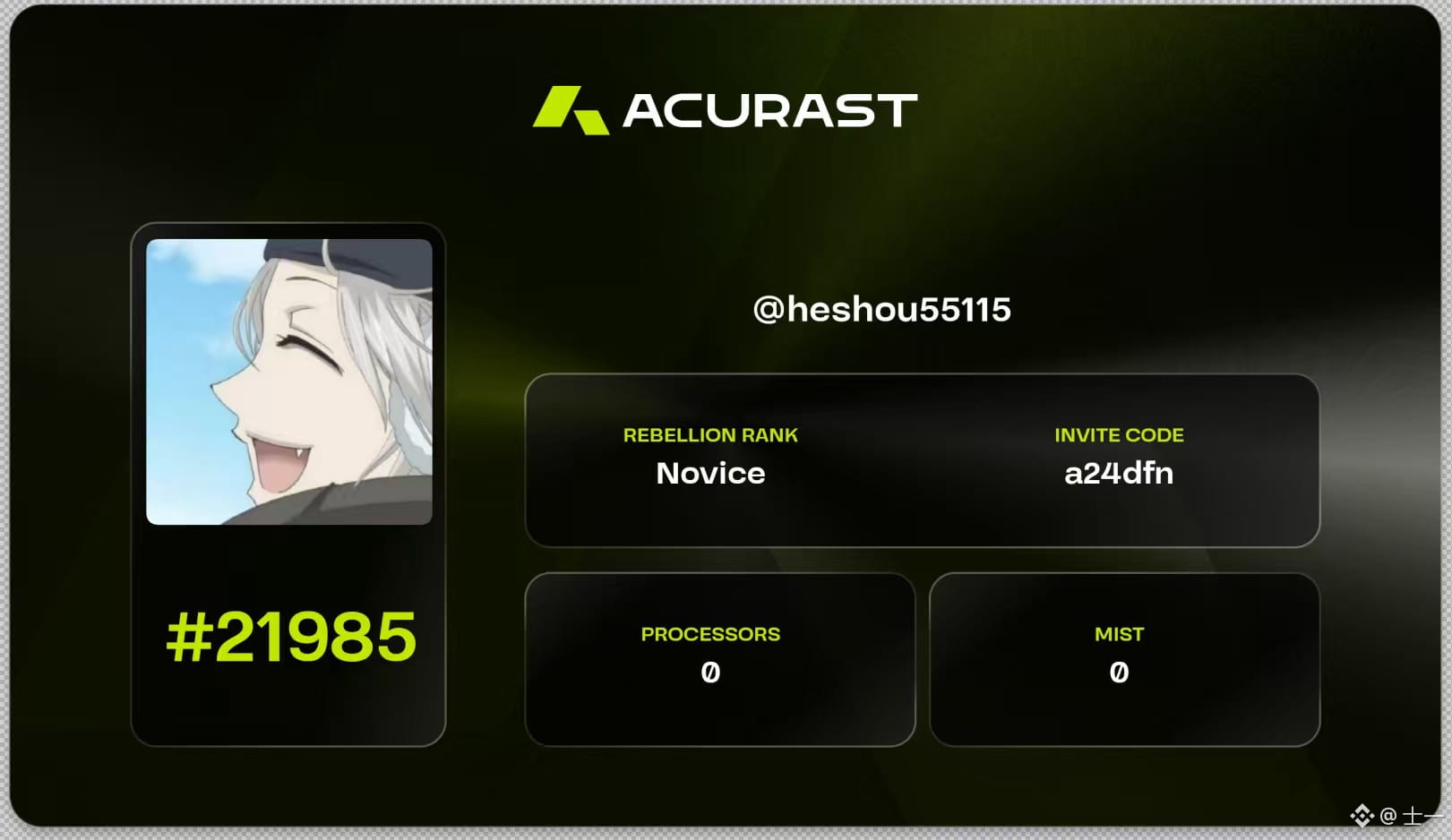
To be honest, don’t rush in all at once lately. This project currently has a tough gate you have to clear first: you must obtain an exclusive invite code generated by existing old players before it can be formally activated.
Over the past few days, what’s been talked about in the community has been pretty hot—@Acurast. In simple terms, they’re quietly turning a large number of old phones that have been sitting around collecting dust worldwide into distributed cloud-computing nodes.
You probably wouldn’t expect this, but according to tracking by relevant computational labs in Cambridge, even old chips from several years ago—if scheduled properly—the idle edge computing power can far exceed most people’s expectations.
So how exactly does it manage to work? The key is that it cleverly leverages the security chip built into the phone hardware. Within a very tightly controlled hardware isolation environment, it distributes and executes real distributed computing tasks.
That means the entire network doesn’t need to rely on those expensive centralized data centers. Not only does it naturally reduce deployment costs, it also creates solid real-world usage scenarios where the native token $ACU can be spent and thus accumulate in a grounded way.
Rather than letting outdated devices in your drawer sit and depreciate, it’s really better to just plug them in and get them running—earning steady, real token incentives every day.
One detail you absolutely must pay close attention to: when you operate, make sure to use a spare phone that has been completely cleared of assets. Don’t use your main device that you normally keep with a crypto wallet on it to mess around.
Since both the software/hardware setup and the logic for making everything work are already laid out, shouldn’t those old phones you’ve had sitting unused for a long time also be put to use—helping take some pressure off your own wallet?
Over the past few days, what’s been talked about in the community has been pretty hot—@Acurast. In simple terms, they’re quietly turning a large number of old phones that have been sitting around collecting dust worldwide into distributed cloud-computing nodes.
You probably wouldn’t expect this, but according to tracking by relevant computational labs in Cambridge, even old chips from several years ago—if scheduled properly—the idle edge computing power can far exceed most people’s expectations.
So how exactly does it manage to work? The key is that it cleverly leverages the security chip built into the phone hardware. Within a very tightly controlled hardware isolation environment, it distributes and executes real distributed computing tasks.
That means the entire network doesn’t need to rely on those expensive centralized data centers. Not only does it naturally reduce deployment costs, it also creates solid real-world usage scenarios where the native token $ACU can be spent and thus accumulate in a grounded way.
Rather than letting outdated devices in your drawer sit and depreciate, it’s really better to just plug them in and get them running—earning steady, real token incentives every day.
One detail you absolutely must pay close attention to: when you operate, make sure to use a spare phone that has been completely cleared of assets. Don’t use your main device that you normally keep with a crypto wallet on it to mess around.
Since both the software/hardware setup and the logic for making everything work are already laid out, shouldn’t those old phones you’ve had sitting unused for a long time also be put to use—helping take some pressure off your own wallet?