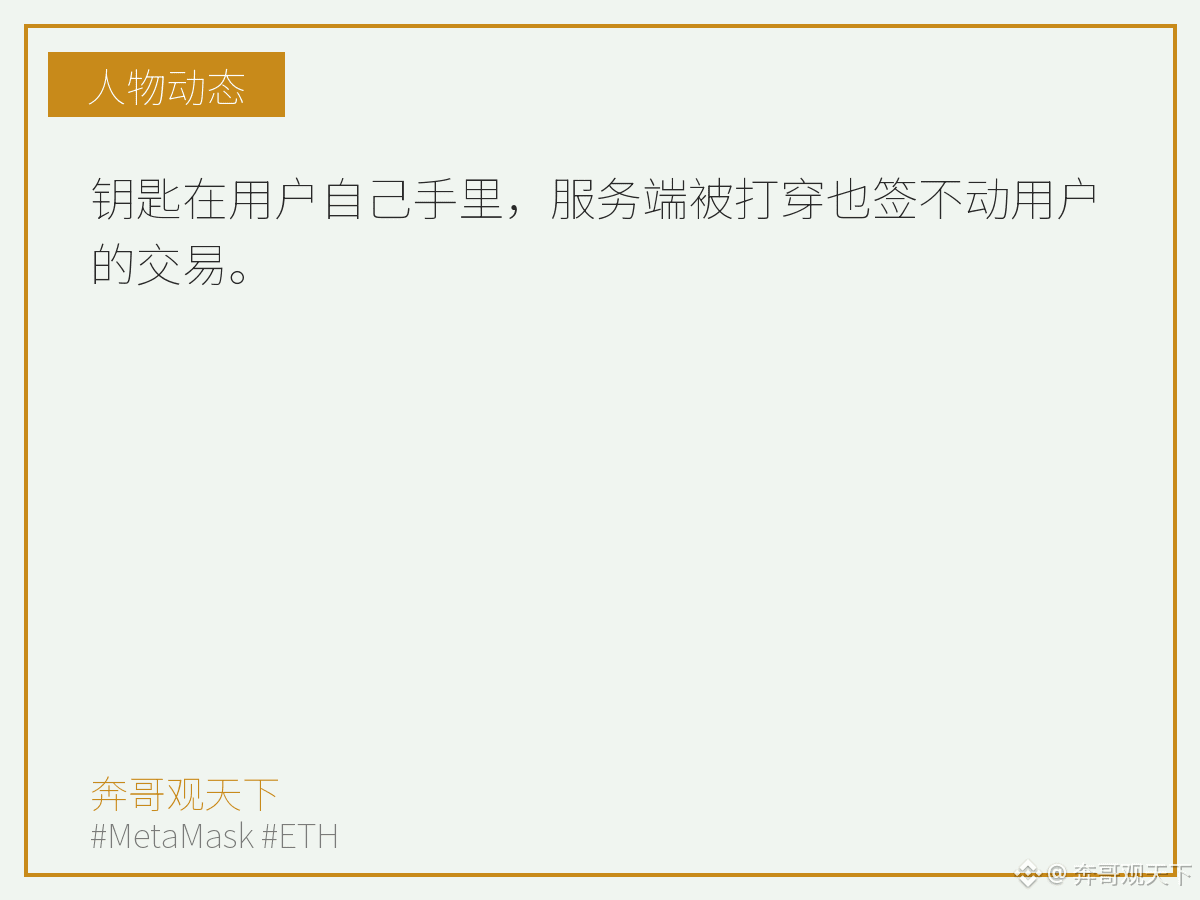
ConsenSys founder Lubin clarified the boundaries of this security incident on X: only part of the company’s infrastructure was affected. MetaMask users’ private keys, recovery phrases, and wallet assets were not involved at any point. His reasoning comes down to the self-custody structure itself: the keys are held by the user, and even if the server is breached, it still cannot sign the user’s transactions.
The side that truly comes with a cost is staking. ConsenSys and its partners rotated the validator key material. The validator nodes operated by MetaMask have already started to exit, with October 7 being the last batch’s exit time. After exiting, retrieving the staked ETH takes about 45 days; re-queueing and entering again takes another 45 days. Altogether, the funds may be idle for nearly three months—meaning standard returns can’t be earned. During the period validators are forced offline, they may also face penalties.
Ethereum separates the validator key and the withdrawal key into two different keys. ConsenSys does not hold clients’ withdrawal key material. This design ensures that the staked ETH cannot be transferred away abnormally.
For regular wallet users, there’s no asset risk in this incident—what to watch out for is phishing. After the event became public, scams impersonating customer support to request private keys are expected to appear in waves. Legitimate customer support will never ask for that string of words.
The side that truly comes with a cost is staking. ConsenSys and its partners rotated the validator key material. The validator nodes operated by MetaMask have already started to exit, with October 7 being the last batch’s exit time. After exiting, retrieving the staked ETH takes about 45 days; re-queueing and entering again takes another 45 days. Altogether, the funds may be idle for nearly three months—meaning standard returns can’t be earned. During the period validators are forced offline, they may also face penalties.
Ethereum separates the validator key and the withdrawal key into two different keys. ConsenSys does not hold clients’ withdrawal key material. This design ensures that the staked ETH cannot be transferred away abnormally.
For regular wallet users, there’s no asset risk in this incident—what to watch out for is phishing. After the event became public, scams impersonating customer support to request private keys are expected to appear in waves. Legitimate customer support will never ask for that string of words.