

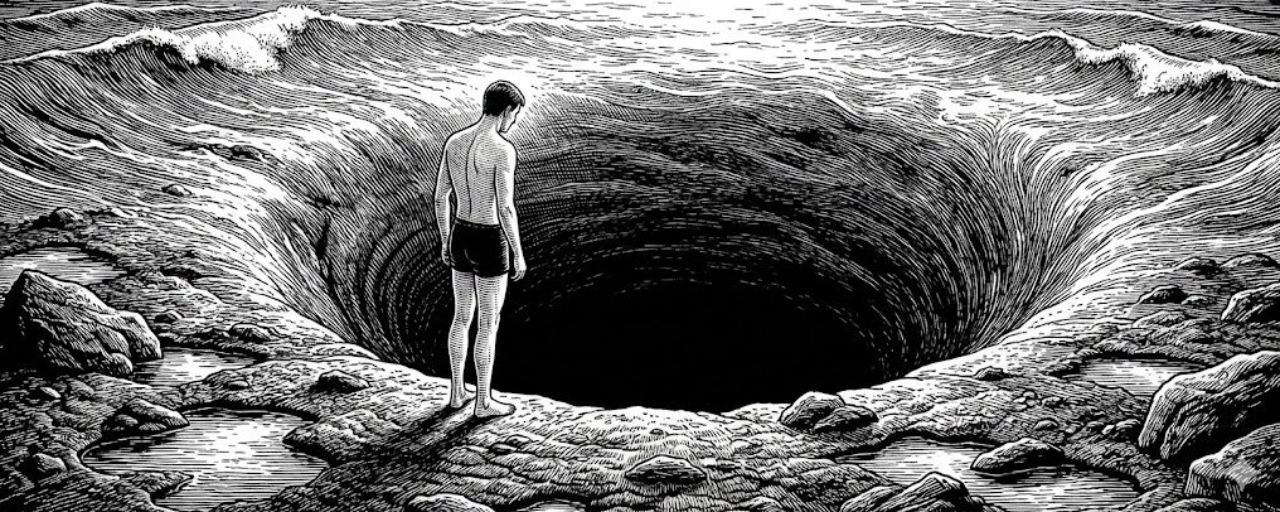


Last month, PONS was still being called “the most profitable money-printing machine on the Robinhood Chain.”
Daily average revenue was close to $2 million, with daily buybacks exceeding $1 million. Uniswap Labs even personally invested. In a week and a half, the token’s market cap surged from $35 million to $500 million, reaching an all-time high of $0.97. An early buyer’s $2,600 turned into $1.2 million.
Back then, everyone believed that PONS had found the most perfect solution for Meme coins—repurchasing and destroying with real money revenue, turning speculative assets into cash-flow assets.
A month later.
PONS’s market cap fell to $414 million, down more than 58% from its $990 million peak. Daily average revenue dropped from nearly $2 million to about $240,000—about an 88% decline. Daily buybacks collapsed from over $1 million to less than $200,000.
This isn’t an ordinary callback.
A “buyback engine” sputtered and died in plain sight.
How exactly did PONS’s buyback engine get turned?
Pons is a Meme coin launch platform on Robinhood Chain. Users mint and trade tokens on the platform, generating fees. The fee distribution path is:
Trading fees → 70% go to creators, 30% to the protocol → 80% of protocol revenue is used to buy PONS and burn it, 20% is used for operations.
As of early September, PONS had cumulatively burned about 29% of its initial supply.
This logic sounds airtight:
The more active the platform → the more fees → the more buybacks → the less circulating supply → the higher the price → attracting more people to participate → making the platform even more active.
A perfect positive flywheel.
But the premise of a flywheel is that “the platform is more active.”
The fatal turn: activity isn’t a constant—it’s a variable
Data shows that from September 29 to October 2, Pons V2’s average daily token-minting amount was 6,768, down about 72% compared with the first half of September. Average daily fees fell from $6.87 million to $1.48 million—a drop of about 78%.
Token minting drops 72%; fees drop 78%.
The buyback capital shrank by nearly 90% directly. Daily buybacks fell from over $1 million to less than $200,000.
What’s even more painful is that this creates a feedback loop like a “death spiral”:
On-chain speculative activity cools down → token minting and trading volume drop → fee revenue falls off a cliff → buyback scale collapses → the price loses support and keeps falling → the money-making effect disappears → participants leave even more → activity keeps cooling down.
Each step feeds the next. The quieter it gets, the more it falls; the more it falls, the quieter it gets.
On October 3, PONS founder Ozzy responded to community concerns and admitted: the buyback rate “hasn’t been adjusted yet,” and the earlier “claim” step also “hasn’t been fully decentralized” yet. In the custody accounts, roughly $440,000 in pending funds had accumulated for more than 5 days without being transferred.
Put into plain human language: even executing the buybacks itself lost the chain.
Why is Uniswap’s “buyback” ( $UNI ) more stable than PONS’s?
Many people compare PONS and Uniswap side by side because both are doing “protocol revenue → buyback token.”
But the underlying logic of tokenomics for the two is completely different.
PONS’s model:
Protocol revenue → 80% used for buyback and burn → reduces circulating supply → supports the price.
Value capture relies entirely on the amount of buyback capital. Buyback capital = fee × 80%. Fee = token mint amount × trading volume × fee rate.
The amount of tokens minted is a derivative of the Meme market. When Meme hype fades, everything goes to zero.
Uniswap’s model:
The fee switch routes about 17% of swap fees to protocol revenue, which is used to buy back and burn UNI; the annualized supply reduction is about 0.4%. UNI’s current daily revenue is about $129,000, and its 30-day revenue is about $4.9 million.
But the key difference is: UNI’s value doesn’t depend on buybacks to “prop it up.”
UNI is a governance token; holders have voting power over the protocol’s fee switch and governance power over the treasury. Buyback and burn is a value accumulation bonus, not the only pillar supporting the price.
PONS treats buybacks as an engine. Uniswap treats buybacks as turbocharging.
When the engine stalls, the car stops. When a turbo breaks, the car can still run.
This isn’t just a problem with PONS; it’s a common flaw across the whole model.
In 2026, more than 100 crypto projects shut down or went bankrupt, and most altcoins retraced 70% to 90% from their highs.
There are countless cases where buybacks fail:
Jupiter: in 2025, it spent over $70 million on buybacks, ( $JUP ) with an overall decline of about 76.7% for the year. Co-founder SIONG publicly reflected: “Buybacks didn’t work—should we spend the money on user growth instead?”
Pump.fun: $330 million in annual revenue, $315 million spent on buybacks—then the token fell 60% after listing.
Helium: the founder directly announced the halt of HNT buybacks, citing that “the market barely reacted to the project’s buyback behavior.”
Tracking 159 token buyback projects shows that: removing Hyperliquid as an outlier, the average decline of buyback-and-burn tokens is 56%.
One token determines the fate of the whole category.
The rest is all money-losing.
$PONS The problem isn’t that the “buyback mechanism is broken.”
The buyback mechanism has never been “good.”
This model only works if fee revenue keeps growing. But activity in the Meme market is cyclical, driven by sentiment, and unpredictable.
You’re propping up a mechanism that requires certainty with an unpredictable variable.
It’s like building a house on a foundation made of sand from the beach. It looks great at high tide, but once the tide goes out, you realize there’s nothing left.
The lesson of PONS is worth remembering by every Meme project that relies on “income buybacks”:
When your token price is built on protocol revenue, you’re no longer a Meme—you’re a cash-flow asset without a moat.
And a cash-flow asset without a moat is even worse than a Meme when on-chain speculation ebbs.
Because at least Memes still have belief. Cash-flow assets are left with only data—and data can lie—especially when it’s dropping.
PONS’s founder said he would introduce an “automated buyback mechanism once every 7 days” to repair trust.
But the problem has never been “how often to buy back,” it’s been “where the buyback money comes from.”
When the amount of tokens minted crashes by 72%, there’s no essential difference between 7-day buybacks and 1-hour buybacks.
It’s like swapping spark plugs for an engine that’s already out of fuel.