

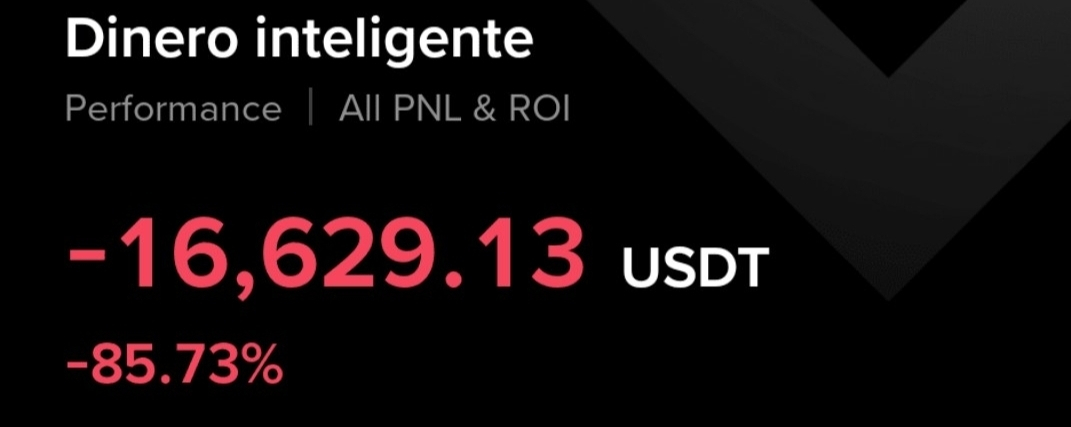

After losing $16.654 in crypto, there are things I learned that are worth far more than any indicator.
And I probably would have liked to understand some of them earlier.
1. A coin that has already gone up 100% isn’t “expensive”.
And one that fell 90% isn’t “cheap”.
The price has no idea where you bought it.
I made the mistake of looking at a drop and thinking:
“It’s already dropped too much.”
The market doesn’t have an obligation to rebound just because you think it’s cheap.
2. Volume can tell a story that price hasn’t told you yet.
A green candle draws attention.
But when really big volume shows up, that’s when I start looking differently.
It doesn’t automatically mean it will go up.
It means something is happening.
And I want to discover what comes first before inventing a narrative.
3. Shitcoins don’t need you to be right.
They need you to be impatient.
You can be right on the direction and still lose money.
You can find a perfect entry and exit too early.
You can be right about the project and still lose because you leveraged too much.
That happened to me.
With GALA, for example, my average price was close to 0,001754.
The chart ended up proving me right.
But I sold my plan.
I went looking for futures to make it faster.
And I ended up losing everything.
I didn’t lose because I didn’t understand the move.
I lost because I wanted to speed it up.
4. Leverage turns a good idea into a bad trade if you don’t know how to wait.
12x doesn’t mean you’re 12 times more right.
It gives you 12 times less room to be wrong.
I learned this too late.
Too late.
5. When you start thinking “I need to make it back,” you’re no longer looking at the chart the same way.
This is probably the most important one.
After losing, the brain wants an operation that fixes the previous one.
So you increase size.
You look for more violent coins.
You get in earlier.
You can hold out longer.
And suddenly you’re no longer trying to win.
You’re trying to go back to the past.
The market can’t give you back the money you lost.
It can only give you another operation.
6. The opportunity you need doesn’t have to be the next one.
This one cost me a lot.
I thought:
“If I don’t get in now, I’ll miss the move.”
No.
There are thousands of coins.
Thousands of candles.
Thousands of opportunities.
The only operation you truly can’t recover is the one you did without thinking.
7. And the darkest of them all:
Sometimes your biggest enemy isn’t a whale.
It’s not Binance.
It’s not the market.
It’s not a shitcoin.
It’s you when an operation starts going well.
Because losing makes you distrust.
But winning can make you believe you discovered something.
And that’s when the real danger starts.
After everything I lost, I don’t want to become the kind of person who “guesses” which coin will explode.
I want to become the kind of person who can watch a coin go up without feeling like they have to chase it.
Because if one day I rebuild everything I lost, I want it to be with patience.
Not with another desperate bet.
And if there’s something I learned after -$16.654, it’s this:
the market doesn’t just charge you for being wrong.
Sometimes it costs you way more to be right...
but not knowing when to stop.