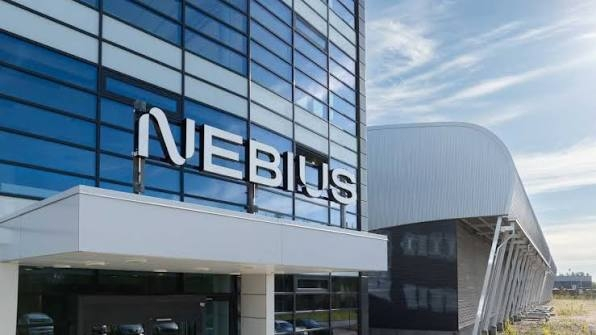

NBIS.US — Nebius Group: a global bet on artificial intelligence infrastructure
Nebius Group N.V. (NASDAQ: NBIS) is a technology company specializing in AI cloud and artificial intelligence infrastructure. Based in Amsterdam, the company is developing global infrastructure for developers and enterprise customers who need computing power to train, fine-tune, and run AI models.
Investment Thesis
Nebius is of interest primarily as an infrastructure company operating at the intersection of several long-term trends: artificial intelligence, GPU computing, cloud technologies, generative AI, AI agents, and robotics.
Unlike companies that directly develop individual AI models, Nebius is building the infrastructure layer on which those models can be trained and run. The company offers computing resources, data storage, managed services, and software tools for the full AI development lifecycle.
This creates a potentially scalable business model: as demand for AI computing grows, so does the need for GPUs, data centers, electricity, network infrastructure, and specialized cloud services.
Rapid Infrastructure Growth
2025 was a year of scaling for Nebius. At the end of 2025, the company reported annualized run-rate revenue (ARR) of approximately $1.25 billion, significantly above its initial targets. In Q4 2025, group revenue was $228 million, up 547% year over year, while revenue from the core AI infrastructure business grew 802% to $214 million.
The company also reported positive adjusted EBITDA at the group level in Q4 2025 and cash of approximately $3.7 billion at year-end.
For investors, these figures matter not only in themselves, but also as an indicator of how quickly the company can convert growing demand for AI infrastructure into actual commercial capacity.
Ambitious Plans for 2026
Nebius set a target ARR of $7–9 billion by the end of 2026, compared with $1.25 billion at the end of 2025. At the same time, the company plans to significantly expand its power and data center infrastructure.
The company raised its target for contracted capacity by the end of 2026 to more than 3 GW and expects to have around 800 MW–1 GW of connected capacity by year-end.
This scaling demonstrates that the main constraint for AI Cloud is not just software, but also physical infrastructure: data centers, GPUs, electricity, cooling, and network capacity.
Partnership with NVIDIA
One of the key drivers of Nebius’s development is its partnership with NVIDIA. In March 2026, the companies announced a strategic partnership to build and scale a hyperscale AI cloud.
As part of the agreement, NVIDIA announced a $2 billion investment in Nebius, and the companies plan to enable the deployment of more than 5 GW of NVIDIA systems by the end of 2030.
This is strategically important for Nebius: access to advanced GPU infrastructure is one of the main factors determining the competitiveness of AI cloud providers.
AI Cloud Expansion
Nebius is developing not only computing infrastructure, but also its own software stack.
The company positions AI Cloud as a unified platform for the entire AI lifecycle—from working with data and training models to inference and production deployment.
One of these initiatives is Nebius Token Factory, designed for production-scale inference and post-training of AI models. The company is also developing AI Cloud Aether, focused on improving the platform’s performance, security, and enterprise capabilities.
A New Scaling Model
In July 2026, Nebius introduced an infrastructure partnership model under which partners finance and own data centers and equipment, while Nebius provides the architecture, software stack, hardware design, and brings capacity to market.
This model could allow the company to expand its global AI infrastructure with less of its own capital required for each new facility.
In addition, in July 2026, Nebius announced that it had raised approximately $775 million through its first senior secured debt financing, backed by GPU infrastructure and contracted cash flows. The funds are intended to accelerate the global expansion of AI Cloud.
Geographic Expansion
Nebius is actively expanding its presence in the US and Europe.
The company also announced a major infrastructure expansion in the UK: the investment is estimated at approximately £1.7 billion, and the combined capacity of the three new UK sites is expected to reach 65 MW once fully deployed.
Geographic expansion allows the company to reduce its dependence on individual regions while bringing computing capacity closer to major enterprise customers.
Other Group Businesses
Nebius Group is more than just an AI cloud company.
The group includes or is associated with businesses such as Avride, which develops autonomous transportation and robotic delivery technologies, and TripleTen, an education technology company.
In addition, Nebius owns stakes in technology companies, including ClickHouse and Toloka.
This provides additional exposure to several fast-growing areas of the technology market.
What Investors May Find Interesting
The core NBIS investment story is tied to the development of global AI infrastructure.
Key factors:
- growth in global demand for GPU computing;
- expansion of AI Cloud;
- construction of its own data centers;
- expansion of power capacity;
- partnership with NVIDIA;
- development of inference and AI agents;
- entry into the enterprise AI segment;
- expansion of its presence in the US and Europe;
- the ability to scale through infrastructure partners;
- development of technologies for robotics and physical AI.
Key Risks
When analyzing NBIS, investors should also consider the risks.
Capital intensity. Building AI data centers requires significant investment in GPUs, electricity, cooling, construction, and network infrastructure.
Competition. Nebius operates in a market that includes large cloud providers and specialized GPU cloud companies.
Dependence on GPU supply. The availability of advanced accelerators and supply terms have a significant impact on the company’s ability to expand capacity.
Power infrastructure. Affordable electricity, grid connections, and suitable sites are critical to AI Cloud.
Stock valuation. Even rapid business growth does not guarantee an increase in the share price. Investors should compare revenue growth, ARR, EBITDA, capital expenditures, debt levels, and market capitalization.
Execution of plans. The target ARR of $7–9 billion by the end of 2026 is management’s forecast, not a guaranteed financial result. Achieving it depends on the pace of infrastructure construction, capacity utilization, customer acquisition, and access to capital.
Outlook for Long-Term Investors
NBIS can be viewed as a way to participate in the development of the infrastructure segment of the artificial intelligence economy.
If AI continues to move from experimental projects to widespread enterprise use, demand for computing capacity will remain one of the technology market’s central drivers. In this scenario, companies that can effectively bring together GPUs, data centers, power, cloud software, and enterprise services could play an important role in the AI ecosystem.
At the same time, an investment analysis of NBIS should take into account not only the potential growth of the AI market, but also the cost of capital, debt financing, capital expenditures, data center utilization, margins, and the company’s actual execution of its stated plans.
NBIS is primarily a bet on AI infrastructure, rather than simply on an individual artificial intelligence product. Scaling computing capacity, developing AI Cloud, and long-term demand for infrastructure are central to the company’s investment story.