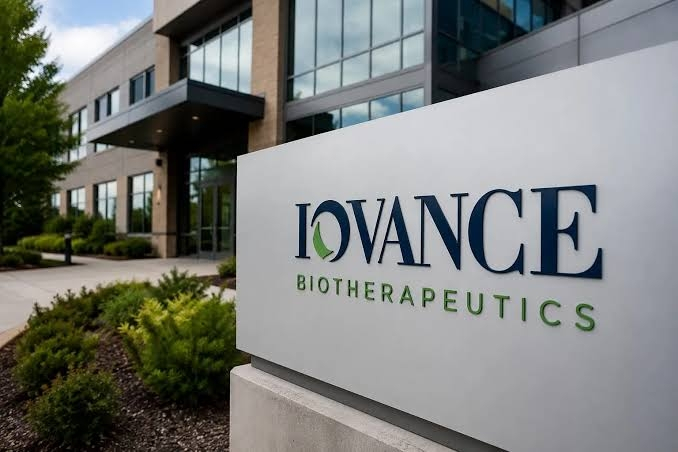

IOVA.US — Iovance Biotherapeutics: cell immunotherapy and growth prospects in oncology
About the company
Iovance Biotherapeutics (NASDAQ: IOVA) — an American biotechnology company specializing in the development and commercialization of innovative cell-based immunotherapy approaches for the treatment of solid tumors.
Iovance’s main focus is TIL therapy (Tumor-Infiltrating Lymphocytes). The approach is based on using the patient’s own immune cells, which are extracted from the tumor, multiplied in laboratory conditions, and then returned to the patient to strengthen the immune response against cancer cells.
The company’s main commercial product is Amtagvi (lifileucel)—a personalized cell therapy for certain patients with previously treated advanced melanoma.
For an investor, IOVA is interesting as a biotechnology company that is gradually moving from the stage of clinical development to scaling its commercial business.
Main investment thesis
IOVA’s investment story is built around several areas:
commercial growth of Amtagvi;
development of TIL technology;
expanding the number of medical centers using the therapy;
entering international markets;
expansion of the drug’s indications;
development of the clinical pipeline;
improving manufacturing efficiency;
the potential application of TIL technology in other solid tumors.
Thus, the company combines an already existing commercial product with the prospect of expanding its technology platform.
Amtagvi is the company’s key asset
Amtagvi is a central element of Iovance’s current commercial strategy.
The drug is intended for a specific category of patients with advanced melanoma who have previously undergone other types of treatment.
A key feature of Amtagvi is its personalized approach. The patient’s tumor material is used to isolate TIL cells. The cells then undergo a special expansion and preparation process, after which the therapy is returned to the medical center for administration to the patient.
Such a model differs significantly from traditional tablet drugs and standard pharmaceuticals.
For the business, this creates both opportunities and additional complexity, since the company must control:
obtaining patient material;
laboratory processing;
manufacturing of cell therapy;
quality control;
logistics;
engagement with medical centers;
manufacturing timelines;
delivery of the finished product to the patient.
Growth of the commercial business
One of the most important changes in Iovance’s history is the shift from a company focused primarily on research to a commercial biotechnology organization.
Amtagvi sales are becoming one of the main sources of growth.
The company is expanding the network of specialized medical centers where patients can receive therapy. The wider this network, the more potential patients the company can serve.
For an investor, it is important to monitor not only absolute revenue, but also how effectively Iovance turns the expansion of medical infrastructure into sales growth.
Manufacturing platform
For Iovance, manufacturing is strategically important.
Cell therapy is a complex manufacturing process because the drug is essentially created individually for a specific patient.
The company develops its own manufacturing infrastructure, aiming to:
reduce the production cycle;
increase the number of orders that can be processed simultaneously;
improve production efficiency;
control quality;
reduce operating expenses;
scale the commercial business.
If the company can increase production volumes while also improving efficiency, this could potentially have a positive impact on gross margin.
International development
The next potential source of growth is international expansion.
Iovance is working to expand the availability of its technology beyond the United States.
International development may include:
obtaining regulatory approvals;
building partnerships;
developing medical infrastructure;
organizing supply;
building a network of specialized centers.
Successful international scaling can increase the company’s potential market, but each new region comes with its own regulatory and commercial requirements.
Clinical pipeline
One of the most important factors in the long-term assessment of IOVA remains the clinical pipeline.
The company is exploring the possibility of using TIL technology in various solid tumors.
Among the research areas considered are:
melanoma;
non-small cell lung cancer;
sarcomas;
other solid tumors;
combinations with other treatment methods.
If research leads to new regulatory approvals, Iovance’s technology could be used for a much larger number of patients.
This could potentially change the scale of the company’s business.
However, clinical studies remain one of the primary risks in the biotechnology sector: positive results from one stage of research do not guarantee subsequent drug approval.
Financial dynamics
For an investor, it is important to evaluate IOVA not only through the technology’s prospects, but also through the actual financial dynamics.
The company demonstrated a substantial increase in commercial revenue as Amtagvi sales expanded.
In 2026, the company also raised its forecast for annual revenue, reflecting expectations for further growth in its commercial business.
When analyzing financial results, an investor should pay attention to:
revenue growth;
Amtagvi sales;
gross margin;
operating expenses;
research expenses;
cash reserves;
cash flow;
need for additional financing.
For a fast-growing biotechnology company, revenue growth by itself is not the only indicator. Just as important is understanding how quickly the company is moving toward a sustainable operating model.
What can support IOVA growth
Expansion of Amtagvi
Increasing the number of patients and medical centers can support growth in the sales of the core product.
New indications
Obtaining additional indications for lifileucel can increase the potential patient population.
Development of the TIL platform
Success of the technology in other types of tumors could turn a single drug into a broader technology platform.
International expansion
Entering new markets increases the potential customer base.
Manufacturing efficiency
Optimizing production can help improve the business’s margins.
Growth of the commercial infrastructure
Expanding the network of medical centers creates a foundation for further increasing the number of patients.
Key risks
Clinical risk
New research may not confirm the expected effectiveness of the therapy. Negative results can significantly change the outlook for individual programs.
Regulatory risk
Obtaining approvals for new indications and entering international markets depend on decisions by regulatory authorities.
Commercial risk
Drug approval does not guarantee rapid sales growth. Important factors include the cost of treatment, insurance coverage, the availability of medical centers, and physicians’ readiness to use the new technology.
Manufacturing risk
Personalized cell therapy is significantly more complex than standard medications. Any issues with manufacturing, quality, or logistics can affect the commercial outcome.
Financial risk
Developing new drugs requires significant investment. The company simultaneously funds manufacturing, commercial expansion, and clinical studies.
Focus on the core product
At the current stage, a significant part of the company’s commercial history is tied to Amtagvi. Therefore, the sales dynamics of this drug are very important for the business.
High volatility
Shares of biotechnology companies can react significantly to:
clinical outcomes;
regulatory decisions;
quarterly reports;
forecast changes;
research results;
news about partnerships;
changes in cash reserves.
What an investor should look at in the coming quarters
When analyzing IOVA, it makes sense to regularly track the following metrics:
1. Amtagvi sales
They show how successfully the company turns drug approval into a commercial business.
2. Number of medical centers
Expansion of the network may indicate the development of infrastructure for treating patients.
3. Gross margin
Allows you to assess the effectiveness of the production model.
4. Cash reserves
These are especially important for assessing the company’s financial resilience.
5. Clinical trials
New results can significantly change the business’s long-term potential.
6. Regulatory decisions
New approvals can expand the potential market.
7. International development
Entering new markets may become an additional source of growth.
8. Operating expenses
It is important to assess how quickly revenue growth is outpacing the increase in expenses.
IOVA as a long-term investment story
Iovance Biotherapeutics is an interesting example of how a biotechnology company transitions from the development stage to commercialization.
The company already has an approved cell therapy and is developing infrastructure to scale it.
At the same time, the future value of the business will depend not only on Amtagvi’s current sales, but also on Iovance’s ability to expand the use of TIL technology.
The key question for long-term analysis is whether the company can turn TIL therapy from a specialized treatment method into a broader platform for treating various solid tumors.
Conclusion
IOVA.US is Iovance Biotherapeutics—a biotechnology company focused on advancing cell immunotherapy and TIL technology.
The foundation of the current business is Amtagvi, and the long-term potential is tied to expanding indications, developing new clinical programs, international expansion, and improving manufacturing efficiency.
For an investor, IOVA is a company that is reasonable to analyze across three areas at the same time:
commercial sales → clinical pipeline → financial resilience.
The combination of these factors will determine the further business dynamics and the company’s ability to scale its technology platform.
Before making an investment decision, it is necessary to separately evaluate the current market capitalization, share price, financial statements, cash flow, the size of cash reserves, clinical outcomes, and valuation relative to future revenues.