$2,680 worth of ETH—why are you panicking?
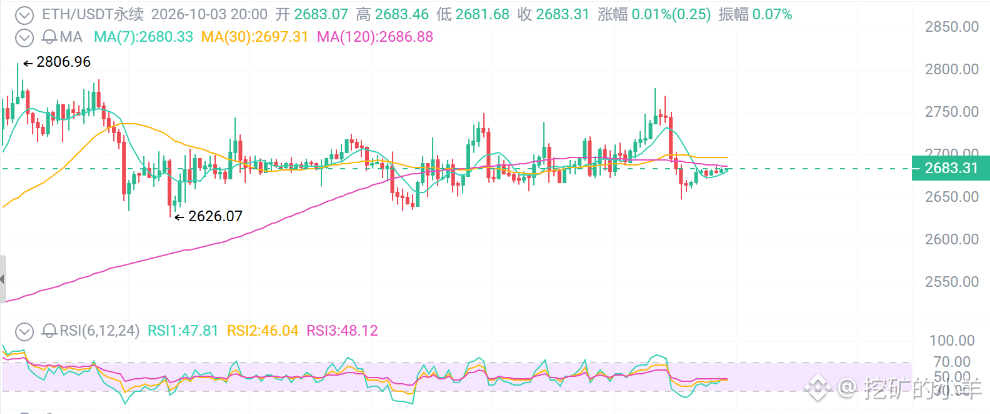
First, look at the surface: On October 2, ETH spiked to 2,778. Everyone thought it was about to break 2,800—then a single bearish candle slammed it back to 2,650, and today it’s just chopping around 2,680. In the past 24 hours, it’s down 2%, tracking BTC. It hasn’t collapsed independently, and it hasn’t rallied independently. The 7-day moving average is being hugged, while volume is lukewarm.
The 4-hour chart looks a bit ugly: 2,680 is below the pivot point of 2,700, and near-term control is in the hands of the bears.
First thing: The ETF has started distributing money, but the market hasn’t reacted yet.
BlackRock’s ETHB has a staking ratio of 70%–90%. Grayscale’s ETHE has a staking ratio of 81%, with a net yield of 2.05%.
Before, when you bought an ETH ETF, you could basically only benefit from price appreciation. Now, when you buy an ETH ETF, you can “lie back” and earn interest as well. A passive 2% yield—what does that equate to in traditional finance? It’s like a high-yield savings account, plus an option on ETH upside.
Second thing: EIP-8363 has been removed, but that’s actually a short-term positive.
Ethereum core developers removed EIP-8363 from the Fusaka roadmap. The idea was that as the staking rate rose, issuance would gradually be reduced—moving toward “zero yield.”
If EIP-8363 had passed, staking yield would be compressed, and the ETF’s attractiveness would decline.
Now that it’s been withdrawn, it means:
For the lending/borrowing market priced off staking rates, this is a short-term tailwind. Since the yield anchor doesn’t move, money won’t run away.
Third thing: The technical setup is stuck at a key level—waiting for a break on one side or the other.
The daily ATR is around $85. What does that mean? Within a day, a move to 2,750 or 2,575 is totally normal—there will be many “fake breakouts.”
Right now, 2,680 is below the 2,700 pivot point and around the lower middle of the trading box.
Don’t chase long. Don’t chase short. Wait until one side is broken effectively on the 4-hour timeframe, then add.
Trading strategy
Inside the box:
2,680 is below the pivot and near the lower-middle of the box. Don’t chase longs or shorts.
Pullback resistance at 2,715–2,758, and the 4-hour candles can’t reclaim it → go lightly short. Stop loss above 2,785. Targets 2,660/2,630.
If it drops to 2,630–2,650 and you see long lower wicks indicating a bounce → go in batches long. Stop loss below 2,610. Targets 2,715/2,750.
Breakout setups:
4-hour close holds above 2,778 and volume expands → look for 2,810–2,830. Stop loss on a reclaim back below 2,740.
Daily close breaks below 2,630 and can’t get back above it → short. Targets 2,575/2,530.
Cross-market conditions:
If BTC effectively breaks below 83,100, ETH’s 2,630 level likely won’t hold, and leverage should come down.
Before the October 14 inflation data, it’s suitable for range trading—not for high-leverage overnight holding to fight the position.
First, look at the surface: On October 2, ETH spiked to 2,778. Everyone thought it was about to break 2,800—then a single bearish candle slammed it back to 2,650, and today it’s just chopping around 2,680. In the past 24 hours, it’s down 2%, tracking BTC. It hasn’t collapsed independently, and it hasn’t rallied independently. The 7-day moving average is being hugged, while volume is lukewarm.
The 4-hour chart looks a bit ugly: 2,680 is below the pivot point of 2,700, and near-term control is in the hands of the bears.
First thing: The ETF has started distributing money, but the market hasn’t reacted yet.
BlackRock’s ETHB has a staking ratio of 70%–90%. Grayscale’s ETHE has a staking ratio of 81%, with a net yield of 2.05%.
Before, when you bought an ETH ETF, you could basically only benefit from price appreciation. Now, when you buy an ETH ETF, you can “lie back” and earn interest as well. A passive 2% yield—what does that equate to in traditional finance? It’s like a high-yield savings account, plus an option on ETH upside.
Second thing: EIP-8363 has been removed, but that’s actually a short-term positive.
Ethereum core developers removed EIP-8363 from the Fusaka roadmap. The idea was that as the staking rate rose, issuance would gradually be reduced—moving toward “zero yield.”
If EIP-8363 had passed, staking yield would be compressed, and the ETF’s attractiveness would decline.
Now that it’s been withdrawn, it means:
For the lending/borrowing market priced off staking rates, this is a short-term tailwind. Since the yield anchor doesn’t move, money won’t run away.
Third thing: The technical setup is stuck at a key level—waiting for a break on one side or the other.
The daily ATR is around $85. What does that mean? Within a day, a move to 2,750 or 2,575 is totally normal—there will be many “fake breakouts.”
Right now, 2,680 is below the 2,700 pivot point and around the lower middle of the trading box.
Don’t chase long. Don’t chase short. Wait until one side is broken effectively on the 4-hour timeframe, then add.
Trading strategy
Inside the box:
2,680 is below the pivot and near the lower-middle of the box. Don’t chase longs or shorts.
Pullback resistance at 2,715–2,758, and the 4-hour candles can’t reclaim it → go lightly short. Stop loss above 2,785. Targets 2,660/2,630.
If it drops to 2,630–2,650 and you see long lower wicks indicating a bounce → go in batches long. Stop loss below 2,610. Targets 2,715/2,750.
Breakout setups:
4-hour close holds above 2,778 and volume expands → look for 2,810–2,830. Stop loss on a reclaim back below 2,740.
Daily close breaks below 2,630 and can’t get back above it → short. Targets 2,575/2,530.
Cross-market conditions:
If BTC effectively breaks below 83,100, ETH’s 2,630 level likely won’t hold, and leverage should come down.
Before the October 14 inflation data, it’s suitable for range trading—not for high-leverage overnight holding to fight the position.