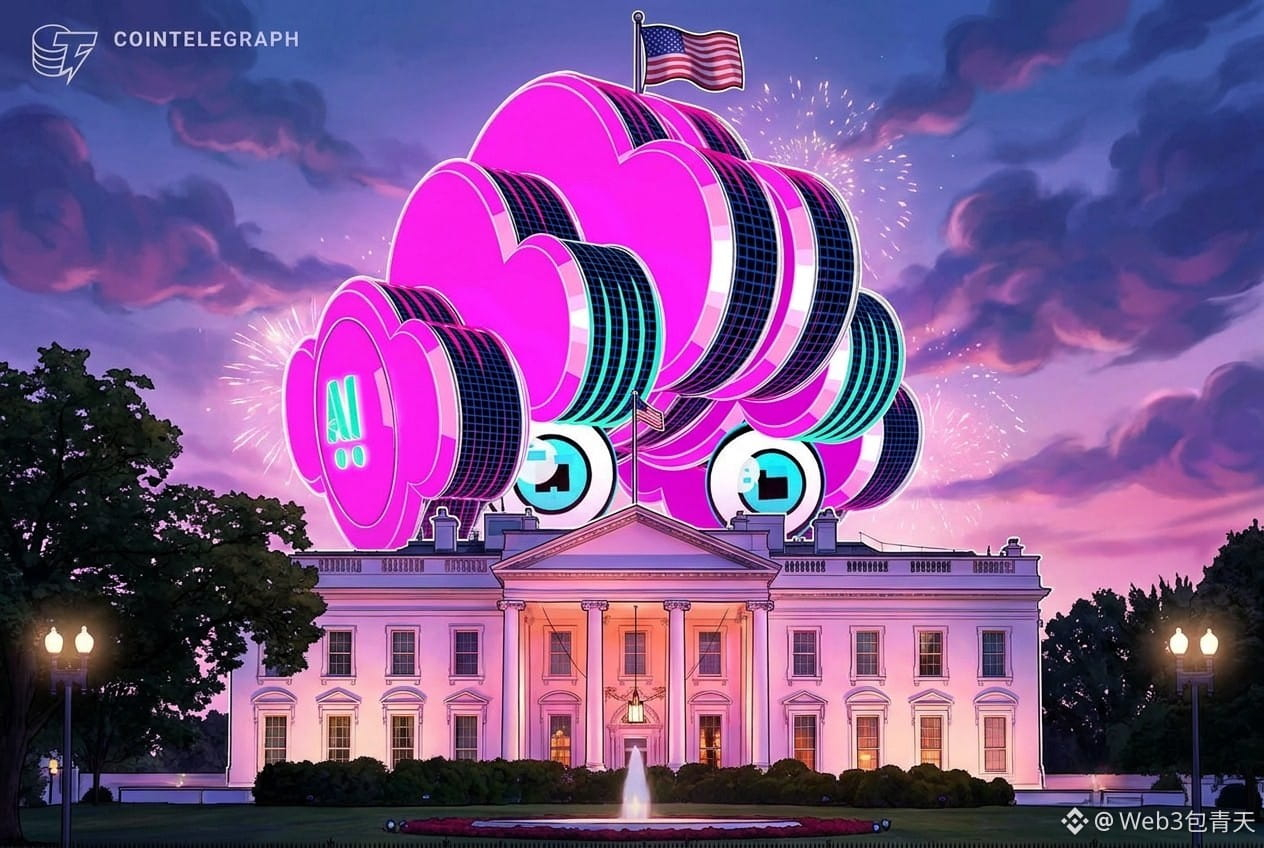
#特朗普签署ai自律协议
👉 AI监管怎么看,币安聊天室跟进
Trump is considering letting Clayton handle AI.
He previously served as the chairman of the SEC.
Now he may take over the AI innovation side.
The idea is to have tech companies self-regulate.
Let the government do less, and let businesses set their own rules.
This logic is very similar to the regulatory stance toward cryptocurrency.
Supporters believe it improves efficiency.
Businesses know the technology better, and the rules can keep up with iterative change.
Opponents worry that it has no teeth.
Self-discipline will ultimately turn into laissez-faire.
The disagreement on both sides isn’t about the technology—it’s about who will be the backstop.
The key point of debate is who will be held responsible.
Related discussions are also heating up.
Some people are calling for a dedicated AI department.
The rationale is that AI has already affected jobs and assets.
Relying on a single “czar” isn’t enough.
Power usage and siting of data centers are also under scrutiny.
Electricity prices are being treated as a new bargaining chip.
For crypto, AI and crypto share the same regulatory environment.
Whoever sets the rules first gets certainty first.
The boundary between self-regulation and oversight will be tested repeatedly.
Do you think self-regulation can keep AI in check? Let’s discuss in the comments
👉 AI监管怎么看,币安聊天室跟进
Trump is considering letting Clayton handle AI.
He previously served as the chairman of the SEC.
Now he may take over the AI innovation side.
The idea is to have tech companies self-regulate.
Let the government do less, and let businesses set their own rules.
This logic is very similar to the regulatory stance toward cryptocurrency.
Supporters believe it improves efficiency.
Businesses know the technology better, and the rules can keep up with iterative change.
Opponents worry that it has no teeth.
Self-discipline will ultimately turn into laissez-faire.
The disagreement on both sides isn’t about the technology—it’s about who will be the backstop.
The key point of debate is who will be held responsible.
Related discussions are also heating up.
Some people are calling for a dedicated AI department.
The rationale is that AI has already affected jobs and assets.
Relying on a single “czar” isn’t enough.
Power usage and siting of data centers are also under scrutiny.
Electricity prices are being treated as a new bargaining chip.
For crypto, AI and crypto share the same regulatory environment.
Whoever sets the rules first gets certainty first.
The boundary between self-regulation and oversight will be tested repeatedly.
Do you think self-regulation can keep AI in check? Let’s discuss in the comments