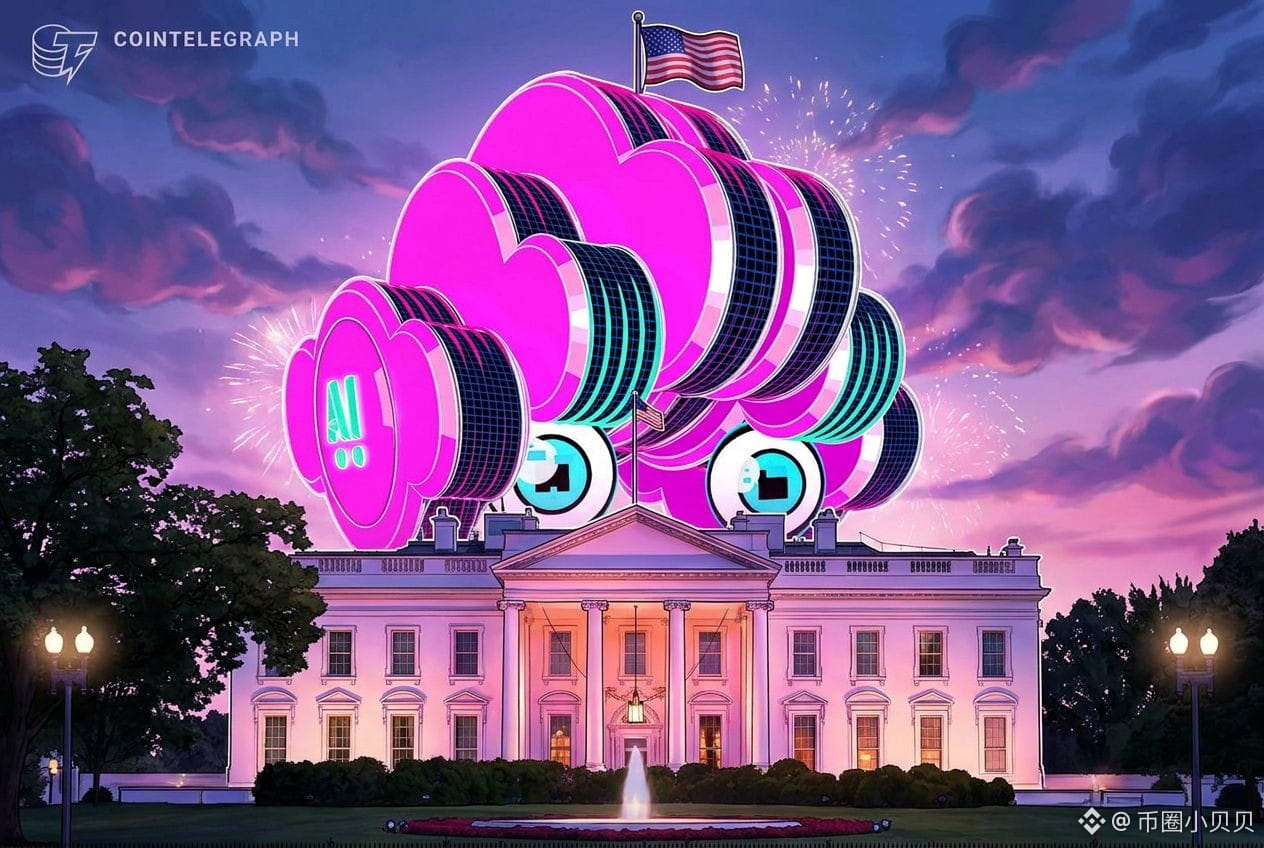
First, the conclusion: what really matters in this appointment may not be the AI itself, but rather the question of “who defines the boundaries of AI.” And it looks like this responsibility has landed in the hands of someone who has handled encryption.
🤖 进群看叙事
Most people see this as just another Washington personnel announcement.. The White House is reportedly going to appoint Jay Clayton as the new head of AI affairs. He is currently the U.S. Director of National Intelligence, and previously served as the Chairman of the SEC.. From the sound of it, it seems unrelated to the crypto world—so with a different headline you could easily overlook it..
What’s truly worth watching is how he handled crypto back then.. In 2017, within the SEC he set up a “Cyber Unit” dedicated to monitoring ICOs and digital assets.. Before leaving in 2020, during his tenure he filed a total of 57 cases involving digital assets, blockchain-related businesses, and ICOs. The headline case was suing Ripple, alleging that about $1.3 billion worth of XRP was not registered as a security.. This “enforcement first” playbook was later inherited—and amplified—by his successor, and it became the hardest years the industry has had to endure.
So the point here isn’t “that he will oversee AI,” but rather whether the mindset behind how he regulated crypto will be carried over to AI.. The two tracks—AI and crypto—were already converging: AI agents using stablecoins for settlement, decentralized compute for issuing tokens, and compute and data assets being moved on-chain.. Once the rule-makers’ reach extends over this space, the key question becomes which kinds of projects can stay and which will be pushed into gray areas—meaning the valuation logic will have to be rewritten end-to-end.
The funding clues also line up.. Money is now flowing into the AI narrative: chip leaders’ market caps have already climbed into the $5.7 trillion range; on the crypto side, the AI theme is one of the few directions still attracting capital.. But it’s worth noting that this reported new role reportedly does not come with crypto authority.. The previous officeholder handled both crypto and AI under one roof, and after his term ended in March this year, the two tracks split.
In other words, AI policy will stand as its own line, while crypto is more like “included along the way.” The real thing to watch is who will define the standards for AI safety next.. If the White House continues down the path of self-regulation, then on-chain AI projects may be treated more leniently; but if the safety camp’s calls end up outweighing the industry camp’s, the first area likely to tighten will be those projects that still haven’t laid out clear compliance routes.
By then, the AI coin that has surged the most may also be the first one to be named.. Before the rules land, this order of events—what comes first—may be more important to understand in advance than the price.
🤖 进群看叙事
Most people see this as just another Washington personnel announcement.. The White House is reportedly going to appoint Jay Clayton as the new head of AI affairs. He is currently the U.S. Director of National Intelligence, and previously served as the Chairman of the SEC.. From the sound of it, it seems unrelated to the crypto world—so with a different headline you could easily overlook it..
What’s truly worth watching is how he handled crypto back then.. In 2017, within the SEC he set up a “Cyber Unit” dedicated to monitoring ICOs and digital assets.. Before leaving in 2020, during his tenure he filed a total of 57 cases involving digital assets, blockchain-related businesses, and ICOs. The headline case was suing Ripple, alleging that about $1.3 billion worth of XRP was not registered as a security.. This “enforcement first” playbook was later inherited—and amplified—by his successor, and it became the hardest years the industry has had to endure.
So the point here isn’t “that he will oversee AI,” but rather whether the mindset behind how he regulated crypto will be carried over to AI.. The two tracks—AI and crypto—were already converging: AI agents using stablecoins for settlement, decentralized compute for issuing tokens, and compute and data assets being moved on-chain.. Once the rule-makers’ reach extends over this space, the key question becomes which kinds of projects can stay and which will be pushed into gray areas—meaning the valuation logic will have to be rewritten end-to-end.
The funding clues also line up.. Money is now flowing into the AI narrative: chip leaders’ market caps have already climbed into the $5.7 trillion range; on the crypto side, the AI theme is one of the few directions still attracting capital.. But it’s worth noting that this reported new role reportedly does not come with crypto authority.. The previous officeholder handled both crypto and AI under one roof, and after his term ended in March this year, the two tracks split.
In other words, AI policy will stand as its own line, while crypto is more like “included along the way.” The real thing to watch is who will define the standards for AI safety next.. If the White House continues down the path of self-regulation, then on-chain AI projects may be treated more leniently; but if the safety camp’s calls end up outweighing the industry camp’s, the first area likely to tighten will be those projects that still haven’t laid out clear compliance routes.
By then, the AI coin that has surged the most may also be the first one to be named.. Before the rules land, this order of events—what comes first—may be more important to understand in advance than the price.