


Will August’s PCE pull down the probability of an October rate hike, and will September’s nonfarm payrolls bring the probability of an October rate hike back up?
As of now, the probability of a rate hike in October is 23.8%, and in December it is 63.4%. Although expectations for rate hikes have been pushed back, strictly speaking, the probabilities for rate hikes are still in an uncertain stage #比特币升至8.5万美元附近
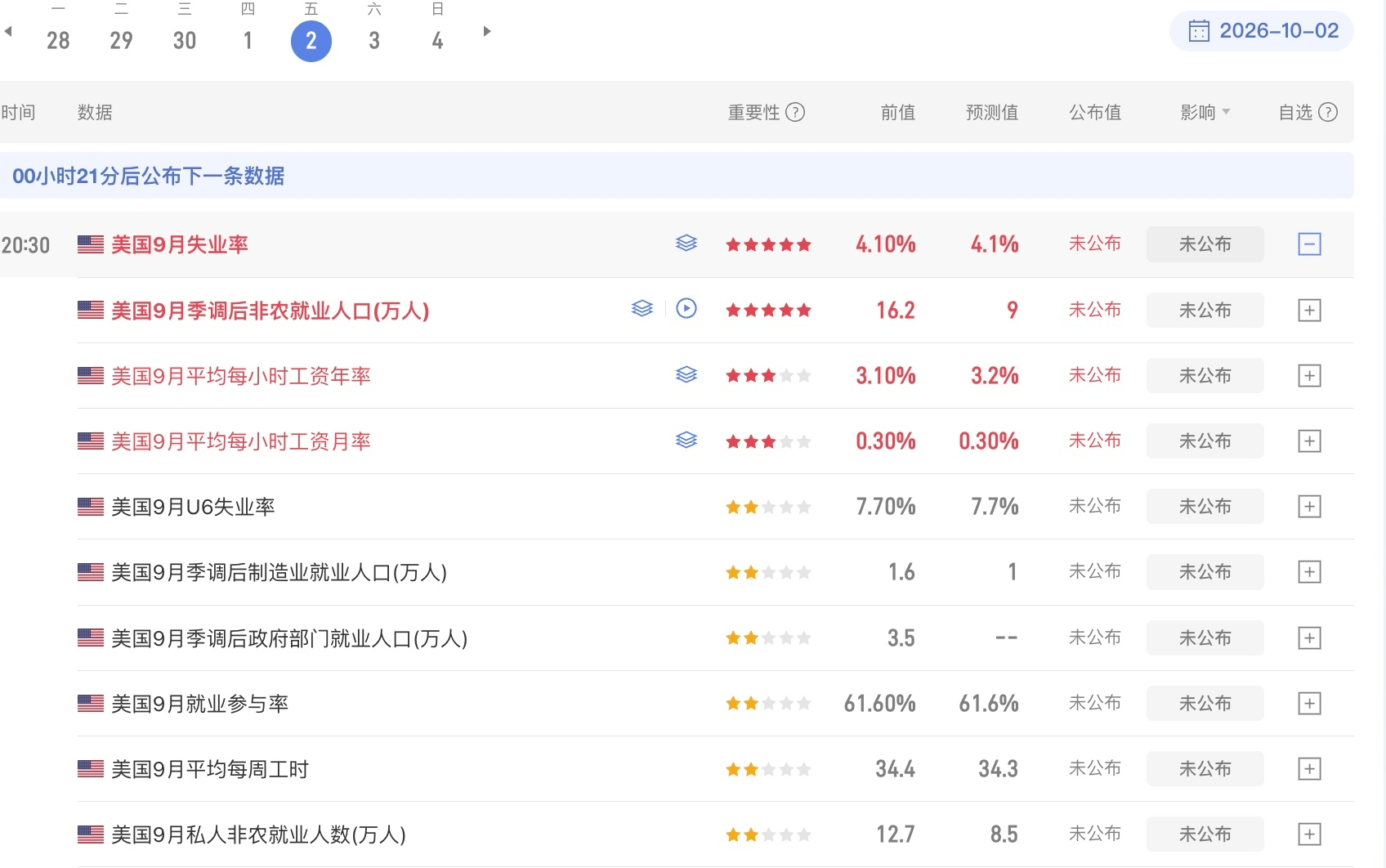
For the market, an expected pace of rate hikes is not scary. What’s scary is an uncertain path of rate hikes—it will make the market unwilling to price things in advance. That’s why tonight’s big nonfarm payrolls data is so important.
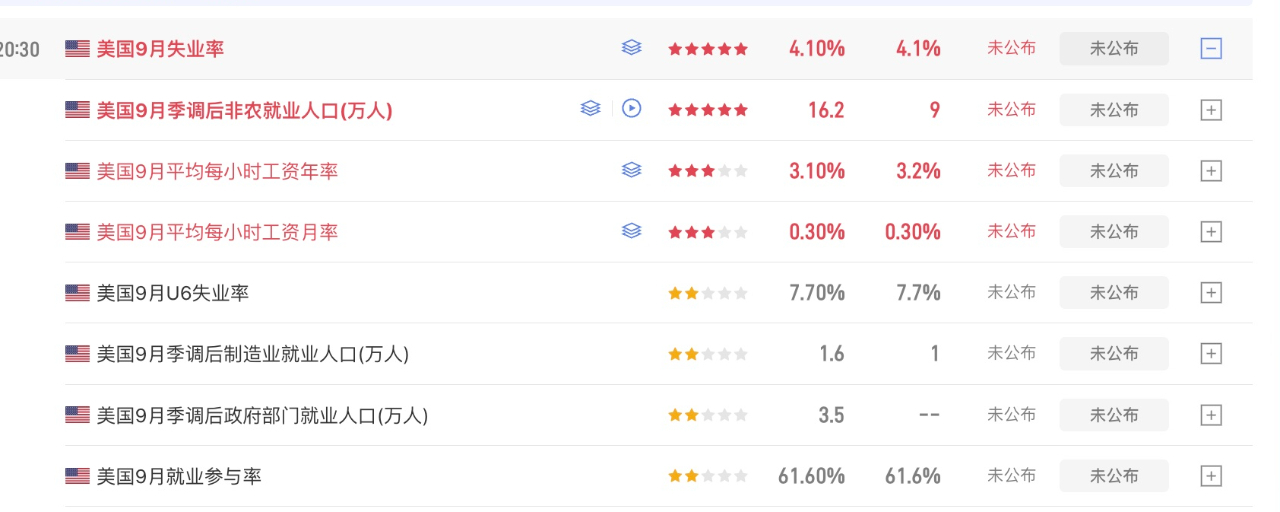
As of this month, the predicted range for the nonfarm payrolls data is 35k–180k. Currently, most expectations cluster in the 84k–90k range, while the prior value of 162k for August had previously been widely attributed by many economists to seasonal factors amplifying the figure.
So tonight, it’s not only the September nonfarm payrolls you need to watch, but also the revisions to the August data. Based on the 90k figure tonight, you can categorize the outcomes into three different scenarios:
a, best data. ≤50k, unemployment ≥4.2%, and wages ≤3.1%. This is a dovish signal of employment cooling. Weak employment would limit the Fed’s space to hike rates. It would not only further weaken October rate-hike expectations; the market may even debate whether to hike in December!
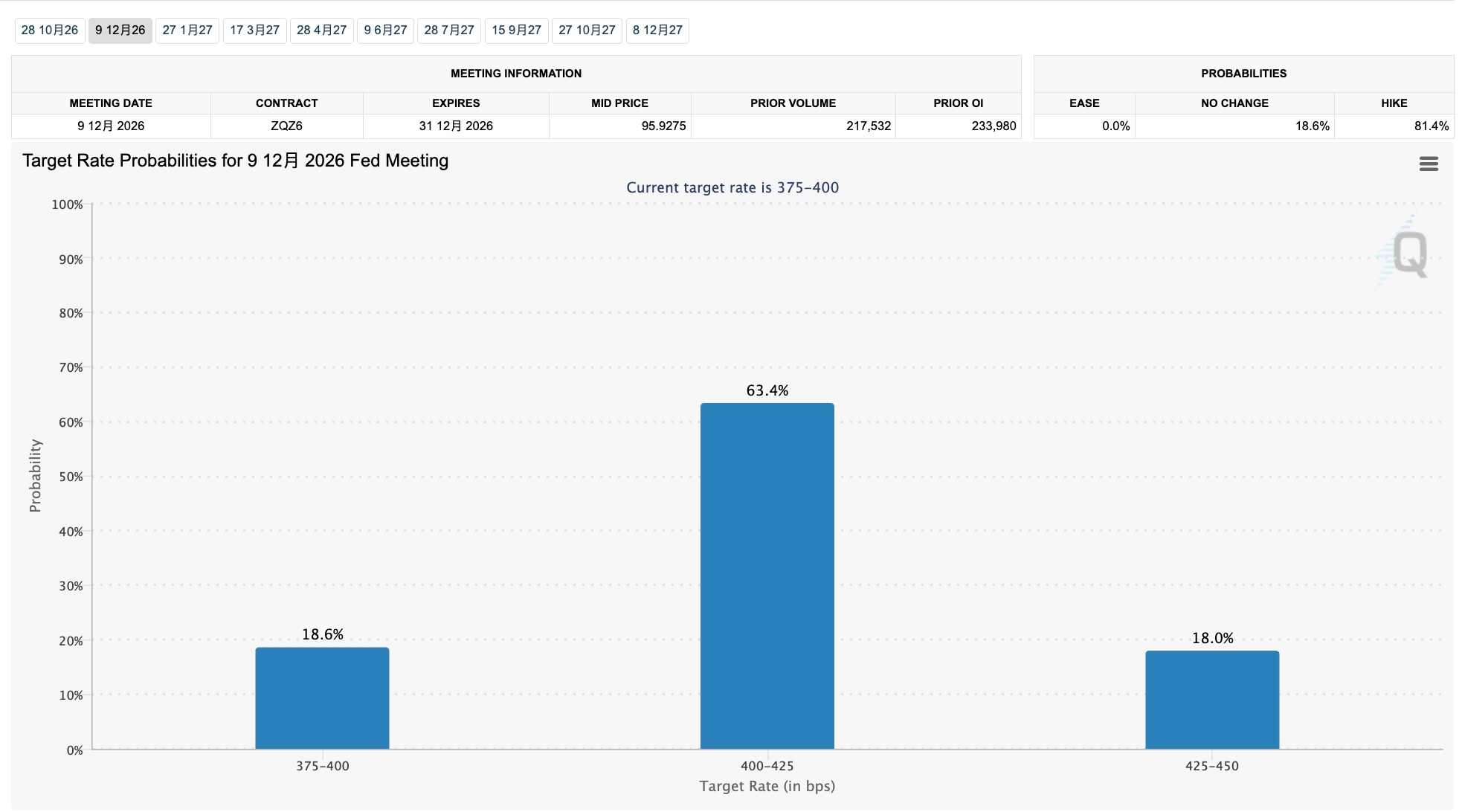
b, neutral data—also the most ideal combination the Fed could want. Nonfarm payrolls in the 80k–100k range, unemployment at 4.1%, and wages around 3.2%, implying stable growth in employment and wages. With the economy showing resilience, it’s the most favorable for upside room for rate hikes. In this scenario, it would further increase the probability of a December rate hike, and the market would then start pricing in the December hike.
c, bad data. Nonfarm payrolls are >120,000, unemployment is 4%–4.1%, and wage growth month-on-month is ≥0.3%. In this case, the market will worry about a cooling in PCE, but the economy is still heating up. This data would add to the Fed’s justification to hike. The probability of an October rate hike will rise, but whether it brings the probability back to above 50% is not certain; however, it will keep the market swinging in uncertainty.
d, worst data. Nonfarm employment rises by 150k, unemployment falls to 4%, and the wage month-on-month rate is ≥0.4%. This means employment and the economy are hot, which could directly push the October rate-hike probability back to around 50% or even above 60%.
In my view, tonight’s data will most likely show scenarios b and c. It probably won’t increase the October rate-hike probability too much, but it will keep pushing up the December rate-hike probability.
One thing to note: the current probability of a December rate hike is around 60%, and it hasn’t entered the initial pricing stage yet. But once tonight’s data pushes the probability above 70%, it means the market will start pricing in it.
When rate-hike expectations are pushed to December and the probability is relatively high, then in the short term it’s favorable for risk assets. However, it’s a headwind for the bond market and bearish for gold, and it’s supportive for the US dollar.
For risk markets, in the near term there’s no rate-hike pressure. For later, December rate hikes can still be assessed with more economic data. So, in the short term, it’s basically a sigh of relief!