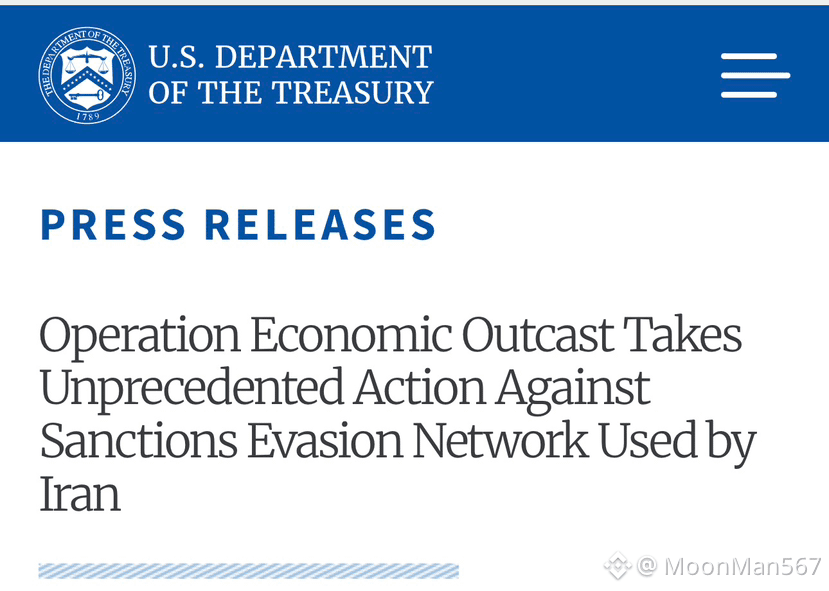
The US struck a shadow financial network that also made room for crypto.
On October 1, the Treasury, through FinCEN, proposed limiting transfers through the A7 Network sub-agents, and OFAC added the network itself to the list of significant transnational criminal organizations.
According to FinCEN, the A7 sub-agents processed over $17 billion from January 2025 to June 2026.
But what’s more interesting for the crypto market is something else.
Treasury directly links A7 with a ruble token which, according to the US agency, Russia used to bypass sanctions. The network is also linked to Nobitex—the largest digital exchange in Iran—and transactions involving North Korean crypto hackers.
And here’s my main takeaway.
In schemes like these, crypto isn’t just “anonymous money.” Tokens become part of an entire financial infrastructure where exchanges, banks, front companies, and payment intermediaries coexist.
I really like cases like this: they show the real role of blockchain much better than a hundred presentations about the future of finance.
If you want to break down crypto where marketing ends and real financial mechanics begin, subscribe to @MoonMan567
On October 1, the Treasury, through FinCEN, proposed limiting transfers through the A7 Network sub-agents, and OFAC added the network itself to the list of significant transnational criminal organizations.
According to FinCEN, the A7 sub-agents processed over $17 billion from January 2025 to June 2026.
But what’s more interesting for the crypto market is something else.
Treasury directly links A7 with a ruble token which, according to the US agency, Russia used to bypass sanctions. The network is also linked to Nobitex—the largest digital exchange in Iran—and transactions involving North Korean crypto hackers.
And here’s my main takeaway.
In schemes like these, crypto isn’t just “anonymous money.” Tokens become part of an entire financial infrastructure where exchanges, banks, front companies, and payment intermediaries coexist.
I really like cases like this: they show the real role of blockchain much better than a hundred presentations about the future of finance.
If you want to break down crypto where marketing ends and real financial mechanics begin, subscribe to @MoonMan567