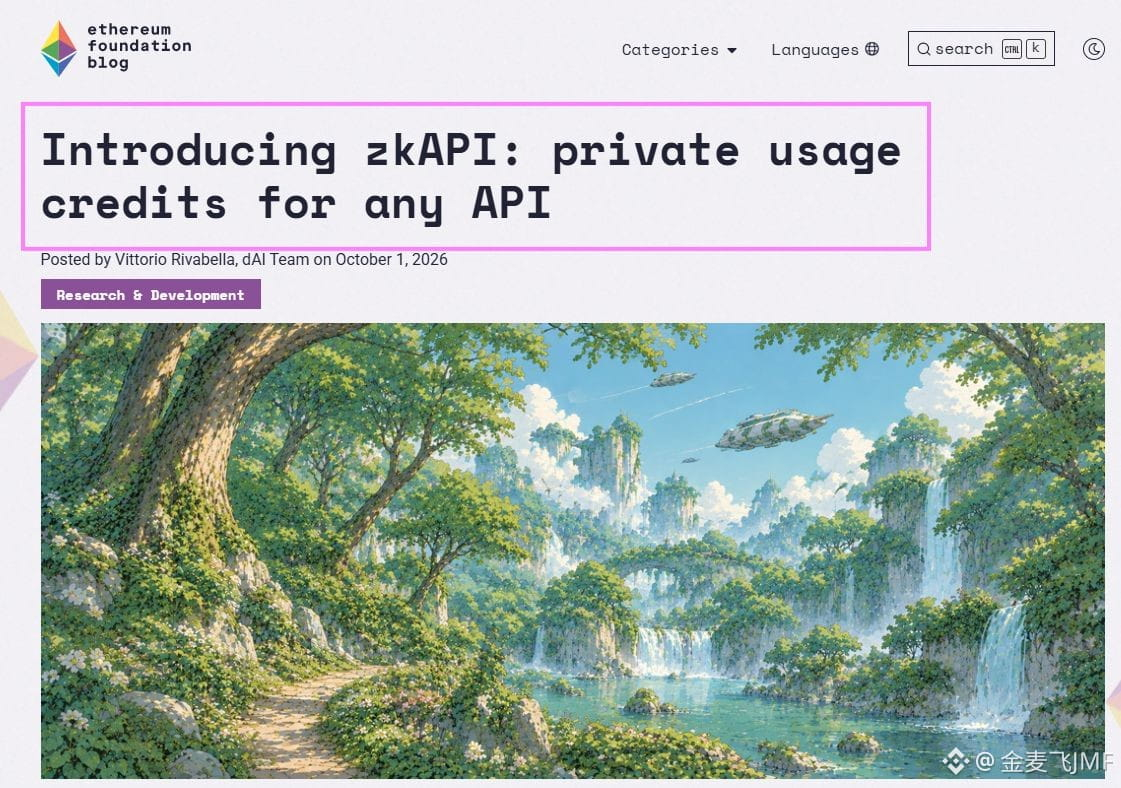
Explain in One Page: zkAPI Goes Live on the Ethereum Mainnet.
On October 1, the Ethereum Foundation announced zkAPI, which is already running on the Ethereum Mainnet. It is being jointly developed by the Open Anonymity Project and the Ethereum Foundation. Its core goal is to let users call paid APIs without tying their payment identity to their usage records.
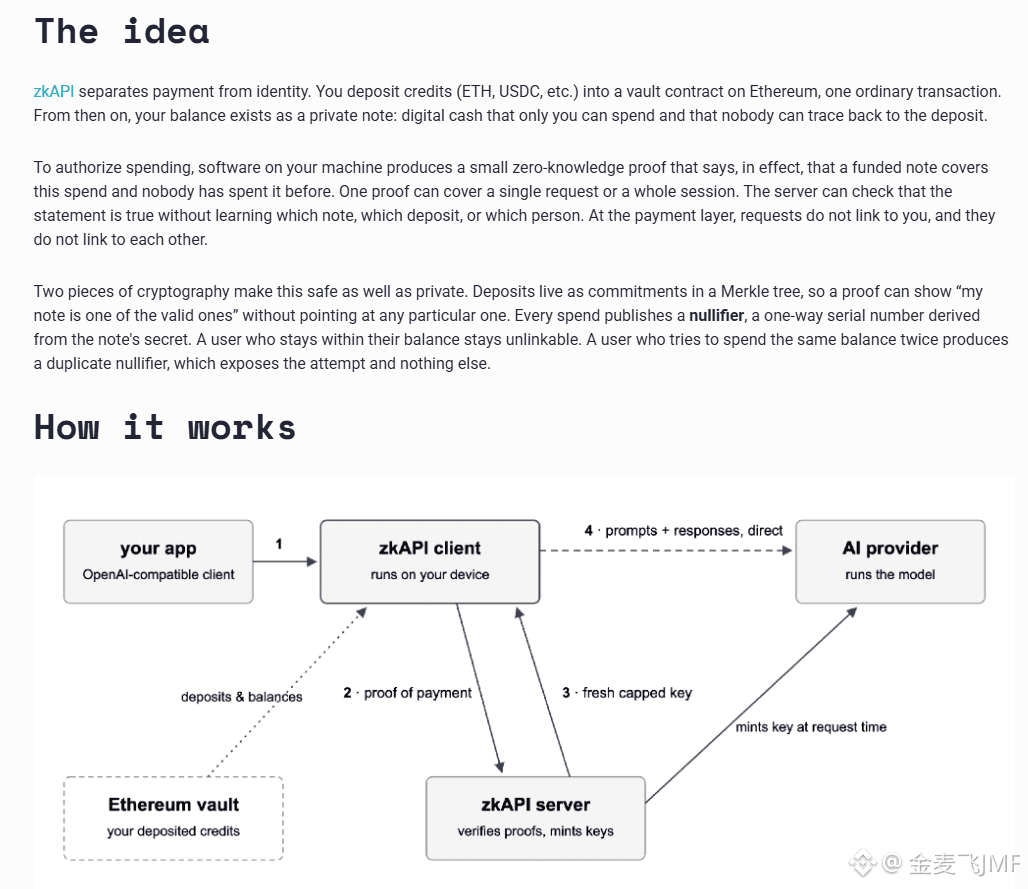
When using it, users first deposit assets such as ETH and USDC into an on-chain vault. Then, for each purchase, zero-knowledge proofs are used to confirm the balance and authorization. The service provider only knows, “This money can be used for payment,” but does not know who is paying or which deposit corresponds to which call.
It initially targets AI APIs. Traditional API keys often link accounts, payment methods, and long-term usage records together. zkAPI aims to separate this chain. In the future, it can also be used for RPC, image generation, VPN, and machine-to-machine paid services.
Of course, privacy isn’t completely anonymous. The API provider can still see the request content and network information. An IP address, writing habits, and repeated context may all reveal identity.
So, zkAPI addresses privacy in payment relationships—not hiding the entire interaction completely.
#以太坊基金会主网推出zkAPI
On October 1, the Ethereum Foundation announced zkAPI, which is already running on the Ethereum Mainnet. It is being jointly developed by the Open Anonymity Project and the Ethereum Foundation. Its core goal is to let users call paid APIs without tying their payment identity to their usage records.
When using it, users first deposit assets such as ETH and USDC into an on-chain vault. Then, for each purchase, zero-knowledge proofs are used to confirm the balance and authorization. The service provider only knows, “This money can be used for payment,” but does not know who is paying or which deposit corresponds to which call.
It initially targets AI APIs. Traditional API keys often link accounts, payment methods, and long-term usage records together. zkAPI aims to separate this chain. In the future, it can also be used for RPC, image generation, VPN, and machine-to-machine paid services.
Of course, privacy isn’t completely anonymous. The API provider can still see the request content and network information. An IP address, writing habits, and repeated context may all reveal identity.
So, zkAPI addresses privacy in payment relationships—not hiding the entire interaction completely.
#以太坊基金会主网推出zkAPI