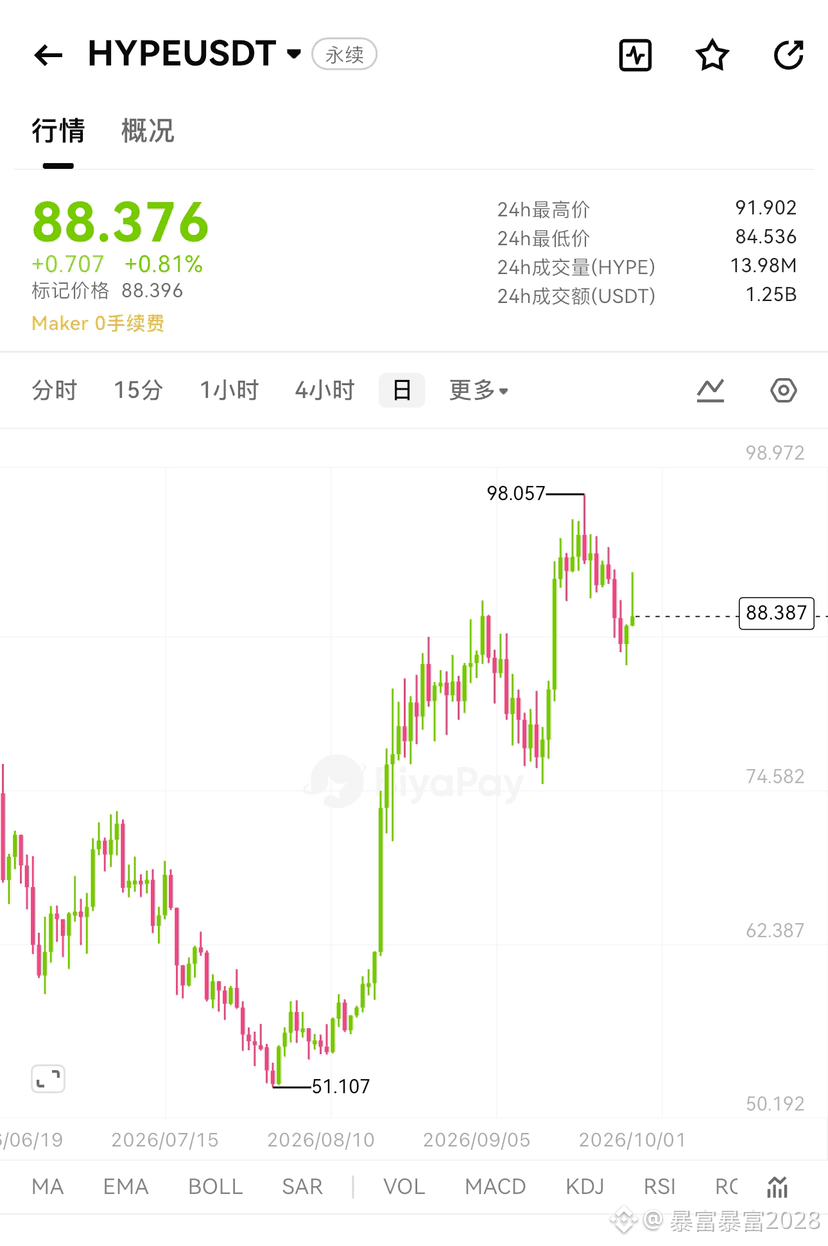
HYPE is the most typical “high-beta momentum coin”: Hyperliquid’s perpetual DEX, on-chain liquidations, and the HLP vault narrative are sexy, but the price logic is different from SOL. SOL still has the ecosystem/TVL/payments tailwinds, while HYPE is more dependent on “trading volume + open interest + risk appetite.” After PCE, the big push toward 85.6k failed—high-beta gets cut first. HYPE’s pullbacks are usually deeper than SOL’s, and its rebounds are usually crazier too.
Technical playbook (no single quote target—read the structure):
• Support: the prior platform breakout level / 4H EMA20 / the open of the previous high-volume bullish candle
• Resistance: the recent swing high / the prior high supply zone
• Volume: rebound on low volume = trapped longs reduce exposure; pullback on shrinking volume = the chips haven’t loosened; breakout with expanding volume = momentum is over
• Relative strength: when both HYPE/BTC and HYPE/SOL weaken at the same time, it signals the “overall high-beta tide is retreating.” If HYPE is weak but SOL is strong, that means capital for that particular coin is withdrawing.
A lot of people treat HYPE as the “next SOL” and go all-in—then a single 8% spike/needle wipes them out. When watching charts, don’t just open Hyperliquid’s front-end. On BiyaPay you can check the latest crypto market data and put HYPE, SOL, SUI, and WLD on one screen—who is leading down, who is holding up, and who is accumulating. You’ll understand far more than just looking at HYPE/USDC.
Strategy:
• Profits taken: when it rebounds to the prior high resistance, scale out 30–50% in batches—don’t fall in love with momentum coins
• New entries: only buy the retest on shrinking volume for support; stop loss goes 3–5% below support
• Breakdown: when the 4H candle closes below key support with volume expanding, exit—don’t average down
• Position sizing: don’t let HYPE exceed 8–10% of total capital—it can pump hard, but it can also dump hard
HYPE’s mid-term view is driven by Hyperliquid trading volume, but short-term it’s all about macro and BTC. Before Non-Farm, high beta is the most dangerous—understand the tape first, then place the bet.
Technical playbook (no single quote target—read the structure):
• Support: the prior platform breakout level / 4H EMA20 / the open of the previous high-volume bullish candle
• Resistance: the recent swing high / the prior high supply zone
• Volume: rebound on low volume = trapped longs reduce exposure; pullback on shrinking volume = the chips haven’t loosened; breakout with expanding volume = momentum is over
• Relative strength: when both HYPE/BTC and HYPE/SOL weaken at the same time, it signals the “overall high-beta tide is retreating.” If HYPE is weak but SOL is strong, that means capital for that particular coin is withdrawing.
A lot of people treat HYPE as the “next SOL” and go all-in—then a single 8% spike/needle wipes them out. When watching charts, don’t just open Hyperliquid’s front-end. On BiyaPay you can check the latest crypto market data and put HYPE, SOL, SUI, and WLD on one screen—who is leading down, who is holding up, and who is accumulating. You’ll understand far more than just looking at HYPE/USDC.
Strategy:
• Profits taken: when it rebounds to the prior high resistance, scale out 30–50% in batches—don’t fall in love with momentum coins
• New entries: only buy the retest on shrinking volume for support; stop loss goes 3–5% below support
• Breakdown: when the 4H candle closes below key support with volume expanding, exit—don’t average down
• Position sizing: don’t let HYPE exceed 8–10% of total capital—it can pump hard, but it can also dump hard
HYPE’s mid-term view is driven by Hyperliquid trading volume, but short-term it’s all about macro and BTC. Before Non-Farm, high beta is the most dangerous—understand the tape first, then place the bet.