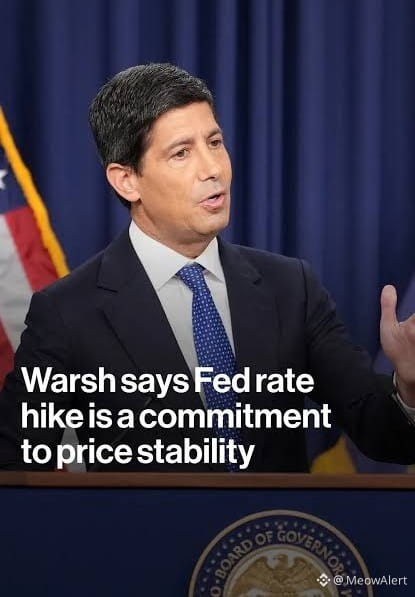
Everyone Is Talking About Rate Hikes & Cuts... But No One Explains How They Actually Work 😭 $MOVR $龙虾 $BNB
Guys, we hear this every day:
"Fed hike = bearish."
"Fed cut = bullish."
But that's not always how it works. Let me explain with a simple example.
Imagine two friends offer you money.
The first friend is extremely honest. If he promises you an extra $500, you know you'll get it. Very safe.
The second friend promises you $1,000, but sometimes he doesn't keep his word. More risk.
Now the honest friend suddenly offers you more money for the same deal. You might think:
"Why should I take the risky offer?"
That's what happens when safe returns become more attractive. Money can move away from risky assets like Bitcoin.
But if the honest friend reduces his offer, because he doesn't need to attract your money anymore, while the risky friend still offers a lot, you may feel more comfortable taking the risk.
That's one reason lower rates can support BTC.
📌 Quick note: the 10Y and 30Y yields are what the US government pays to borrow money. They act like the "honest friend's offer" for the whole market. That's why I watch them.
Now the important part 👇
If the Fed cuts because inflation is falling and the economy is healthy, that can be positive for risk assets like BTC.
But if the Fed cuts because the economy is breaking down (jobs falling, recession fears rising), people may still sell BTC because they're worried.
Same with hikes.
A hike can hurt BTC if it pushes yields higher and makes money tighter.
But if the hike was already expected and yields barely move, BTC can simply ignore it.
So don't just ask: "Hike or cut?"
Ask these 3 things:
1. Why did the Fed do it?
2. What are the 10Y and 30Y yields doing?
3. How is BTC reacting?
That's the part that actually matters.
Guys, we hear this every day:
"Fed hike = bearish."
"Fed cut = bullish."
But that's not always how it works. Let me explain with a simple example.
Imagine two friends offer you money.
The first friend is extremely honest. If he promises you an extra $500, you know you'll get it. Very safe.
The second friend promises you $1,000, but sometimes he doesn't keep his word. More risk.
Now the honest friend suddenly offers you more money for the same deal. You might think:
"Why should I take the risky offer?"
That's what happens when safe returns become more attractive. Money can move away from risky assets like Bitcoin.
But if the honest friend reduces his offer, because he doesn't need to attract your money anymore, while the risky friend still offers a lot, you may feel more comfortable taking the risk.
That's one reason lower rates can support BTC.
📌 Quick note: the 10Y and 30Y yields are what the US government pays to borrow money. They act like the "honest friend's offer" for the whole market. That's why I watch them.
Now the important part 👇
If the Fed cuts because inflation is falling and the economy is healthy, that can be positive for risk assets like BTC.
But if the Fed cuts because the economy is breaking down (jobs falling, recession fears rising), people may still sell BTC because they're worried.
Same with hikes.
A hike can hurt BTC if it pushes yields higher and makes money tighter.
But if the hike was already expected and yields barely move, BTC can simply ignore it.
So don't just ask: "Hike or cut?"
Ask these 3 things:
1. Why did the Fed do it?
2. What are the 10Y and 30Y yields doing?
3. How is BTC reacting?
That's the part that actually matters.