There is still no effective information regarding the U.S. and Iran to date. Yesterday, Iran confirmed that it had received feedback from the United States. Now it is time for both sides to weigh the pros and cons.
In fact, for the U.S. and Iran, as mentioned earlier, the peace camp and the hardliners are both key points that the leadership on both sides needs to balance. Resuming negotiations is relatively easy; what is more difficult—and more valuable—is figuring out a justification for portraying oneself as the winner.
At present, media reports reveal that in the early part of this week, while the U.S. was communicating with Iran, Iran had not given up its attacks and disruptions in the Strait of Hormuz. What’s more, it was also reported that Rubio had previously expelled an Iranian delegation.
No matter whether the Rubio incident is true, it shows that the hardliners within both the U.S. and Iran are proving difficult to suppress. So, rather than viewing Iran’s silence negatively, I actually think it is a good sign. Not rejecting the U.S. proposal means the leadership is weighing the pros and cons, and looking for an opportunity to return to negotiations in a posture of a victor.
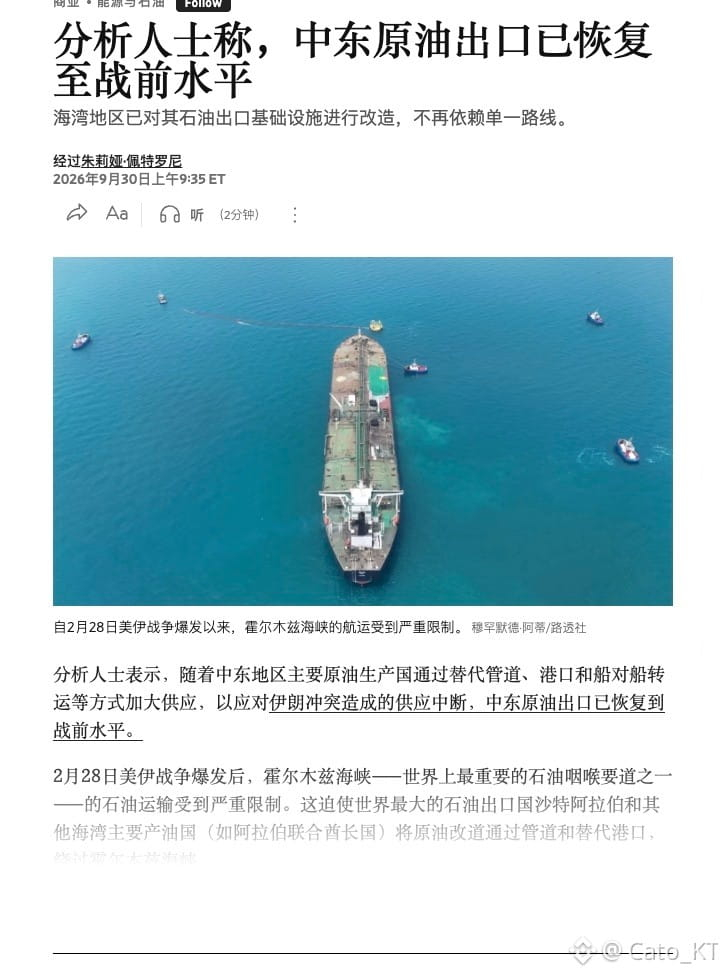
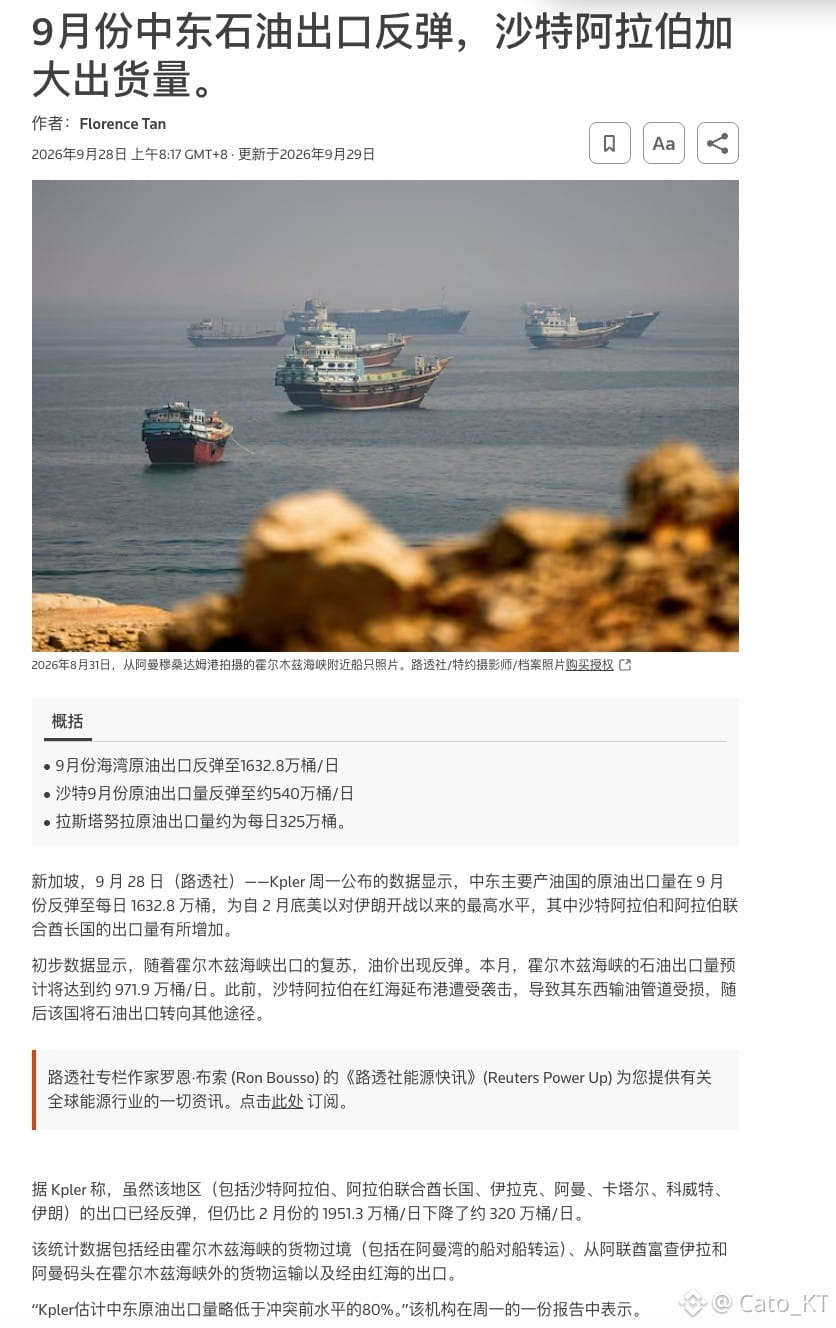
On the other hand, it is important to note that this week, the media reported multiple times that energy exports from the Strait of Hormuz have already returned to pre-war levels—yet the price of Brent has not fallen meaningfully.
Obviously, the pricing logic in the energy market is: supply conditions + capital pricing + a geopolitical risk premium.
If energy exports from the Strait of Hormuz really have returned to pre-war conditions, and the U.S.-Iran situation has already reached the stage of Iran’s response, then why is Brent still priced so high?
The answer is simple: the market’s confidence in the recovery of pre-war export data is still insufficient, and confidence in the U.S.-Iran situation is still lacking. Personally, I even have some doubts about the possibility that so-called energy exports have indeed returned to pre-war levels! #美光业绩超预期并上调指引
In fact, for the U.S. and Iran, as mentioned earlier, the peace camp and the hardliners are both key points that the leadership on both sides needs to balance. Resuming negotiations is relatively easy; what is more difficult—and more valuable—is figuring out a justification for portraying oneself as the winner.
At present, media reports reveal that in the early part of this week, while the U.S. was communicating with Iran, Iran had not given up its attacks and disruptions in the Strait of Hormuz. What’s more, it was also reported that Rubio had previously expelled an Iranian delegation.
No matter whether the Rubio incident is true, it shows that the hardliners within both the U.S. and Iran are proving difficult to suppress. So, rather than viewing Iran’s silence negatively, I actually think it is a good sign. Not rejecting the U.S. proposal means the leadership is weighing the pros and cons, and looking for an opportunity to return to negotiations in a posture of a victor.
On the other hand, it is important to note that this week, the media reported multiple times that energy exports from the Strait of Hormuz have already returned to pre-war levels—yet the price of Brent has not fallen meaningfully.
Obviously, the pricing logic in the energy market is: supply conditions + capital pricing + a geopolitical risk premium.
If energy exports from the Strait of Hormuz really have returned to pre-war conditions, and the U.S.-Iran situation has already reached the stage of Iran’s response, then why is Brent still priced so high?
The answer is simple: the market’s confidence in the recovery of pre-war export data is still insufficient, and confidence in the U.S.-Iran situation is still lacking. Personally, I even have some doubts about the possibility that so-called energy exports have indeed returned to pre-war levels! #美光业绩超预期并上调指引