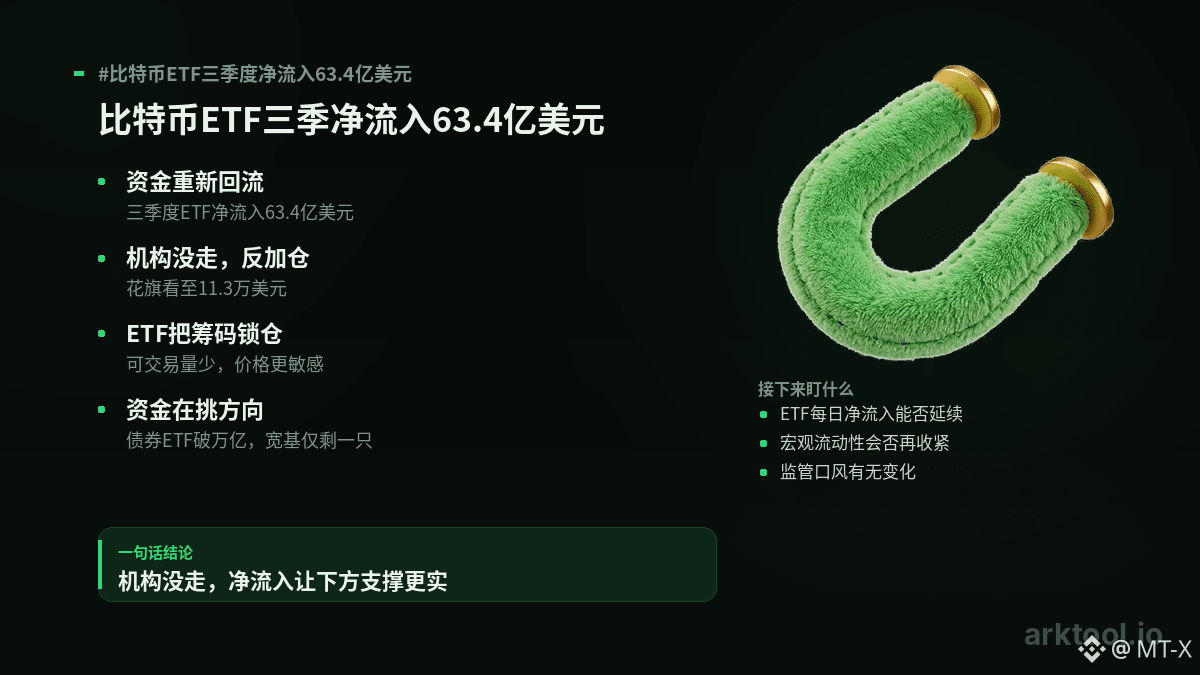
$BTC Spot Bitcoin ETFs saw net inflows of $6.34 billion in Q3. The money that had gone out earlier is back again. After the fund inflows resumed, Citibank raised its 12-month target price to $113,000.
The key isn’t the single-day number, but the sustainability. ETFs are a channel for off-exchange capital to enter; net inflows indicate real buy orders coming in. Net outflows, on the other hand, suggest institutions are pulling back. The Q3 figure at least shows that institutions haven’t left—if anything, they’re adding to positions.
For Bitcoin specifically, ETFs lock part of the float into custody accounts, reducing the amount available for trading in the market. As a result, price becomes more sensitive to new buy demand. In the first three quarters this year, the overall ETF market has also been going through reshuffling: bond ETF assets first broke the trillion-dollar mark, and only one billion-dollar-plus broad-based product remains. Capital is more willing to move toward more targeted, sector-specific directions. The money hasn’t disappeared—it’s just choosing a different direction.
Next, watch three things: whether daily ETF net inflows can be sustained; whether macro liquidity will tighten again; and whether the regulatory stance changes. As long as net inflows are still positive, Bitcoin’s downside support is stronger. But if it turns consistently negative, rebounds are more likely to lose momentum. Broader market risk appetite will also amplify short-term volatility.
# Bitcoin ETF net inflows in Q3 totaled $6.34 billion
The key isn’t the single-day number, but the sustainability. ETFs are a channel for off-exchange capital to enter; net inflows indicate real buy orders coming in. Net outflows, on the other hand, suggest institutions are pulling back. The Q3 figure at least shows that institutions haven’t left—if anything, they’re adding to positions.
For Bitcoin specifically, ETFs lock part of the float into custody accounts, reducing the amount available for trading in the market. As a result, price becomes more sensitive to new buy demand. In the first three quarters this year, the overall ETF market has also been going through reshuffling: bond ETF assets first broke the trillion-dollar mark, and only one billion-dollar-plus broad-based product remains. Capital is more willing to move toward more targeted, sector-specific directions. The money hasn’t disappeared—it’s just choosing a different direction.
Next, watch three things: whether daily ETF net inflows can be sustained; whether macro liquidity will tighten again; and whether the regulatory stance changes. As long as net inflows are still positive, Bitcoin’s downside support is stronger. But if it turns consistently negative, rebounds are more likely to lose momentum. Broader market risk appetite will also amplify short-term volatility.
# Bitcoin ETF net inflows in Q3 totaled $6.34 billion