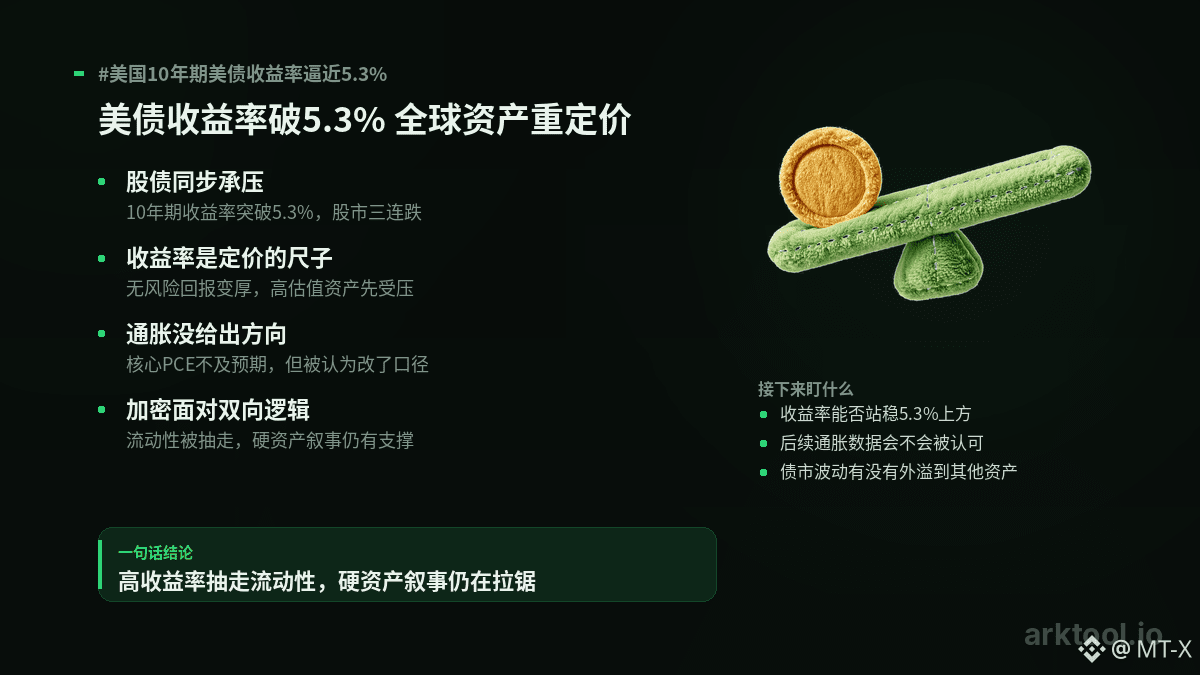
The U.S. 10-year Treasury yield has broken above 5.3%, which is the most direct signal of pressure in the current global bond market. In the third quarter, the bond market overall took a sharp hit, and the stock market also fell for three straight days.
The key is that yields are the yardstick used to price all assets. The higher they are, the thicker the risk-free return becomes, and investors’ tolerance for high-volatility assets drops. Valuations are high and those whose prices rely on future expectations are the first to be compared and judged.
On the inflation front, there’s also no clear direction. Core PCE came in below expectations, but the report itself was believed to have changed its methodology, and the market hasn’t fully bought into it—so it’s difficult to use this to judge when the pressure might ease.
$BTC is facing a two-way logic. On one side, elevated yields drain liquidity and weigh on near-term sentiment. On the other, persistent fiscal deficits and continuously expanding debt keep the narrative for hard assets alive. Which side gains the upper hand depends on whether investors treat it as a risk asset or a hedging tool.
Next, watch three things: whether yields can hold steady above 5.3%; whether subsequent inflation data will be accepted; and whether volatility in the bond market spills over into other assets.
# U.S. 10-year Treasury yield approaching 5.3%
The key is that yields are the yardstick used to price all assets. The higher they are, the thicker the risk-free return becomes, and investors’ tolerance for high-volatility assets drops. Valuations are high and those whose prices rely on future expectations are the first to be compared and judged.
On the inflation front, there’s also no clear direction. Core PCE came in below expectations, but the report itself was believed to have changed its methodology, and the market hasn’t fully bought into it—so it’s difficult to use this to judge when the pressure might ease.
$BTC is facing a two-way logic. On one side, elevated yields drain liquidity and weigh on near-term sentiment. On the other, persistent fiscal deficits and continuously expanding debt keep the narrative for hard assets alive. Which side gains the upper hand depends on whether investors treat it as a risk asset or a hedging tool.
Next, watch three things: whether yields can hold steady above 5.3%; whether subsequent inflation data will be accepted; and whether volatility in the bond market spills over into other assets.
# U.S. 10-year Treasury yield approaching 5.3%