



The number that opens the conversation
US$3.0 billion. That was the threshold that tokenized equity market capitalization crossed in the fourth week of September, according to data from RWA.xyz collected by Binance Research. In early January, it was around US$700 million. In less than nine months, the segment multiplied by more than four.
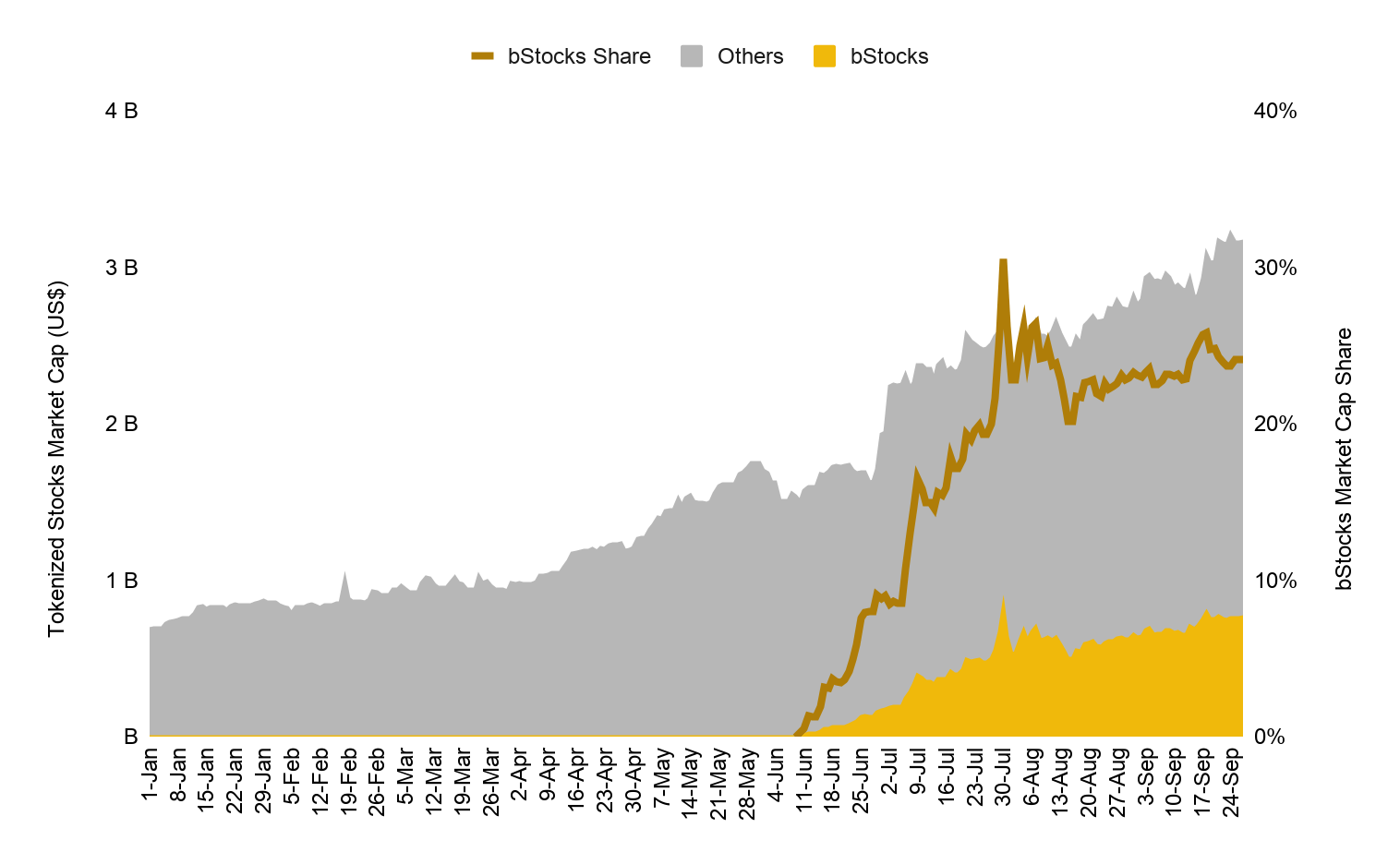
Context also matters: the broader market for tokenized real-world assets, known as RWA, reached US$38.0 billion, up 50% year-to-date in 2026. Tokenized equities account for close to 8% of that figure. They are still a small part of the overall picture, but their growth raises an interesting question: are we just seeing more tokens issued, or a market that already uses them?
To answer that, it helps to separate three things that are often mixed together: market capitalization, transfers, and use in financial applications. Each one measures a different stage.
To have a token to move it
Market cap reflects the added value of tokenized assets. It doesn’t indicate how many times they changed hands or how much new capital came in. That’s why the second data point in the report stands out: on-chain transfers of tokenized stocks surpassed US$100 billion during Q3 2026, compared with US$6 billion in Q1.
The figure includes trading operations and other transfers. It does not equal US$100 billion in net purchases nor does it cover all RWA. What it does show is a jump in circulation for this category of assets. Binance Research says bStocks drove much of the movement and reached more than 90% of weekly transfer volume at its early-August peak.
There’s an important difference between issuing a token and building a market around it. A token can exist with little activity. When it starts moving, trading, and integrating with other services, the conversation changes: we can observe how the infrastructure works, even if volume alone doesn’t reveal the reason behind each transaction.
The most demanding test: what happens next
The report also looks at how much value of tokenized stocks is used in DeFi. Its metric compares, in a 60-day rolling window, the value deployed in decentralized financial applications with the segment’s active market capitalization. This proportion rose from 1.8% to 6.3% during 2026.
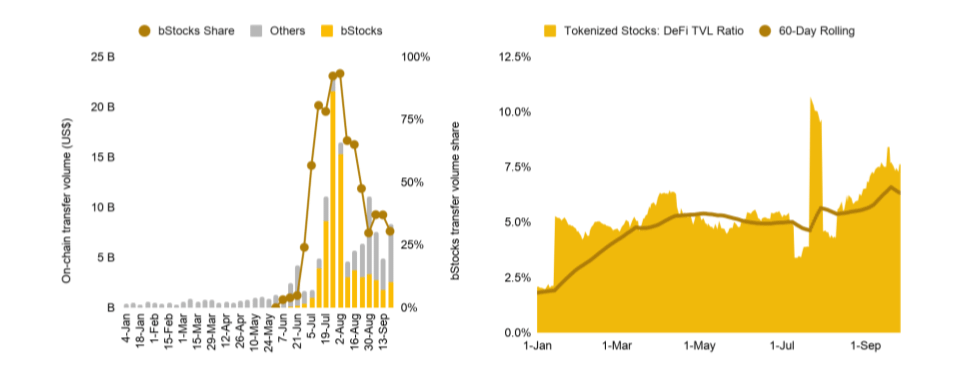
In practice, these are tokens that can be used to enter lending markets as collateral, provide liquidity, or interact with compatible protocols. That use gives them a different role than simply tracking a stock price within a platform.
But the 6.3% also helps keep scale in perspective: most of the value of tokenized stocks still hasn’t been deployed in DeFi under that measure. Plus, using a token as collateral or in a protocol adds risks related to liquidation, liquidity, smart contracts, and product terms. More utility doesn’t mean less risk by default.
Where do BNB Chain and bStocks fit?
According to the same report, BNB Chain held around US$1 billion in tokenized stocks in mid-September, about 34% of the market. It also led the count of reported holders: 1.8 million, approximately 45% of the total. That count serves as a distribution signal, though it should not be read automatically as 1.8 million distinct people.
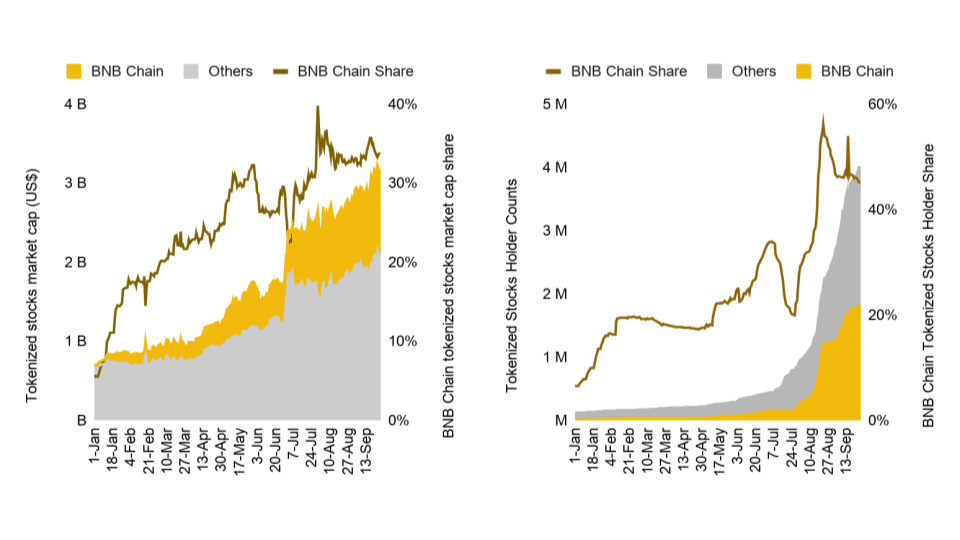
The key point is that BNB Chain hosts several products, including bStocks and Ondo tokenized stocks. Chain volume doesn’t belong entirely to Binance. Within that environment, bStocks reached around US$800 million—about a quarter of the segment’s capitalization in less than four months. Binance Research describes it as the fastest-growing tokenized stocks product in 2026 and the most transferred on-chain.
This combination of scale and movement explains why bStocks is at the center of the debate. Still, a bStock isn’t directly a share of the underlying company. Binance’s official landing defines it as a tokenized value backed by a corresponding share, without direct ownership of that share for the holder. Before thinking about trading hours or possible DeFi uses, you need to understand that structure and check eligibility, jurisdiction, and applicable documents.
What changes for the on-chain economy
For a long time, much of on-chain activity was explained by assets born within the crypto ecosystem itself. Now it’s starting to coexist with instruments tied to traditional markets. The US$3 billion milestone shows the scale reached; the US$100 billion in transfers shows circulation; the rise in DeFi usage shows an additional function. These are related signals, but they’re not interchangeable.
That’s why it’s worth qualifying the phrase “speculation is over.” The data doesn’t allow that claim. What it does allow is a more concrete read: tokenized stocks already have observable activity that goes beyond simply announcing issuances. The next test will be sustaining that activity with liquidity, clarity on rights and risks, and uses that remain relevant when market enthusiasm changes.
If you want to learn how bStocks work, check their official page. Review availability, the product structure, and the applicable risks before making a decision.
Conclusion
The headline figure for September is market capitalization. The story worth following is what portion of that value is in circulation, what portion is used, and under what conditions.
BNB Chain and bStocks show a concrete path to bring equity exposure to networks that are always active. The market is still building its usage rules. Looking at the figures in context helps distinguish real growth from a rushed conclusion.
What data would you follow after the milestone?
If you had to choose one metric to evaluate this market over the coming months, would you look at market cap, transfers, or use in DeFi? Tell me why in the comments. Follow the profile for more educational analysis on tokenization, and share this article if it helped you read the numbers more clearly.
⸻
This article is for informational purposes and does not constitute financial advice or an investment recommendation. Tokenized assets are subject to market, product, and availability risks. Investigate the applicable conditions and make your own decisions.