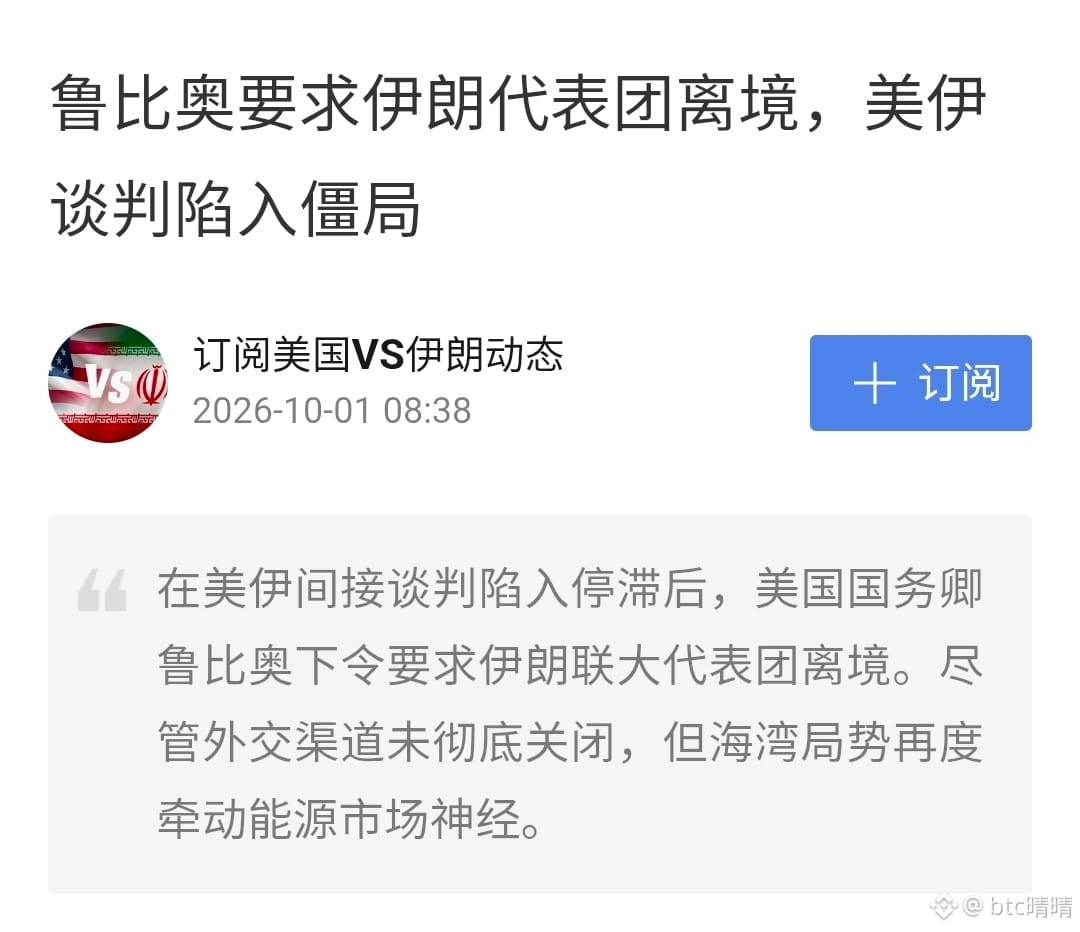
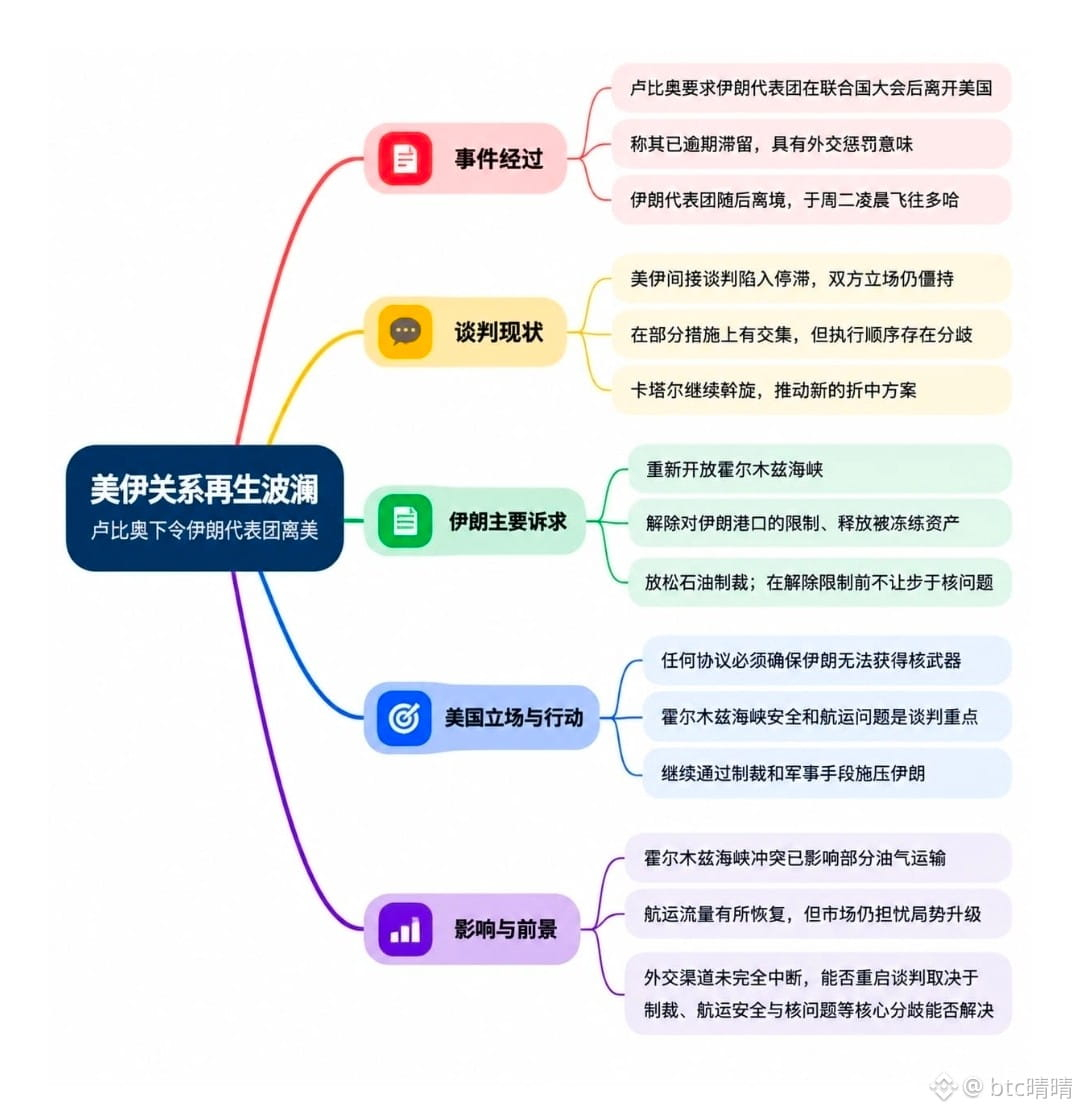
#美伊谈判最新进展 Negotiations between Iran and the U.S. have stalled, and the direct impacts include an upgrade in geopolitical risk, restricted shipping through the Strait of Hormuz, disruptions in crude oil transport, and a rise in market risk-averse sentiment. Bitcoin’s impact is mainly reflected in the following dimensions:
1️⃣ Macroeconomic transmission: energy-driven inflation and tightened liquidity suppress it
1. Crude oil and inflation: The Strait of Hormuz accounts for roughly one-fifth of global crude oil transport. Tensions may lead to conflict in the strait and disrupt oil and gas shipping, directly pushing up international oil prices. A surge in oil prices will intensify global inflation expectations, forcing the Federal Reserve to maintain high interest rates/tight monetary policy—leading to a stronger U.S. dollar and higher yields on U.S. Treasuries
2. Suppression of Bitcoin: In today’s pricing framework, Bitcoin more often plays the role of a “high-volatility risk asset sensitive to macro liquidity” rather than a pure safe-haven asset. Under conditions of tightened liquidity and higher interest rates, capital tends to withdraw from high-leverage and high-risk assets. As a result, Bitcoin typically faces selling pressure, pullbacks, and risks of large-scale long liquidations (blow-ups)
2️⃣ Safe-haven attributes and capital reallocation: a double game
1. Risk of safe-haven logic failing: When real geopolitical risk breaks out locally and global risk appetite rapidly deteriorates, Bitcoin often does not follow the safe-haven logic of gold. Instead, it may experience sharp drops due to its own high volatility and liquidation-driven stampedes in leveraged funds. Capital will prioritize cash, highly liquid assets, or traditional safe-haven instruments
2. “Teeter-totter” capital effect: If traditional tech stocks/U.S. equities face severe pressure from high oil prices and interest rates, some capital may look for a narrative-independent crypto market for internal rebalancing, or use it as a cross-border transfer/alternative settlement tool. In the short term, this could bring incremental local funding, but overall it is unlikely to change the macro suppression backdrop
3️⃣ Structural impacts of sanctions evasion and on-chain demand
The U.S. continues to sanction Iran. Iran’s demands include lifting sanctions and releasing frozen assets. Under long-term sanctions, Bitcoin and stablecoins are important tools for countries like Iran to evade U.S. dollar sanctions and move funds cross-border
If this diplomatic stalemate causes sanctions to persist, settlement demand for crypto assets at specific on-chain addresses is likely to remain active. If future negotiations unexpectedly break the deadlock, this “sanctions-evasion-type demand” may fall #QNT一周涨287% #美国8月核心PCE降至3% $BTC
1️⃣ Macroeconomic transmission: energy-driven inflation and tightened liquidity suppress it
1. Crude oil and inflation: The Strait of Hormuz accounts for roughly one-fifth of global crude oil transport. Tensions may lead to conflict in the strait and disrupt oil and gas shipping, directly pushing up international oil prices. A surge in oil prices will intensify global inflation expectations, forcing the Federal Reserve to maintain high interest rates/tight monetary policy—leading to a stronger U.S. dollar and higher yields on U.S. Treasuries
2. Suppression of Bitcoin: In today’s pricing framework, Bitcoin more often plays the role of a “high-volatility risk asset sensitive to macro liquidity” rather than a pure safe-haven asset. Under conditions of tightened liquidity and higher interest rates, capital tends to withdraw from high-leverage and high-risk assets. As a result, Bitcoin typically faces selling pressure, pullbacks, and risks of large-scale long liquidations (blow-ups)
2️⃣ Safe-haven attributes and capital reallocation: a double game
1. Risk of safe-haven logic failing: When real geopolitical risk breaks out locally and global risk appetite rapidly deteriorates, Bitcoin often does not follow the safe-haven logic of gold. Instead, it may experience sharp drops due to its own high volatility and liquidation-driven stampedes in leveraged funds. Capital will prioritize cash, highly liquid assets, or traditional safe-haven instruments
2. “Teeter-totter” capital effect: If traditional tech stocks/U.S. equities face severe pressure from high oil prices and interest rates, some capital may look for a narrative-independent crypto market for internal rebalancing, or use it as a cross-border transfer/alternative settlement tool. In the short term, this could bring incremental local funding, but overall it is unlikely to change the macro suppression backdrop
3️⃣ Structural impacts of sanctions evasion and on-chain demand
The U.S. continues to sanction Iran. Iran’s demands include lifting sanctions and releasing frozen assets. Under long-term sanctions, Bitcoin and stablecoins are important tools for countries like Iran to evade U.S. dollar sanctions and move funds cross-border
If this diplomatic stalemate causes sanctions to persist, settlement demand for crypto assets at specific on-chain addresses is likely to remain active. If future negotiations unexpectedly break the deadlock, this “sanctions-evasion-type demand” may fall #QNT一周涨287% #美国8月核心PCE降至3% $BTC