

圣克斯Lucky1688
355 Posts

圣克斯Lucky1688
Report
Block User
Open Trade
Frequent Trader
2.1 Years
483 Following
28.5K+ Followers
10.6K+ Liked
Posts
Portfolio
All
Quotes
PINNED
·
--
🧧🎁🌹🧧🎁🌹
The SEC Chair Speaks Out in Support of Asset Tokenization: In an interview, Paul Atkins, Chairman of the U.S. Securities and Exchange Commission (SEC), said he hopes to actively promote the transition of traditional stock markets to on-chain operations, and bluntly stated that the entire financial system is accelerating toward the Bitcoin and cryptocurrency era.
Robinhood Launches Perpetual Contracts Service: Major broker Robinhood has officially launched a Perps (perpetual contracts) product for U.S. traders, supporting 24/7 trading and up to 10x leverage. With this, it has become the first compliant mainstream platform to connect six major asset classes—stocks, options, cryptocurrencies, futures, prediction markets, and perpetual contracts—on a single platform.
Binance Suspends Base Network Deposits and Withdrawals: To support the network upgrade and hard fork planned for the Layer 2 network Base being incubated by Coinbase, Binance suspended token deposits and withdrawals on that network on September 30 (related token trading remains normal).
Prediction Market Kalshi Seeks Massive Funding: Prediction market operator Kalshi is in deep negotiations for a new round of $1 billion in funding, aiming for an evaluation as high as $40 billion, with existing investors such as Sequoia Capital participating in the discussions
Follow me and answer 1 to take the $SOL 红包!
🧧🎁🌹🧧🎁🌹
The SEC Chair Speaks Out in Support of Asset Tokenization: In an interview, Paul Atkins, Chairman of the U.S. Securities and Exchange Commission (SEC), said he hopes to actively promote the transition of traditional stock markets to on-chain operations, and bluntly stated that the entire financial system is accelerating toward the Bitcoin and cryptocurrency era.
Robinhood Launches Perpetual Contracts Service: Major broker Robinhood has officially launched a Perps (perpetual contracts) product for U.S. traders, supporting 24/7 trading and up to 10x leverage. With this, it has become the first compliant mainstream platform to connect six major asset classes—stocks, options, cryptocurrencies, futures, prediction markets, and perpetual contracts—on a single platform.
Binance Suspends Base Network Deposits and Withdrawals: To support the network upgrade and hard fork planned for the Layer 2 network Base being incubated by Coinbase, Binance suspended token deposits and withdrawals on that network on September 30 (related token trading remains normal).
Prediction Market Kalshi Seeks Massive Funding: Prediction market operator Kalshi is in deep negotiations for a new round of $1 billion in funding, aiming for an evaluation as high as $40 billion, with existing investors such as Sequoia Capital participating in the discussions
Follow me and answer 1 to take the $SOL 红包!
The SEC Chair Speaks Out in Support of Asset Tokenization: In an interview, Paul Atkins, Chairman of the U.S. Securities and Exchange Commission (SEC), said he hopes to actively promote the transition of traditional stock markets to on-chain operations, and bluntly stated that the entire financial system is accelerating toward the Bitcoin and cryptocurrency era.
Robinhood Launches Perpetual Contracts Service: Major broker Robinhood has officially launched a Perps (perpetual contracts) product for U.S. traders, supporting 24/7 trading and up to 10x leverage. With this, it has become the first compliant mainstream platform to connect six major asset classes—stocks, options, cryptocurrencies, futures, prediction markets, and perpetual contracts—on a single platform.
Binance Suspends Base Network Deposits and Withdrawals: To support the network upgrade and hard fork planned for the Layer 2 network Base being incubated by Coinbase, Binance suspended token deposits and withdrawals on that network on September 30 (related token trading remains normal).
Prediction Market Kalshi Seeks Massive Funding: Prediction market operator Kalshi is in deep negotiations for a new round of $1 billion in funding, aiming for an evaluation as high as $40 billion, with existing investors such as Sequoia Capital participating in the discussions
Follow me and answer 1 to take the $SOL 红包!


1.2k
35
84
1.2k
PINNED
·
--
🧧🎁🌹🧧🎁🌹
“Asia Web3 Policy Promotion Alliance” launches a new cross-border cooperation initiative. As global compliance frameworks continue to evolve, policy makers represented by legislators from the Hong Kong Special Administrative Region, together with Web3 industry stakeholders in major Asian regions such as South Korea, have recently accelerated efforts to coordinate policies. All parties have jointly established the “Asia Web3 Policy Promotion Alliance,” with the aim of bridging regulatory standards across different Asian jurisdictions in areas such as token compliance, RWA (real-world asset tokenization), and cross-border payments—providing clearer policy pathways for compliant Web3 companies to expand across Asia.
Follow me and answer 1 to take away the $SOL red envelope!
🧧🎁🌹🧧🎁🌹
🧧🎁🌹🧧🎁🌹
“Asia Web3 Policy Promotion Alliance” launches a new cross-border cooperation initiative. As global compliance frameworks continue to evolve, policy makers represented by legislators from the Hong Kong Special Administrative Region, together with Web3 industry stakeholders in major Asian regions such as South Korea, have recently accelerated efforts to coordinate policies. All parties have jointly established the “Asia Web3 Policy Promotion Alliance,” with the aim of bridging regulatory standards across different Asian jurisdictions in areas such as token compliance, RWA (real-world asset tokenization), and cross-border payments—providing clearer policy pathways for compliant Web3 companies to expand across Asia.
Follow me and answer 1 to take away the $SOL red envelope!
🧧🎁🌹🧧🎁🌹
“Asia Web3 Policy Promotion Alliance” launches a new cross-border cooperation initiative. As global compliance frameworks continue to evolve, policy makers represented by legislators from the Hong Kong Special Administrative Region, together with Web3 industry stakeholders in major Asian regions such as South Korea, have recently accelerated efforts to coordinate policies. All parties have jointly established the “Asia Web3 Policy Promotion Alliance,” with the aim of bridging regulatory standards across different Asian jurisdictions in areas such as token compliance, RWA (real-world asset tokenization), and cross-border payments—providing clearer policy pathways for compliant Web3 companies to expand across Asia.
Follow me and answer 1 to take away the $SOL red envelope!
🧧🎁🌹🧧🎁🌹


1.3k
23
84
1.3k
·
--

紫气东来M天官赐福
·
--
🌹🌹🌹🌹🌹🌹🌹🌹🌹🌹
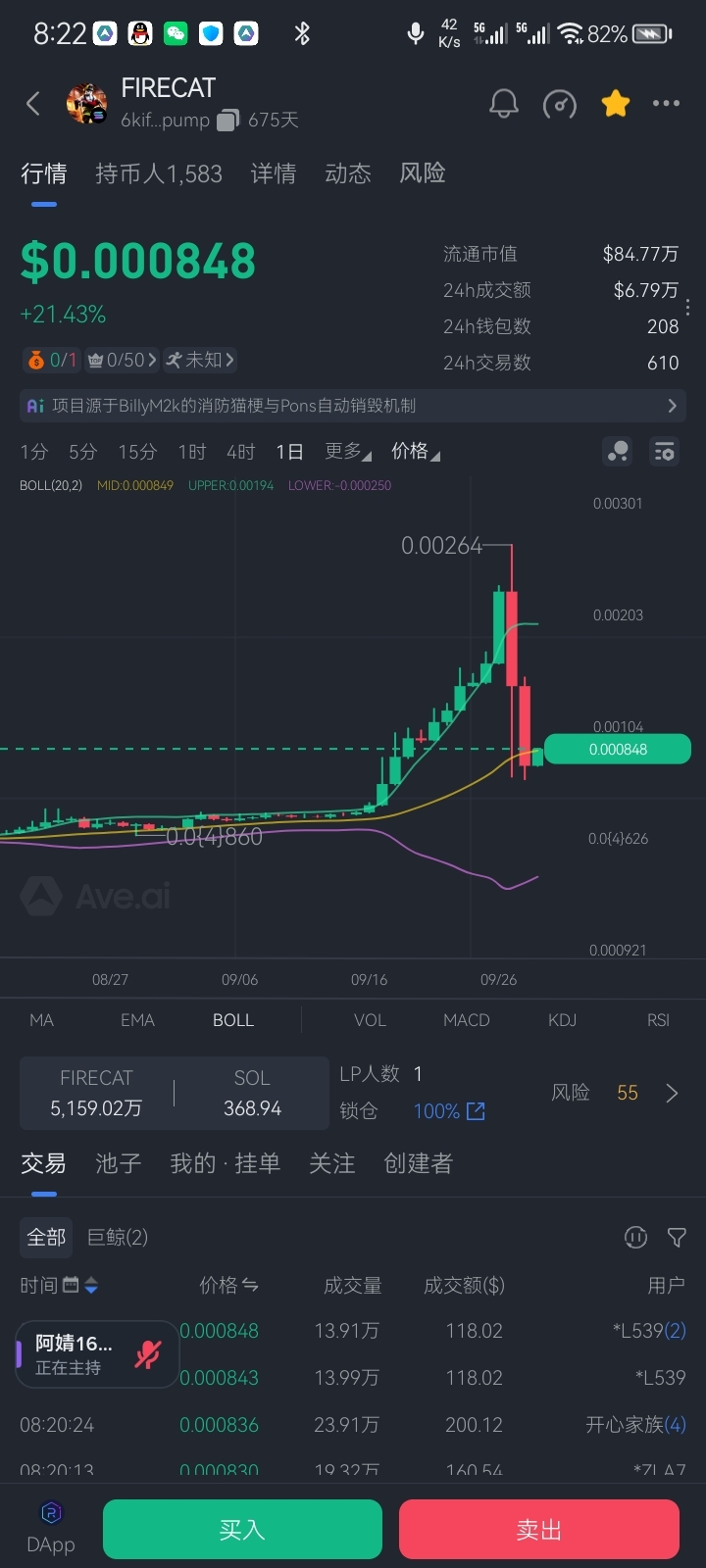
A new “cat” sensation in the world of fire alarms—fired up to the sky.
In tribute to the fire heroes, spreading vigilance against fire.
Keep safety in your heart, and protect the peace and well-being of every household
☯️☯️☯️☯️☯️☯️☯️☯️☯️☯️☯️☯️
A new “cat” sensation in the world of fire alarms—fired up to the sky.
In tribute to the fire heroes, spreading vigilance against fire.
Keep safety in your heart, and protect the peace and well-being of every household
☯️☯️☯️☯️☯️☯️☯️☯️☯️☯️☯️☯️

1
176
·
--

猫咪神9527
·
--
The fire alarm cat is currently in the callback phase 🔥 Ready to set sail and go! 🔥 Let those who believe make money, let those who work hard make a fortune. A great target/asset 🔥 The cost of missing out is low 🔥 The price of missing the chance is a bit regrettable. 🔥 Grab the opportunity and you’ll grab wealth.

150
·
--
灼见Cryptosighted
·
--
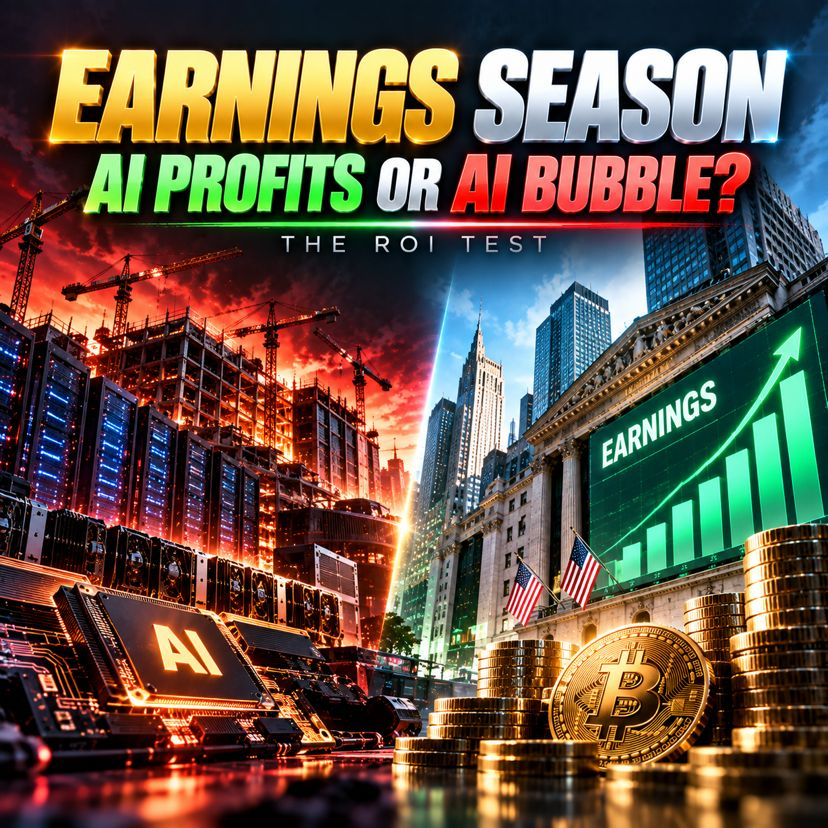
🚨 The new earnings season is here.
But this time, what Wall Street really wants to know might not be how much the EPS beat is.
Instead, it’s a question worth tens of trillions of dollars:
With all that money being burned by AI—are they actually starting to make profits yet?
In the past few years, tech giants have been疯狂 buying GPUs, building data centers, and racing for power and compute capacity.
Now the pressure is starting to show:
🤖 AI demand is still exploding
💰 Cloud providers’ capital expenditures continue to expand
🔥 Orders for AI chips and memory remain tight
⚠️ But the market is starting to ask: how long before the spending turns into profits?
Micron’s latest earnings report has already sent a signal—demand for AI infrastructure remains strong, and customers’ long-term purchasing commitments continue to increase.
But the real test is still ahead.
If the next round of tech giant earnings proves that:
AI revenue growth > AI spending growth
the market may once again price in the “AI productivity revolution.”
On the other hand, if profits can’t keep up with capital expenditures—
then these currently expensive AI valuations will, for the first time, truly face scrutiny.
And it’s not just about the US stock market.
Once tech-sector risk appetite changes, BTC and the entire crypto market could be repriced as well.
So for this earnings season, I’m only watching one question:
Is AI starting to print money—or still burning it?
🟢 AI profits realized
🔴 AI bubble tested
#BTC #ETH #BNB
But this time, what Wall Street really wants to know might not be how much the EPS beat is.
Instead, it’s a question worth tens of trillions of dollars:
With all that money being burned by AI—are they actually starting to make profits yet?
In the past few years, tech giants have been疯狂 buying GPUs, building data centers, and racing for power and compute capacity.
Now the pressure is starting to show:
🤖 AI demand is still exploding
💰 Cloud providers’ capital expenditures continue to expand
🔥 Orders for AI chips and memory remain tight
⚠️ But the market is starting to ask: how long before the spending turns into profits?
Micron’s latest earnings report has already sent a signal—demand for AI infrastructure remains strong, and customers’ long-term purchasing commitments continue to increase.
But the real test is still ahead.
If the next round of tech giant earnings proves that:
AI revenue growth > AI spending growth
the market may once again price in the “AI productivity revolution.”
On the other hand, if profits can’t keep up with capital expenditures—
then these currently expensive AI valuations will, for the first time, truly face scrutiny.
And it’s not just about the US stock market.
Once tech-sector risk appetite changes, BTC and the entire crypto market could be repriced as well.
So for this earnings season, I’m only watching one question:
Is AI starting to print money—or still burning it?
🟢 AI profits realized
🔴 AI bubble tested
#BTC #ETH #BNB
1
176
·
--


阿婧1688
·
--
Peace and joy, every day is a good day, and my mood is wonderful.🌹🌹🌹🌹🌹🌹🎁🎁🎁🎁🎁🎁

1
102
·
--
@阿婧1688
is speaking[LIVE] 🎙️ Happy National Day to everyone!
745 listens
1
246
·
--

@辛迪cindy
is speaking[LIVE] 🎙️ Good morning... How is the Thursday trading market? BNB forecast~
1.2k listens

2
241
·
--
🧧🎁🌹🧧🎁🌹
On 9/29, we continued to focus on the following core innovation and transformation directions in underlying technical architecture, compliance tooling, and asset operation models:
1. Deep integration of Zero-Knowledge Identity (ZK Identity) with on-chain compliance
Innovation highlights: To address the conflict between decentralization and regulatory compliance, the industry in late September intensively discussed and advanced the practical deployment of ZK KYC (zero-knowledge proof identity verification) technologies.
Technical value: Exchanges, stablecoin issuers, and licensed DeFi (Permissioned DeFi) began using ZK proofs to verify eligibility for on-chain compliance without disclosing users’ sensitive privacy data (such as real names, nationality, and other original document details). This enables users to generate a credential once and reuse it across multiple Web3 services, significantly reducing the risk of privacy data leakage.
2. Scaling experiments for tokenized interbank deposits (Tokenized Deposits)
Innovation highlights: In the convergence of traditional finance and Web3, leading banks in multiple countries (e.g., UK-based Barclays, NatWest, HSBC, and Canadian banking institutions) collectively announced or tested cross-bank tokenized deposit networks in late September.
Technical value: By leveraging blockchain technology to tokenize traditional fiat currency deposits, interbank settlement is shifting from conventional T+1 or lengthy wire transfers toward “instant settlement,” representing a substantive step of traditional finance toward on-chain financial infrastructure.
3. Exchange asset account architecture reform: physical isolation of crypto and tokenized stocks (bStocks)
Innovation highlights: Represented by Binance, a leading exchange, which in late September (starting from 9/29) promoted the split of the Funding Account and the Spot Account, as well as the introduction of a separate “Stocks Account.” Platform-level account architecture is evolving.
Technical value: With the explosive growth of RWA businesses such as tokenized stocks (bStocks), compliant on-chain assets and non-standard/traditional brokerage activities (e.g., T+1 stock settlement via Alpaca) require stricter isolation and independent clearing systems. This account restructuring marks the next stage of super apps moving from “pure crypto trading” to “multi-asset integrated finance (Crypto + Tokenized Equities).”
Follow me—reply with Answer 1 to take away the $SOL 红包!
🧧🎁🌹🧧🎁🌹
On 9/29, we continued to focus on the following core innovation and transformation directions in underlying technical architecture, compliance tooling, and asset operation models:
1. Deep integration of Zero-Knowledge Identity (ZK Identity) with on-chain compliance
Innovation highlights: To address the conflict between decentralization and regulatory compliance, the industry in late September intensively discussed and advanced the practical deployment of ZK KYC (zero-knowledge proof identity verification) technologies.
Technical value: Exchanges, stablecoin issuers, and licensed DeFi (Permissioned DeFi) began using ZK proofs to verify eligibility for on-chain compliance without disclosing users’ sensitive privacy data (such as real names, nationality, and other original document details). This enables users to generate a credential once and reuse it across multiple Web3 services, significantly reducing the risk of privacy data leakage.
2. Scaling experiments for tokenized interbank deposits (Tokenized Deposits)
Innovation highlights: In the convergence of traditional finance and Web3, leading banks in multiple countries (e.g., UK-based Barclays, NatWest, HSBC, and Canadian banking institutions) collectively announced or tested cross-bank tokenized deposit networks in late September.
Technical value: By leveraging blockchain technology to tokenize traditional fiat currency deposits, interbank settlement is shifting from conventional T+1 or lengthy wire transfers toward “instant settlement,” representing a substantive step of traditional finance toward on-chain financial infrastructure.
3. Exchange asset account architecture reform: physical isolation of crypto and tokenized stocks (bStocks)
Innovation highlights: Represented by Binance, a leading exchange, which in late September (starting from 9/29) promoted the split of the Funding Account and the Spot Account, as well as the introduction of a separate “Stocks Account.” Platform-level account architecture is evolving.
Technical value: With the explosive growth of RWA businesses such as tokenized stocks (bStocks), compliant on-chain assets and non-standard/traditional brokerage activities (e.g., T+1 stock settlement via Alpaca) require stricter isolation and independent clearing systems. This account restructuring marks the next stage of super apps moving from “pure crypto trading” to “multi-asset integrated finance (Crypto + Tokenized Equities).”
Follow me—reply with Answer 1 to take away the $SOL 红包!
On 9/29, we continued to focus on the following core innovation and transformation directions in underlying technical architecture, compliance tooling, and asset operation models:
1. Deep integration of Zero-Knowledge Identity (ZK Identity) with on-chain compliance
Innovation highlights: To address the conflict between decentralization and regulatory compliance, the industry in late September intensively discussed and advanced the practical deployment of ZK KYC (zero-knowledge proof identity verification) technologies.
Technical value: Exchanges, stablecoin issuers, and licensed DeFi (Permissioned DeFi) began using ZK proofs to verify eligibility for on-chain compliance without disclosing users’ sensitive privacy data (such as real names, nationality, and other original document details). This enables users to generate a credential once and reuse it across multiple Web3 services, significantly reducing the risk of privacy data leakage.
2. Scaling experiments for tokenized interbank deposits (Tokenized Deposits)
Innovation highlights: In the convergence of traditional finance and Web3, leading banks in multiple countries (e.g., UK-based Barclays, NatWest, HSBC, and Canadian banking institutions) collectively announced or tested cross-bank tokenized deposit networks in late September.
Technical value: By leveraging blockchain technology to tokenize traditional fiat currency deposits, interbank settlement is shifting from conventional T+1 or lengthy wire transfers toward “instant settlement,” representing a substantive step of traditional finance toward on-chain financial infrastructure.
3. Exchange asset account architecture reform: physical isolation of crypto and tokenized stocks (bStocks)
Innovation highlights: Represented by Binance, a leading exchange, which in late September (starting from 9/29) promoted the split of the Funding Account and the Spot Account, as well as the introduction of a separate “Stocks Account.” Platform-level account architecture is evolving.
Technical value: With the explosive growth of RWA businesses such as tokenized stocks (bStocks), compliant on-chain assets and non-standard/traditional brokerage activities (e.g., T+1 stock settlement via Alpaca) require stricter isolation and independent clearing systems. This account restructuring marks the next stage of super apps moving from “pure crypto trading” to “multi-asset integrated finance (Crypto + Tokenized Equities).”
Follow me—reply with Answer 1 to take away the $SOL 红包!


1.4k
29
110
1.4k
·
--
Article
Looking Ahead to Long-Term Opportunities During the Pullback🧧🎁🌹🧧🎁🌹
On September 28, the market saw a pullback, but we can still look at certain opportunities in the long run:
1. Tokenization of Real-World Assets (RWA) and on-chain government bonds
Logic evolves: Traditional financial giants (such as BlackRock, Fidelity, and major global banks) are accelerating the migration of traditional assets like U.S. Treasuries, real estate, and commodities onto the blockchain. Blockchain is no longer just a “casino for trading coins,” but is evolving into an efficient underlying layer for global asset clearing and settlement.
Long-term opportunities:
RWA issuance and tokenization protocols that link traditional finance with the on-chain world.
Looking Ahead to Long-Term Opportunities During the Pullback
🧧🎁🌹🧧🎁🌹
On September 28, the market saw a pullback, but we can still look at certain opportunities in the long run:
1. Tokenization of Real-World Assets (RWA) and on-chain government bonds
Logic evolves: Traditional financial giants (such as BlackRock, Fidelity, and major global banks) are accelerating the migration of traditional assets like U.S. Treasuries, real estate, and commodities onto the blockchain. Blockchain is no longer just a “casino for trading coins,” but is evolving into an efficient underlying layer for global asset clearing and settlement.
Long-term opportunities:
RWA issuance and tokenization protocols that link traditional finance with the on-chain world.
On September 28, the market saw a pullback, but we can still look at certain opportunities in the long run:
1. Tokenization of Real-World Assets (RWA) and on-chain government bonds
Logic evolves: Traditional financial giants (such as BlackRock, Fidelity, and major global banks) are accelerating the migration of traditional assets like U.S. Treasuries, real estate, and commodities onto the blockchain. Blockchain is no longer just a “casino for trading coins,” but is evolving into an efficient underlying layer for global asset clearing and settlement.
Long-term opportunities:
RWA issuance and tokenization protocols that link traditional finance with the on-chain world.
2.4k
43
140
2.4k
·
--
🧧🎁🌹🧧🎁🌹
September 27 Information Quick Review:
Miner sell pressure may ease: JPMorgan analysis says that the current Bitcoin price has returned to the production cost range of around $85,000. As some miners get through the period of cost inverted pressure, overall miner selling pressure may further ease.
The Fed advances new stablecoin rules under the GENIUS Act: The Federal Reserve has officially released two highly anticipated stablecoin rule proposals in connection with the GENIUS Act. The proposals enter a 60-day public comment period. The proposals require that payment stablecoins issued by regulated banks must be backed by fully compliant 1:1 reserves (supporting U.S. Treasuries, Federal Reserve deposits, etc.), must unconditionally satisfy user redemptions within 2 business days, and must establish standardized capital charging and anti-money-laundering review standards.
U.S. stocks officially become DeFi collateral: Lending giant Aave has achieved a milestone—users can now officially deposit tokenized U.S. stocks, including seven tokenized equities such as Apple, Nvidia, and Tesla, into the platform and use them as collateral to borrow USDC.
Scale and risk-control limits: According to the initial settings from risk-control provider LlamaRisk, the loan-to-value (LTV) ratio for this batch of tokenized stocks (supported by Coinbase) is controlled between 65% and 79%. The initial USDC borrowing limit is set at $21 million—an important step toward deeper integration between TradFi (traditional finance) and DeFi.
Bitget exchange suffers a security incident: Blockchain security monitoring shows that the exchange Bitget was hacked and a large amount of XRP was transferred out (worth about $83 million). Since the XRP ledger (XRPL) native architecture does not support directly freezing assets by a single issuing party, Ripple appears powerless in responding to such cross-chain hacker transfers, sparking heated community debate over freezing and security mechanisms for assets on specific chains.
Follow me—answer 1 to take away the $SOL 红包 (red packet)!
🧧🎁🌹🧧🎁🌹
September 27 Information Quick Review:
Miner sell pressure may ease: JPMorgan analysis says that the current Bitcoin price has returned to the production cost range of around $85,000. As some miners get through the period of cost inverted pressure, overall miner selling pressure may further ease.
The Fed advances new stablecoin rules under the GENIUS Act: The Federal Reserve has officially released two highly anticipated stablecoin rule proposals in connection with the GENIUS Act. The proposals enter a 60-day public comment period. The proposals require that payment stablecoins issued by regulated banks must be backed by fully compliant 1:1 reserves (supporting U.S. Treasuries, Federal Reserve deposits, etc.), must unconditionally satisfy user redemptions within 2 business days, and must establish standardized capital charging and anti-money-laundering review standards.
U.S. stocks officially become DeFi collateral: Lending giant Aave has achieved a milestone—users can now officially deposit tokenized U.S. stocks, including seven tokenized equities such as Apple, Nvidia, and Tesla, into the platform and use them as collateral to borrow USDC.
Scale and risk-control limits: According to the initial settings from risk-control provider LlamaRisk, the loan-to-value (LTV) ratio for this batch of tokenized stocks (supported by Coinbase) is controlled between 65% and 79%. The initial USDC borrowing limit is set at $21 million—an important step toward deeper integration between TradFi (traditional finance) and DeFi.
Bitget exchange suffers a security incident: Blockchain security monitoring shows that the exchange Bitget was hacked and a large amount of XRP was transferred out (worth about $83 million). Since the XRP ledger (XRPL) native architecture does not support directly freezing assets by a single issuing party, Ripple appears powerless in responding to such cross-chain hacker transfers, sparking heated community debate over freezing and security mechanisms for assets on specific chains.
Follow me—answer 1 to take away the $SOL 红包 (red packet)!
September 27 Information Quick Review:
Miner sell pressure may ease: JPMorgan analysis says that the current Bitcoin price has returned to the production cost range of around $85,000. As some miners get through the period of cost inverted pressure, overall miner selling pressure may further ease.
The Fed advances new stablecoin rules under the GENIUS Act: The Federal Reserve has officially released two highly anticipated stablecoin rule proposals in connection with the GENIUS Act. The proposals enter a 60-day public comment period. The proposals require that payment stablecoins issued by regulated banks must be backed by fully compliant 1:1 reserves (supporting U.S. Treasuries, Federal Reserve deposits, etc.), must unconditionally satisfy user redemptions within 2 business days, and must establish standardized capital charging and anti-money-laundering review standards.
U.S. stocks officially become DeFi collateral: Lending giant Aave has achieved a milestone—users can now officially deposit tokenized U.S. stocks, including seven tokenized equities such as Apple, Nvidia, and Tesla, into the platform and use them as collateral to borrow USDC.
Scale and risk-control limits: According to the initial settings from risk-control provider LlamaRisk, the loan-to-value (LTV) ratio for this batch of tokenized stocks (supported by Coinbase) is controlled between 65% and 79%. The initial USDC borrowing limit is set at $21 million—an important step toward deeper integration between TradFi (traditional finance) and DeFi.
Bitget exchange suffers a security incident: Blockchain security monitoring shows that the exchange Bitget was hacked and a large amount of XRP was transferred out (worth about $83 million). Since the XRP ledger (XRPL) native architecture does not support directly freezing assets by a single issuing party, Ripple appears powerless in responding to such cross-chain hacker transfers, sparking heated community debate over freezing and security mechanisms for assets on specific chains.
Follow me—answer 1 to take away the $SOL 红包 (red packet)!



2.8k
57
175
2.8k
·
--
🧧🎁🌹🧧🎁🌹
Sep 26 Market Update:
1. Market Overview: After the settlement of large-size options, BTC trades in a high-range consolidation. The $84.0k area is set for a support test
Bitcoin consolidates within a narrow range: After experiencing the largest quarterly options settlement of the year on September 25 (over $16 billion), Bitcoin (BTC) on September 26 entered a digestion phase following volatility release. Price is moving within the $83,800 to $84,500 range. In the short term, the key focus is whether a breakout through $84,000 can complete an effective “top-to-bottom transition,” confirming support.
Long/short sentiment and options positioning: With market maker Gamma being released, short-term implied volatility (IV) has eased slightly. However, in the derivatives market, the open interest (OI) for October-end out-of-the-money forward call options with strike prices of $95,000 to $100,000 remains high, indicating that institutional medium- to long-term bullish consensus has not been damaged by the short-term pullback.
2. Regulatory Trends and Global Compliance Progress
Brazil countdown for new rules on self-custody wallets: Regulatory requirements for self-custody wallets continue to tighten. The Central Bank of Brazil has most recently confirmed that, starting next month, any transfer of crypto assets from self-custody wallets exceeding $10,000 per transaction will require mandatory compliance reporting.
Polymarket regulatory lawsuit gains momentum: The New York State judicial authorities’ compliance allegations against the decentralized prediction market Polymarket have attracted ongoing industry attention. How decentralized prediction protocols operate within North America’s compliance framework has become a key topic of market discussion.
Follow me—reply with answer 1 to take the $SOL 红包 (red packet)!
🧧🎁🌹🧧🎁🌹
🧧🎁🌹🧧🎁🌹
Sep 26 Market Update:
1. Market Overview: After the settlement of large-size options, BTC trades in a high-range consolidation. The $84.0k area is set for a support test
Bitcoin consolidates within a narrow range: After experiencing the largest quarterly options settlement of the year on September 25 (over $16 billion), Bitcoin (BTC) on September 26 entered a digestion phase following volatility release. Price is moving within the $83,800 to $84,500 range. In the short term, the key focus is whether a breakout through $84,000 can complete an effective “top-to-bottom transition,” confirming support.
Long/short sentiment and options positioning: With market maker Gamma being released, short-term implied volatility (IV) has eased slightly. However, in the derivatives market, the open interest (OI) for October-end out-of-the-money forward call options with strike prices of $95,000 to $100,000 remains high, indicating that institutional medium- to long-term bullish consensus has not been damaged by the short-term pullback.
2. Regulatory Trends and Global Compliance Progress
Brazil countdown for new rules on self-custody wallets: Regulatory requirements for self-custody wallets continue to tighten. The Central Bank of Brazil has most recently confirmed that, starting next month, any transfer of crypto assets from self-custody wallets exceeding $10,000 per transaction will require mandatory compliance reporting.
Polymarket regulatory lawsuit gains momentum: The New York State judicial authorities’ compliance allegations against the decentralized prediction market Polymarket have attracted ongoing industry attention. How decentralized prediction protocols operate within North America’s compliance framework has become a key topic of market discussion.
Follow me—reply with answer 1 to take the $SOL 红包 (red packet)!
🧧🎁🌹🧧🎁🌹
Sep 26 Market Update:
1. Market Overview: After the settlement of large-size options, BTC trades in a high-range consolidation. The $84.0k area is set for a support test
Bitcoin consolidates within a narrow range: After experiencing the largest quarterly options settlement of the year on September 25 (over $16 billion), Bitcoin (BTC) on September 26 entered a digestion phase following volatility release. Price is moving within the $83,800 to $84,500 range. In the short term, the key focus is whether a breakout through $84,000 can complete an effective “top-to-bottom transition,” confirming support.
Long/short sentiment and options positioning: With market maker Gamma being released, short-term implied volatility (IV) has eased slightly. However, in the derivatives market, the open interest (OI) for October-end out-of-the-money forward call options with strike prices of $95,000 to $100,000 remains high, indicating that institutional medium- to long-term bullish consensus has not been damaged by the short-term pullback.
2. Regulatory Trends and Global Compliance Progress
Brazil countdown for new rules on self-custody wallets: Regulatory requirements for self-custody wallets continue to tighten. The Central Bank of Brazil has most recently confirmed that, starting next month, any transfer of crypto assets from self-custody wallets exceeding $10,000 per transaction will require mandatory compliance reporting.
Polymarket regulatory lawsuit gains momentum: The New York State judicial authorities’ compliance allegations against the decentralized prediction market Polymarket have attracted ongoing industry attention. How decentralized prediction protocols operate within North America’s compliance framework has become a key topic of market discussion.
Follow me—reply with answer 1 to take the $SOL 红包 (red packet)!
🧧🎁🌹🧧🎁🌹



2.9k
44
194
2.9k
·
--
Article
9.25 Key News Roundup🧧🎁🌹🧧🎁🌹
9.25 Key News Roundup:
1. Derivatives and Market Update: $16 billion BTC options settlement, with price trading in a high-range consolidation
The largest options settlement of the quarter: On September 25, Deribit saw one of the largest quarterly options settlements of the year, involving nearly $16 billion (about 189,000 BTC) worth of Bitcoin options at expiration. Call options accounted for over 60% (about $9.6 billion), heavily concentrated around strike prices of $90,000 and $100,000.
Headwinds from interest rates and a price pullback: Due to fluctuations in market expectations for Federal Reserve interest-rate policy and rising U.S. Treasury yields, Bitcoin pulled back after hitting an $87,000 impact and consolidated in the $83,000 - $84,500 range. The global total cryptocurrency market cap held steady at around $2.97 trillion, while the Fear and Greed Index remained at 71 (Greed).
9.25 Key News Roundup
🧧🎁🌹🧧🎁🌹
9.25 Key News Roundup:
1. Derivatives and Market Update: $16 billion BTC options settlement, with price trading in a high-range consolidation
The largest options settlement of the quarter: On September 25, Deribit saw one of the largest quarterly options settlements of the year, involving nearly $16 billion (about 189,000 BTC) worth of Bitcoin options at expiration. Call options accounted for over 60% (about $9.6 billion), heavily concentrated around strike prices of $90,000 and $100,000.
Headwinds from interest rates and a price pullback: Due to fluctuations in market expectations for Federal Reserve interest-rate policy and rising U.S. Treasury yields, Bitcoin pulled back after hitting an $87,000 impact and consolidated in the $83,000 - $84,500 range. The global total cryptocurrency market cap held steady at around $2.97 trillion, while the Fear and Greed Index remained at 71 (Greed).
9.25 Key News Roundup:
1. Derivatives and Market Update: $16 billion BTC options settlement, with price trading in a high-range consolidation
The largest options settlement of the quarter: On September 25, Deribit saw one of the largest quarterly options settlements of the year, involving nearly $16 billion (about 189,000 BTC) worth of Bitcoin options at expiration. Call options accounted for over 60% (about $9.6 billion), heavily concentrated around strike prices of $90,000 and $100,000.
Headwinds from interest rates and a price pullback: Due to fluctuations in market expectations for Federal Reserve interest-rate policy and rising U.S. Treasury yields, Bitcoin pulled back after hitting an $87,000 impact and consolidated in the $83,000 - $84,500 range. The global total cryptocurrency market cap held steady at around $2.97 trillion, while the Fear and Greed Index remained at 71 (Greed).
2.4k
20
120
2.4k
·
--
✨ Light up the night sky—how about we create a galaxy together! ✨
Witness how the “Galaxy Community” takes root from a simple idea into reality—there are emotions and surges in my heart that are hard to put into words.
Creating a community isn’t just about building a platform for interaction; it’s also about gathering all the “like-minded souls” and co-creating a set of values and culture that we all recognize and share.
🌌 What we want to build is a place like this:
💡 People-first: the core of the community isn’t a framework—it’s every unique “you.”
🤝 Sincere inclusion: here, there’s an atmosphere of genuine communication and acceptance, where different ideas collide and burst into sparks.
🌱 Continuous growth: it’s a warm long-distance run. We encourage sharing, learning from one another, and empowering each other.
The birth of a new community is a brand-new starting point. Even though starlight is beautiful, it needs you and me to light it up together. If you’re also longing for a spiritual home that’s full of warmth, has value, and allows free exchange—
🚀 We sincerely invite those who are truly aligned with us to join the Galaxy Community!
Let’s build it together with one heart, and find the companions who belong with you here! 👇
✨ Light up the night sky—how about we create a galaxy together! ✨
Witness how the “Galaxy Community” takes root from a simple idea into reality—there are emotions and surges in my heart that are hard to put into words.
Creating a community isn’t just about building a platform for interaction; it’s also about gathering all the “like-minded souls” and co-creating a set of values and culture that we all recognize and share.
🌌 What we want to build is a place like this:
💡 People-first: the core of the community isn’t a framework—it’s every unique “you.”
🤝 Sincere inclusion: here, there’s an atmosphere of genuine communication and acceptance, where different ideas collide and burst into sparks.
🌱 Continuous growth: it’s a warm long-distance run. We encourage sharing, learning from one another, and empowering each other.
The birth of a new community is a brand-new starting point. Even though starlight is beautiful, it needs you and me to light it up together. If you’re also longing for a spiritual home that’s full of warmth, has value, and allows free exchange—
🚀 We sincerely invite those who are truly aligned with us to join the Galaxy Community!
Let’s build it together with one heart, and find the companions who belong with you here! 👇
Witness how the “Galaxy Community” takes root from a simple idea into reality—there are emotions and surges in my heart that are hard to put into words.
Creating a community isn’t just about building a platform for interaction; it’s also about gathering all the “like-minded souls” and co-creating a set of values and culture that we all recognize and share.
🌌 What we want to build is a place like this:
💡 People-first: the core of the community isn’t a framework—it’s every unique “you.”
🤝 Sincere inclusion: here, there’s an atmosphere of genuine communication and acceptance, where different ideas collide and burst into sparks.
🌱 Continuous growth: it’s a warm long-distance run. We encourage sharing, learning from one another, and empowering each other.
The birth of a new community is a brand-new starting point. Even though starlight is beautiful, it needs you and me to light it up together. If you’re also longing for a spiritual home that’s full of warmth, has value, and allows free exchange—
🚀 We sincerely invite those who are truly aligned with us to join the Galaxy Community!
Let’s build it together with one heart, and find the companions who belong with you here! 👇

2
1
10
554
·
--
Everyone keeps paying attention
Everyone keeps paying attention


Binance News
·
--
Bitget CEO says IP clues suggest North Korean hackers may have caused $352 million attack incident
According to Cointelegraph, Bitget CEO Gracy Chen said that the security breach behind the exchange’s $351.6 million loss of funds on Thursday may have involved North Korean hackers; her basis was that an initial investigation found the relevant IP addresses matched a VPN service used by a certain North Korean hacking group. In a live Q&A on the X platform after the incident, Chen said that security investigators had found similarities between this attack and prior attacks by the North Korean side, and that the exchange does not believe it was an inside job. She said: "We have identified some IP addresses that match the VPN choice of a certain North Korean (DPRK) organization." She also said: "Their modus operandi is highly similar to the schemes previously carried out by the North Korean team."
758
·
--
🧧🎁🌹🧧🎁🌹
9/24 Important News:
1. Regulatory and banking industry integration: The U.S. OCC conditionally approves licenses for three digital-asset banks
Federal oversight breaks down barriers: The U.S. Office of the Comptroller of the Currency (OCC) has conditionally approved the bank-license applications of three digital-asset institutions—Bastion, Catena, and Agora.
Supporting stablecoin compliance: Although the three institutions still must meet stringent requirements for capital, liquidity, and pre-opening conditions, this marks an acceleration in stablecoins and crypto custody companies integrating into traditional financial infrastructure under U.S. federal regulation. This is a long-term positive for compliant stablecoin settlement on mainnets such as Ethereum and BNB Chain.
2. Stablecoins and payment applications: Traditional finance and Web3 settlement accelerate integration
BVNK integrates the Stellar network: Enterprise stablecoin payments platform BVNK has officially connected to the Stellar blockchain, providing corporate clients with a faster cross-border stablecoin settlement channel. Previously, the platform had just partnered with Marqeta to launch stablecoin issuance services.
Reap and Visa expand stablecoin cards: Payments company Reap announced, together with Visa, that its stablecoin card program will be expanded to more than 100 markets worldwide, significantly lowering the barrier for enterprises and everyday consumers to use crypto for routine payroll and settlement.
Bitpace partners with Fireblocks: Cross-border payments provider Bitpace has integrated Fireblocks infrastructure, further improving the security and compliance of cross-border stablecoin transfers.
3. Industry infrastructure and market liquidity
BeInCrypto releases a liquidity report: The latest exchange order-book depth study shows that major platforms such as LBank perform strongly in depth for leading crypto assets ($52.16 million) and tokenized stocks. This reflects that market liquidity concentration is shifting toward exchanges with deep, robust buy/sell order books.
Follow me—answer 1 and take away the $SOL 红包!
🧧🎁🌹🧧🎁🌹
🧧🎁🌹🧧🎁🌹
9/24 Important News:
1. Regulatory and banking industry integration: The U.S. OCC conditionally approves licenses for three digital-asset banks
Federal oversight breaks down barriers: The U.S. Office of the Comptroller of the Currency (OCC) has conditionally approved the bank-license applications of three digital-asset institutions—Bastion, Catena, and Agora.
Supporting stablecoin compliance: Although the three institutions still must meet stringent requirements for capital, liquidity, and pre-opening conditions, this marks an acceleration in stablecoins and crypto custody companies integrating into traditional financial infrastructure under U.S. federal regulation. This is a long-term positive for compliant stablecoin settlement on mainnets such as Ethereum and BNB Chain.
2. Stablecoins and payment applications: Traditional finance and Web3 settlement accelerate integration
BVNK integrates the Stellar network: Enterprise stablecoin payments platform BVNK has officially connected to the Stellar blockchain, providing corporate clients with a faster cross-border stablecoin settlement channel. Previously, the platform had just partnered with Marqeta to launch stablecoin issuance services.
Reap and Visa expand stablecoin cards: Payments company Reap announced, together with Visa, that its stablecoin card program will be expanded to more than 100 markets worldwide, significantly lowering the barrier for enterprises and everyday consumers to use crypto for routine payroll and settlement.
Bitpace partners with Fireblocks: Cross-border payments provider Bitpace has integrated Fireblocks infrastructure, further improving the security and compliance of cross-border stablecoin transfers.
3. Industry infrastructure and market liquidity
BeInCrypto releases a liquidity report: The latest exchange order-book depth study shows that major platforms such as LBank perform strongly in depth for leading crypto assets ($52.16 million) and tokenized stocks. This reflects that market liquidity concentration is shifting toward exchanges with deep, robust buy/sell order books.
Follow me—answer 1 and take away the $SOL 红包!
🧧🎁🌹🧧🎁🌹
9/24 Important News:
1. Regulatory and banking industry integration: The U.S. OCC conditionally approves licenses for three digital-asset banks
Federal oversight breaks down barriers: The U.S. Office of the Comptroller of the Currency (OCC) has conditionally approved the bank-license applications of three digital-asset institutions—Bastion, Catena, and Agora.
Supporting stablecoin compliance: Although the three institutions still must meet stringent requirements for capital, liquidity, and pre-opening conditions, this marks an acceleration in stablecoins and crypto custody companies integrating into traditional financial infrastructure under U.S. federal regulation. This is a long-term positive for compliant stablecoin settlement on mainnets such as Ethereum and BNB Chain.
2. Stablecoins and payment applications: Traditional finance and Web3 settlement accelerate integration
BVNK integrates the Stellar network: Enterprise stablecoin payments platform BVNK has officially connected to the Stellar blockchain, providing corporate clients with a faster cross-border stablecoin settlement channel. Previously, the platform had just partnered with Marqeta to launch stablecoin issuance services.
Reap and Visa expand stablecoin cards: Payments company Reap announced, together with Visa, that its stablecoin card program will be expanded to more than 100 markets worldwide, significantly lowering the barrier for enterprises and everyday consumers to use crypto for routine payroll and settlement.
Bitpace partners with Fireblocks: Cross-border payments provider Bitpace has integrated Fireblocks infrastructure, further improving the security and compliance of cross-border stablecoin transfers.
3. Industry infrastructure and market liquidity
BeInCrypto releases a liquidity report: The latest exchange order-book depth study shows that major platforms such as LBank perform strongly in depth for leading crypto assets ($52.16 million) and tokenized stocks. This reflects that market liquidity concentration is shifting toward exchanges with deep, robust buy/sell order books.
Follow me—answer 1 and take away the $SOL 红包!
🧧🎁🌹🧧🎁🌹


2.4k
32
147
2.4k
·
--
🧧🎁🌹🧧🎁🌹
Tech giants preparing on-chain settlement: The latest hiring needs from Apple and Google show that both companies are preparing underlying technology and product R&D related to stablecoins and tokenized deposits.
Hong Kong stocks Web3 concept shares surge: In the intraday session today, Hong Kong-listed company Boyaa Interactive (00434.HK) jumped by more than 6%. The company announced that it will continue accumulating Bitcoin and increase its funding for Web3 ecosystem projects.
Follow me—answer 1 to take the $SOL red envelope.
🧧🎁🌹🧧🎁🌹
🧧🎁🌹🧧🎁🌹
Tech giants preparing on-chain settlement: The latest hiring needs from Apple and Google show that both companies are preparing underlying technology and product R&D related to stablecoins and tokenized deposits.
Hong Kong stocks Web3 concept shares surge: In the intraday session today, Hong Kong-listed company Boyaa Interactive (00434.HK) jumped by more than 6%. The company announced that it will continue accumulating Bitcoin and increase its funding for Web3 ecosystem projects.
Follow me—answer 1 to take the $SOL red envelope.
🧧🎁🌹🧧🎁🌹
Tech giants preparing on-chain settlement: The latest hiring needs from Apple and Google show that both companies are preparing underlying technology and product R&D related to stablecoins and tokenized deposits.
Hong Kong stocks Web3 concept shares surge: In the intraday session today, Hong Kong-listed company Boyaa Interactive (00434.HK) jumped by more than 6%. The company announced that it will continue accumulating Bitcoin and increase its funding for Web3 ecosystem projects.
Follow me—answer 1 to take the $SOL red envelope.
🧧🎁🌹🧧🎁🌹


2.3k
27
128
2.3k
·
--
Verified
🧧🎁🌹🧧🎁🌹
Xiaomo is bullish on a Bitcoin short-squeeze scenario: In its latest report, JPMorgan Chase noted that BlackRock’s Bitcoin spot ETF (IBIT) has short positions nearing this year’s high point. This imbalance in open-contract ratios may create more upside for Bitcoin, because once the price rises, the short squeeze will further accelerate its rebound.
ZetaChain proposal approved—transitioning to Solana: With an overwhelming 99.4% support rate, the ZetaChain community passed Proposal No. 68. The vote will close its original Layer 1 blockchain and migrate and convert the ZETA token on a 1:1 basis into Solana-native SPL tokens. In the future, the team will focus on AI applications.
Follow me and answer to take away the $SOL red envelope!
🧧🎁🌹🧧🎁🌹
🧧🎁🌹🧧🎁🌹
Xiaomo is bullish on a Bitcoin short-squeeze scenario: In its latest report, JPMorgan Chase noted that BlackRock’s Bitcoin spot ETF (IBIT) has short positions nearing this year’s high point. This imbalance in open-contract ratios may create more upside for Bitcoin, because once the price rises, the short squeeze will further accelerate its rebound.
ZetaChain proposal approved—transitioning to Solana: With an overwhelming 99.4% support rate, the ZetaChain community passed Proposal No. 68. The vote will close its original Layer 1 blockchain and migrate and convert the ZETA token on a 1:1 basis into Solana-native SPL tokens. In the future, the team will focus on AI applications.
Follow me and answer to take away the $SOL red envelope!
🧧🎁🌹🧧🎁🌹
Xiaomo is bullish on a Bitcoin short-squeeze scenario: In its latest report, JPMorgan Chase noted that BlackRock’s Bitcoin spot ETF (IBIT) has short positions nearing this year’s high point. This imbalance in open-contract ratios may create more upside for Bitcoin, because once the price rises, the short squeeze will further accelerate its rebound.
ZetaChain proposal approved—transitioning to Solana: With an overwhelming 99.4% support rate, the ZetaChain community passed Proposal No. 68. The vote will close its original Layer 1 blockchain and migrate and convert the ZETA token on a 1:1 basis into Solana-native SPL tokens. In the future, the team will focus on AI applications.
Follow me and answer to take away the $SOL red envelope!
🧧🎁🌹🧧🎁🌹


3.1k
53
189
3.1k
·
--
Verified
🧧🎁🌹🧧🎁🌹
News worth paying attention to within September 19th:
1. Exchange and product updates: Binance launches FX perpetual contracts
Binance expands its TradFi perpetual products: On September 19, Binance announced the launch of a foreign exchange (FX) perpetual contract category under its traditional finance (TradFi) perpetual contracts, providing users worldwide with a 24/7 trading channel for a regulated FX market settled in USDT. The first FX perpetual trading pair (USD/Brazilian real, USDBRLUSDT) is expected to go live on September 21, 2026.
2. Industry summit: UN Blockchain Week 2026 concludes
A New York event spotlights Web3 infrastructure: As a major industry event held in Times Square, New York, in mid-September (September 10–19), UN Blockchain Week 2026 wrapped up on September 19. The conference not only discussed Bitcoin and real-world asset (RWA) tokenization, but also placed special emphasis on AI agents running on decentralized rails, as well as real-world deployments of Web3 in supply chains, digital identity, and compliance.
3. Market outlook and macro trends
Bitcoin consolidates amid regulatory shifts: Bitcoin has recently been trading in a range of $77,000 to $81,500, consolidating. At the same time, the U.S. Commodity Futures Trading Commission (CFTC) has recently submitted related new rules for cryptocurrencies to the White House, and the evolution of macro-regulatory policies continues to influence market investors’ sentiment.
Follow me—answer 1 and take away the $SOL红包.
🧧🎁🌹🧧🎁🌹
🧧🎁🌹🧧🎁🌹
News worth paying attention to within September 19th:
1. Exchange and product updates: Binance launches FX perpetual contracts
Binance expands its TradFi perpetual products: On September 19, Binance announced the launch of a foreign exchange (FX) perpetual contract category under its traditional finance (TradFi) perpetual contracts, providing users worldwide with a 24/7 trading channel for a regulated FX market settled in USDT. The first FX perpetual trading pair (USD/Brazilian real, USDBRLUSDT) is expected to go live on September 21, 2026.
2. Industry summit: UN Blockchain Week 2026 concludes
A New York event spotlights Web3 infrastructure: As a major industry event held in Times Square, New York, in mid-September (September 10–19), UN Blockchain Week 2026 wrapped up on September 19. The conference not only discussed Bitcoin and real-world asset (RWA) tokenization, but also placed special emphasis on AI agents running on decentralized rails, as well as real-world deployments of Web3 in supply chains, digital identity, and compliance.
3. Market outlook and macro trends
Bitcoin consolidates amid regulatory shifts: Bitcoin has recently been trading in a range of $77,000 to $81,500, consolidating. At the same time, the U.S. Commodity Futures Trading Commission (CFTC) has recently submitted related new rules for cryptocurrencies to the White House, and the evolution of macro-regulatory policies continues to influence market investors’ sentiment.
Follow me—answer 1 and take away the $SOL红包.
🧧🎁🌹🧧🎁🌹
News worth paying attention to within September 19th:
1. Exchange and product updates: Binance launches FX perpetual contracts
Binance expands its TradFi perpetual products: On September 19, Binance announced the launch of a foreign exchange (FX) perpetual contract category under its traditional finance (TradFi) perpetual contracts, providing users worldwide with a 24/7 trading channel for a regulated FX market settled in USDT. The first FX perpetual trading pair (USD/Brazilian real, USDBRLUSDT) is expected to go live on September 21, 2026.
2. Industry summit: UN Blockchain Week 2026 concludes
A New York event spotlights Web3 infrastructure: As a major industry event held in Times Square, New York, in mid-September (September 10–19), UN Blockchain Week 2026 wrapped up on September 19. The conference not only discussed Bitcoin and real-world asset (RWA) tokenization, but also placed special emphasis on AI agents running on decentralized rails, as well as real-world deployments of Web3 in supply chains, digital identity, and compliance.
3. Market outlook and macro trends
Bitcoin consolidates amid regulatory shifts: Bitcoin has recently been trading in a range of $77,000 to $81,500, consolidating. At the same time, the U.S. Commodity Futures Trading Commission (CFTC) has recently submitted related new rules for cryptocurrencies to the White House, and the evolution of macro-regulatory policies continues to influence market investors’ sentiment.
Follow me—answer 1 and take away the $SOL红包.
🧧🎁🌹🧧🎁🌹


2k
35
134
2k
·
--
Verified
🧧🎁🧧🎁🧧🎁
Around September 18, a series of important infrastructure upgrades, project pivots, and industry ecosystem developments took place in the blockchain sector:
1. The Vanar chain completed a major migration and formally shut down its independent L1 mainnet Vanar project. On September 18, it officially initiated the shutdown and liquidation procedures for its original independent Layer 1 blockchain. Before that, on September 17, the project had completed the migration of its token contracts, and trading of VANRY tokens on Ethereum and Polygon was formally paused, fully transitioning to the Base chain. This move marks its departure from the early era of independent public chains. In the future, its strategy will fully shift toward an AI application ecosystem built on the Base chain and “AI Organizations” (AI orgs) platform (such as the Foundry platform planned for release on October 1).
2. In mid-September, the industry’s pragmatic shift toward real-world Web3 business adoption accelerated. The focus of discussions in the Web3 space is moving faster from pure token speculation and concept hype toward “eliminating real-world friction in commerce.” Developers and startups are increasingly inclined to apply blockchain technology to scenarios that truly require multi-party trust, tamper-proof credentials, supply-chain anti-counterfeiting, and digital identity verification—while keeping sensitive data and core business logic off-chain. The emphasis is on “trust infrastructure is better than token theater.”
3. Global regional Web3 and blockchain conferences continued to advance. With mid-September approaching, Web3 technical events and conferences combining academia and industry (such as regional tech events like Brazil’s Web3 PE, etc.) are also rolling out in close succession. These discussions mainly focus on concrete deployment cases of blockchain in areas such as the digital economy, compliant payments, and the creative industries. Overall, as of September 18, the Web3 industry is undergoing structural adjustments: public-chain ecosystems are converging toward mainstream high-performance networks (such as Base) through architectural upgrades, while the industry’s application layer is becoming more pragmatic and compliant.
Follow me and get the $SOL red envelope in Answer 1!
🧧🎁🧧🎁🧧🎁
🧧🎁🧧🎁🧧🎁
Around September 18, a series of important infrastructure upgrades, project pivots, and industry ecosystem developments took place in the blockchain sector:
1. The Vanar chain completed a major migration and formally shut down its independent L1 mainnet Vanar project. On September 18, it officially initiated the shutdown and liquidation procedures for its original independent Layer 1 blockchain. Before that, on September 17, the project had completed the migration of its token contracts, and trading of VANRY tokens on Ethereum and Polygon was formally paused, fully transitioning to the Base chain. This move marks its departure from the early era of independent public chains. In the future, its strategy will fully shift toward an AI application ecosystem built on the Base chain and “AI Organizations” (AI orgs) platform (such as the Foundry platform planned for release on October 1).
2. In mid-September, the industry’s pragmatic shift toward real-world Web3 business adoption accelerated. The focus of discussions in the Web3 space is moving faster from pure token speculation and concept hype toward “eliminating real-world friction in commerce.” Developers and startups are increasingly inclined to apply blockchain technology to scenarios that truly require multi-party trust, tamper-proof credentials, supply-chain anti-counterfeiting, and digital identity verification—while keeping sensitive data and core business logic off-chain. The emphasis is on “trust infrastructure is better than token theater.”
3. Global regional Web3 and blockchain conferences continued to advance. With mid-September approaching, Web3 technical events and conferences combining academia and industry (such as regional tech events like Brazil’s Web3 PE, etc.) are also rolling out in close succession. These discussions mainly focus on concrete deployment cases of blockchain in areas such as the digital economy, compliant payments, and the creative industries. Overall, as of September 18, the Web3 industry is undergoing structural adjustments: public-chain ecosystems are converging toward mainstream high-performance networks (such as Base) through architectural upgrades, while the industry’s application layer is becoming more pragmatic and compliant.
Follow me and get the $SOL red envelope in Answer 1!
🧧🎁🧧🎁🧧🎁
Around September 18, a series of important infrastructure upgrades, project pivots, and industry ecosystem developments took place in the blockchain sector:
1. The Vanar chain completed a major migration and formally shut down its independent L1 mainnet Vanar project. On September 18, it officially initiated the shutdown and liquidation procedures for its original independent Layer 1 blockchain. Before that, on September 17, the project had completed the migration of its token contracts, and trading of VANRY tokens on Ethereum and Polygon was formally paused, fully transitioning to the Base chain. This move marks its departure from the early era of independent public chains. In the future, its strategy will fully shift toward an AI application ecosystem built on the Base chain and “AI Organizations” (AI orgs) platform (such as the Foundry platform planned for release on October 1).
2. In mid-September, the industry’s pragmatic shift toward real-world Web3 business adoption accelerated. The focus of discussions in the Web3 space is moving faster from pure token speculation and concept hype toward “eliminating real-world friction in commerce.” Developers and startups are increasingly inclined to apply blockchain technology to scenarios that truly require multi-party trust, tamper-proof credentials, supply-chain anti-counterfeiting, and digital identity verification—while keeping sensitive data and core business logic off-chain. The emphasis is on “trust infrastructure is better than token theater.”
3. Global regional Web3 and blockchain conferences continued to advance. With mid-September approaching, Web3 technical events and conferences combining academia and industry (such as regional tech events like Brazil’s Web3 PE, etc.) are also rolling out in close succession. These discussions mainly focus on concrete deployment cases of blockchain in areas such as the digital economy, compliant payments, and the creative industries. Overall, as of September 18, the Web3 industry is undergoing structural adjustments: public-chain ecosystems are converging toward mainstream high-performance networks (such as Base) through architectural upgrades, while the industry’s application layer is becoming more pragmatic and compliant.
Follow me and get the $SOL red envelope in Answer 1!
🧧🎁🧧🎁🧧🎁


3.4k
52
205
3.4k
Log in to explore more content
Join global crypto users on Binance Square
⚡️ Get latest and useful information about crypto.
💬 Trusted by the world’s largest crypto exchange.
👍 Discover real insights from verified creators.
Email / Phone number
Trending Topics
BitcoinClears$85200
18,357 views
247 Discussing
We got the move, and $BTC is standing exactly where we were before the data. That’s what actual patience for a trade looks like.
The data came in mixed but with some important numbers. ADP Non-Farm Employment Change came at 90K vs 73K forecast, while Core PCE came in at 0.2% vs 0.3% expected. Final GDP was also stronger at 2.2% vs 1.5% forecast, while Personal Spending came in at 0.9% vs 0.8% expected. At the same time, Personal Income missed at 0.2% vs 0.5% forecast.
BTC initially surged to $85,600 and is now back where it needs to be. I’m still looking toward the lower ranges at $82,759 and the $80,000 liquidity, because the overhead liquidity is done and dusted.
We had a live session during the data, and during that session we saw the market at $83,800, then $85,600, and then back toward $83,000 and we still didn’t enter a trade.
That’s what patience is.
We can’t force an entry when the market has no clear direction. The same range is still in focus, and we’ll wait for the market to give us the setup.
Let me know, guys, how was the session? And should we have more regular sessions with our respected members so we can have proper discussions regarding the market?
#BitcoinClears$85200 #AltcoinSeasonIndexHoldsAbove60For5Days #USADPAdds90000JobsInSeptember #BitcoinSlipsBelow$84000 #SECToClarifyOnChainFundraisingRules
Crypto_LUX
·29 Likes
·26.5k views
AltcoinSeasonIndexHoldsAbove60For5Days
94,191 views
1,373 Discussing
USADPAdds90000JobsInSeptember
40,752 views
750 Discussing