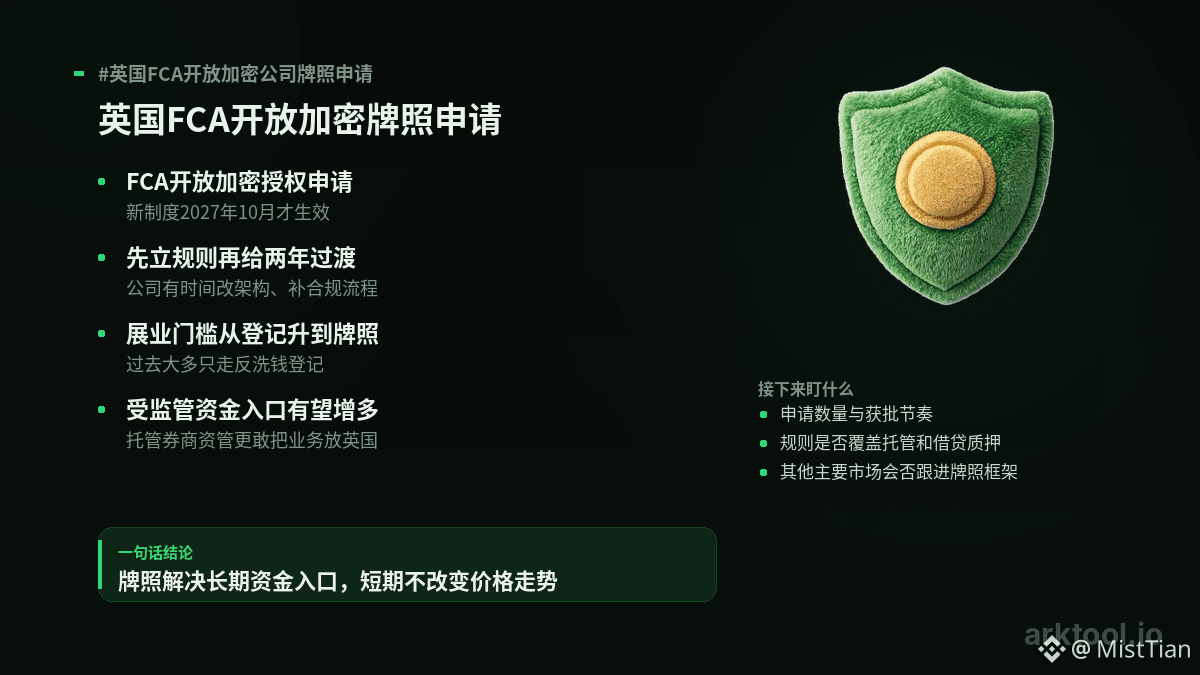
The UK Financial Conduct Authority has opened authorization applications for crypto firms. The new system will not officially take effect until October 2027.
The key is the words “authorization.” In the past, running a crypto business in the UK mostly only required anti-money-laundering registration, with a low threshold. Now firms must obtain a formal license. To be able to conduct compliant business, they must first get through this gate.
The application window is open now, but effectiveness is scheduled two years later. This suggests regulators want to get the rules in place first, giving companies time to adjust their corporate structures and strengthen compliance processes.
For $BTC , the outlook is more positive. With clearer rules, institutions such as custodians, brokers, and asset managers will be more willing to expand business into the UK. And since Bitcoin is one of the most commonly held assets by institutions, this could add some regulated capital entry points. The trade-off is rising compliance costs—smaller teams will be pushed out, and the industry will become more concentrated.
Next, watch three things: the number of applications and the approval timeline; whether the rules specifically cover custody or lending and collateral pledging; and whether other major markets will follow with similar licensing frameworks.
Licensing determines whether long-term capital can come in; it does not change short-term price trends.
#英国FCA开放加密公司牌照申请
The key is the words “authorization.” In the past, running a crypto business in the UK mostly only required anti-money-laundering registration, with a low threshold. Now firms must obtain a formal license. To be able to conduct compliant business, they must first get through this gate.
The application window is open now, but effectiveness is scheduled two years later. This suggests regulators want to get the rules in place first, giving companies time to adjust their corporate structures and strengthen compliance processes.
For $BTC , the outlook is more positive. With clearer rules, institutions such as custodians, brokers, and asset managers will be more willing to expand business into the UK. And since Bitcoin is one of the most commonly held assets by institutions, this could add some regulated capital entry points. The trade-off is rising compliance costs—smaller teams will be pushed out, and the industry will become more concentrated.
Next, watch three things: the number of applications and the approval timeline; whether the rules specifically cover custody or lending and collateral pledging; and whether other major markets will follow with similar licensing frameworks.
Licensing determines whether long-term capital can come in; it does not change short-term price trends.
#英国FCA开放加密公司牌照申请