

易琳Ten
193 Posts

易琳Ten
交易是修行,盈利是结果,纪律是信仰。🐺📈
60 Following
22.5K+ Followers
9.3K+ Liked
Posts
All
Quotes
Videos


Maryam Pro TRDER
·
--
$HBAR
My coin always trades in the trending category—much like $HBAR , which is currently trading at the top genre category 😀
My coin always trades in the trending category—much like $HBAR , which is currently trading at the top genre category 😀

慢就是快Mike8
·
--
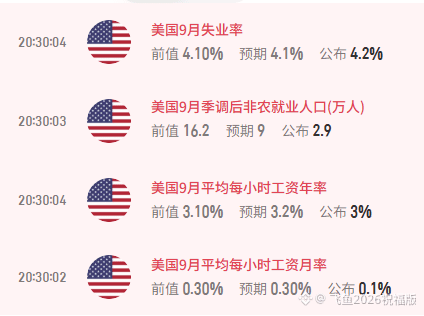
$BTC Interpretation of Non-Farm Payroll Data!!!
After the Non-Farm Payrolls came out, my biggest takeaway is that the Fed has even more compelling reasons to hold steady in October.
First, let’s look at a few key figures. Non-Farm Payrolls increased by only 29,000, far below the expected 84,000. The unemployment rate rose to 4.2%. In addition, revisions over the previous two months total a downward adjustment of 60,000. In the interest rate swap market, traders now price the probability of a rate hike in October at just 17%. Even more striking, the Kalshi prediction market prices a higher chance of holding rates steady in October at 85%.
The CME FedWatch data change is also very straightforward— the probability of keeping rates unchanged in October rose from about 76% the previous day to 86%.
In fact, before the Non-Farm Payrolls were released, Fed officials had already been signaling this. New York Fed President Williams said there is “no need for urgency” around the next rate hike, and Vice Chair Jefferson also noted that policymakers need more time to observe the data. Allianz Chief Economic Advisor Mohamed El-Erian commented as well that this set of data will further reinforce the impact of recent Fed officials’ remarks, and market expectations for an October rate hike are cooling.
However, keep in mind: this Non-Farm report only makes rate hikes feel “less urgent,” but it does not mean a policy turn. Inflation is still the Fed’s top concern. While the probability of no move in October is high, how things play out in December will depend on subsequent inflation data.
After the Non-Farm Payrolls came out, my biggest takeaway is that the Fed has even more compelling reasons to hold steady in October.
First, let’s look at a few key figures. Non-Farm Payrolls increased by only 29,000, far below the expected 84,000. The unemployment rate rose to 4.2%. In addition, revisions over the previous two months total a downward adjustment of 60,000. In the interest rate swap market, traders now price the probability of a rate hike in October at just 17%. Even more striking, the Kalshi prediction market prices a higher chance of holding rates steady in October at 85%.
The CME FedWatch data change is also very straightforward— the probability of keeping rates unchanged in October rose from about 76% the previous day to 86%.
In fact, before the Non-Farm Payrolls were released, Fed officials had already been signaling this. New York Fed President Williams said there is “no need for urgency” around the next rate hike, and Vice Chair Jefferson also noted that policymakers need more time to observe the data. Allianz Chief Economic Advisor Mohamed El-Erian commented as well that this set of data will further reinforce the impact of recent Fed officials’ remarks, and market expectations for an October rate hike are cooling.
However, keep in mind: this Non-Farm report only makes rate hikes feel “less urgent,” but it does not mean a policy turn. Inflation is still the Fed’s top concern. While the probability of no move in October is high, how things play out in December will depend on subsequent inflation data.

易琳Ten
·
--
What really widens the gap in wealth isn’t diligence, but choices and patience
Buffett has repeatedly emphasized a simple truth:
Real wealth accumulation doesn’t require doing countless things correctly. The key is getting a few things right—and sticking with them for the long term.
For many people, the problem has never been that they aren’t hardworking enough; it’s that they love to stay busy recklessly and often.
Chasing the trend today, switching tracks tomorrow;
When prices rise, they fear missing out; when they fall, they rush to cut losses.
Making investing into gambling, and turning trading into an outlet for emotions.
And what Buffett and Munger are truly great at is precisely their ability to wait.
They can go years without making a move—quietly read, think, and wait for the real opportunity worth betting on.
Real wealth accumulation doesn’t require doing countless things correctly. The key is getting a few things right—and sticking with them for the long term.
For many people, the problem has never been that they aren’t hardworking enough; it’s that they love to stay busy recklessly and often.
Chasing the trend today, switching tracks tomorrow;
When prices rise, they fear missing out; when they fall, they rush to cut losses.
Making investing into gambling, and turning trading into an outlet for emotions.
And what Buffett and Munger are truly great at is precisely their ability to wait.
They can go years without making a move—quietly read, think, and wait for the real opportunity worth betting on.



苏菲亚 Sophia
·
--
🎉🎉 Great major news
🔥 Major catalyst—new Meme super hot-spot is coming!
Everything is numbers—where did it originate from, in just one or two posts?
Everything is numbers; the Dao is simple.
▫ A strong trend signal
▫ Community consensus is going wild—stacking nonstop!
▫ Public-domain traffic explodes across the board
“Target Plan”
▪ First goal: break through the remaining two zeros
▪ Second goal: go straight for Alpha III
24-hour live broadcast|community-made
Led by the CTO, seize the momentum where crypto and equity move together—strong listing
An Alpha
Together we move forward, creating the future
—Everything is numbers
Ready? Buckle up.
Be prepared to go for Alpha at any time.
Hold your coins steady—everything is numbers is about to take off!
$AAPL.US $NVDAB $BTC #美元指数创2025年5月来新高 #Anthropic最早11月中旬IPO #BTC☀ #meme板块关注热点
🔥 Major catalyst—new Meme super hot-spot is coming!
Everything is numbers—where did it originate from, in just one or two posts?
Everything is numbers; the Dao is simple.
▫ A strong trend signal
▫ Community consensus is going wild—stacking nonstop!
▫ Public-domain traffic explodes across the board
“Target Plan”
▪ First goal: break through the remaining two zeros
▪ Second goal: go straight for Alpha III
24-hour live broadcast|community-made
Led by the CTO, seize the momentum where crypto and equity move together—strong listing
An Alpha
Together we move forward, creating the future
—Everything is numbers
Ready? Buckle up.
Be prepared to go for Alpha at any time.
Hold your coins steady—everything is numbers is about to take off!
$AAPL.US $NVDAB $BTC #美元指数创2025年5月来新高 #Anthropic最早11月中旬IPO #BTC☀ #meme板块关注热点



周周1688
·
--
🇨🇳 Oct 2|Crypto Market Brief
$BNB
📈 BTC reclaims $86K, the second day of Q4 continues to rebound
BTC is currently around $86.3K, briefly nearing $86.9K during the day; ETH is around $2.76K, SOL around $122.
Overall, the market has warmed up. Since the beginning of October, BTC has risen by about 3%. However, Treasury yields are still high, the dollar is strengthening, and macro pressure has not disappeared.
🔥 ETF inflows return as the core support
In September, the US spot BTC ETF recorded net inflows of about $2.65B, the second-strongest monthly performance since October 2025; ETH spot ETFs saw net inflows of about $832M in the same period.
On Oct 1, BTC ETFs again logged around $102.7M in net inflows, with the funds mainly flowing to BlackRock’s IBIT.
🏦 SEC: New framework for institutional crypto custody
The market is continuing to digest the SEC’s Crypto Custody proposal released yesterday.
Under the new scheme, qualified investment advisers and regulated funds may, under certain circumstances, self-custody crypto assets, and state-level trust companies may also be used as custodians.
However, note that this is still a Proposal—not the final rules. After the formal release, there will be a 60-day public comment period.
💰 Citi raises its BTC target to $113K
Citi raised its 12-month BTC target from $82K to $113K, and its ETH target from $2,240 to $3,028.
The report attributes the forecast adjustments mainly to ETF capital returning, higher activity in the crypto market, and an improving macro environment.
This is an institutional view, not a price guarantee.
⚡ The real test today: US Non-Farm Payrolls
US September NFP employment data will be released today.
The market previously expected an increase of about 90K jobs, with the unemployment rate staying at 4.1%. The employment report will directly affect how the market assesses the Fed’s interest-rate path for October.
Meanwhile, Core Lightning reminds users running older versions of nodes to upgrade as soon as possible—unupdated nodes are increasingly becoming targets of attacks.
📊 Market Snapshot
BTC ≈ $86.3K
ETH ≈ $2.76K
SOL ≈ $122
XRP ≈ $1.53
BTC Dominance ≈ 57%
Fear & Greed ≈ 72
Market Cap ≈ $2.99T
🎯 On Day 2 of Q4, the market’s logic is changing:
ETF inflows are back in, the institutional regulatory framework continues to move forward, BTC has reclaimed $86K,
But what will truly determine today’s行情 is still US employment data.
If Non-Farm Payrolls give the market more room for rate cuts, $87K will become the key level again.
Today, don’t listen to the story.
Look at the data.
#1688家族family #蓝朋友1688 #crypto #RWA赛道 #defi
$BNB
📈 BTC reclaims $86K, the second day of Q4 continues to rebound
BTC is currently around $86.3K, briefly nearing $86.9K during the day; ETH is around $2.76K, SOL around $122.
Overall, the market has warmed up. Since the beginning of October, BTC has risen by about 3%. However, Treasury yields are still high, the dollar is strengthening, and macro pressure has not disappeared.
🔥 ETF inflows return as the core support
In September, the US spot BTC ETF recorded net inflows of about $2.65B, the second-strongest monthly performance since October 2025; ETH spot ETFs saw net inflows of about $832M in the same period.
On Oct 1, BTC ETFs again logged around $102.7M in net inflows, with the funds mainly flowing to BlackRock’s IBIT.
🏦 SEC: New framework for institutional crypto custody
The market is continuing to digest the SEC’s Crypto Custody proposal released yesterday.
Under the new scheme, qualified investment advisers and regulated funds may, under certain circumstances, self-custody crypto assets, and state-level trust companies may also be used as custodians.
However, note that this is still a Proposal—not the final rules. After the formal release, there will be a 60-day public comment period.
💰 Citi raises its BTC target to $113K
Citi raised its 12-month BTC target from $82K to $113K, and its ETH target from $2,240 to $3,028.
The report attributes the forecast adjustments mainly to ETF capital returning, higher activity in the crypto market, and an improving macro environment.
This is an institutional view, not a price guarantee.
⚡ The real test today: US Non-Farm Payrolls
US September NFP employment data will be released today.
The market previously expected an increase of about 90K jobs, with the unemployment rate staying at 4.1%. The employment report will directly affect how the market assesses the Fed’s interest-rate path for October.
Meanwhile, Core Lightning reminds users running older versions of nodes to upgrade as soon as possible—unupdated nodes are increasingly becoming targets of attacks.
📊 Market Snapshot
BTC ≈ $86.3K
ETH ≈ $2.76K
SOL ≈ $122
XRP ≈ $1.53
BTC Dominance ≈ 57%
Fear & Greed ≈ 72
Market Cap ≈ $2.99T
🎯 On Day 2 of Q4, the market’s logic is changing:
ETF inflows are back in, the institutional regulatory framework continues to move forward, BTC has reclaimed $86K,
But what will truly determine today’s行情 is still US employment data.
If Non-Farm Payrolls give the market more room for rate cuts, $87K will become the key level again.
Today, don’t listen to the story.
Look at the data.
#1688家族family #蓝朋友1688 #crypto #RWA赛道 #defi


静心1688
·
--
🎉 Follow Like Reply Claim 🎁🎁🎁
#以太坊基金会主网推出zkAPI
#以太坊基金会主网推出zkAPI


任性的大叔 Sassy Uncle
·
--
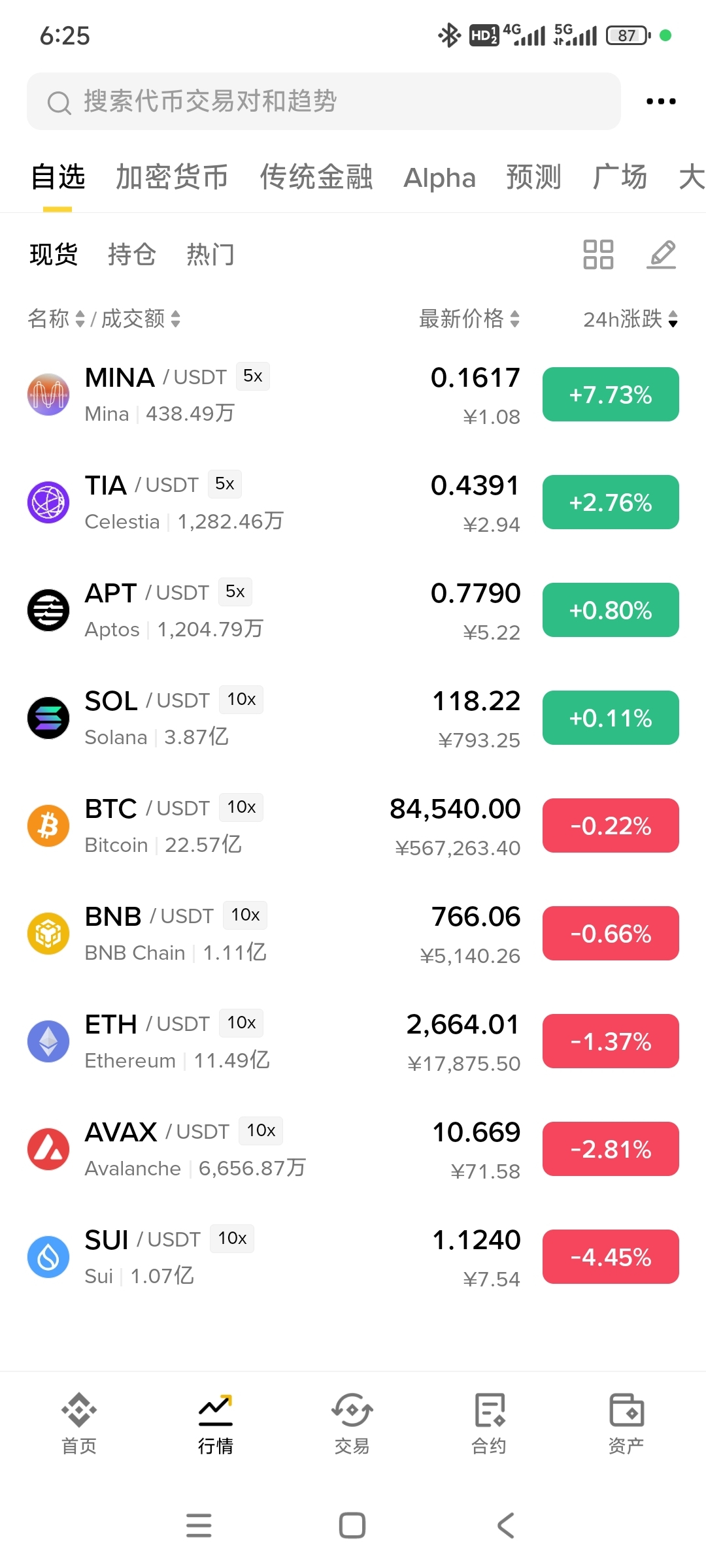
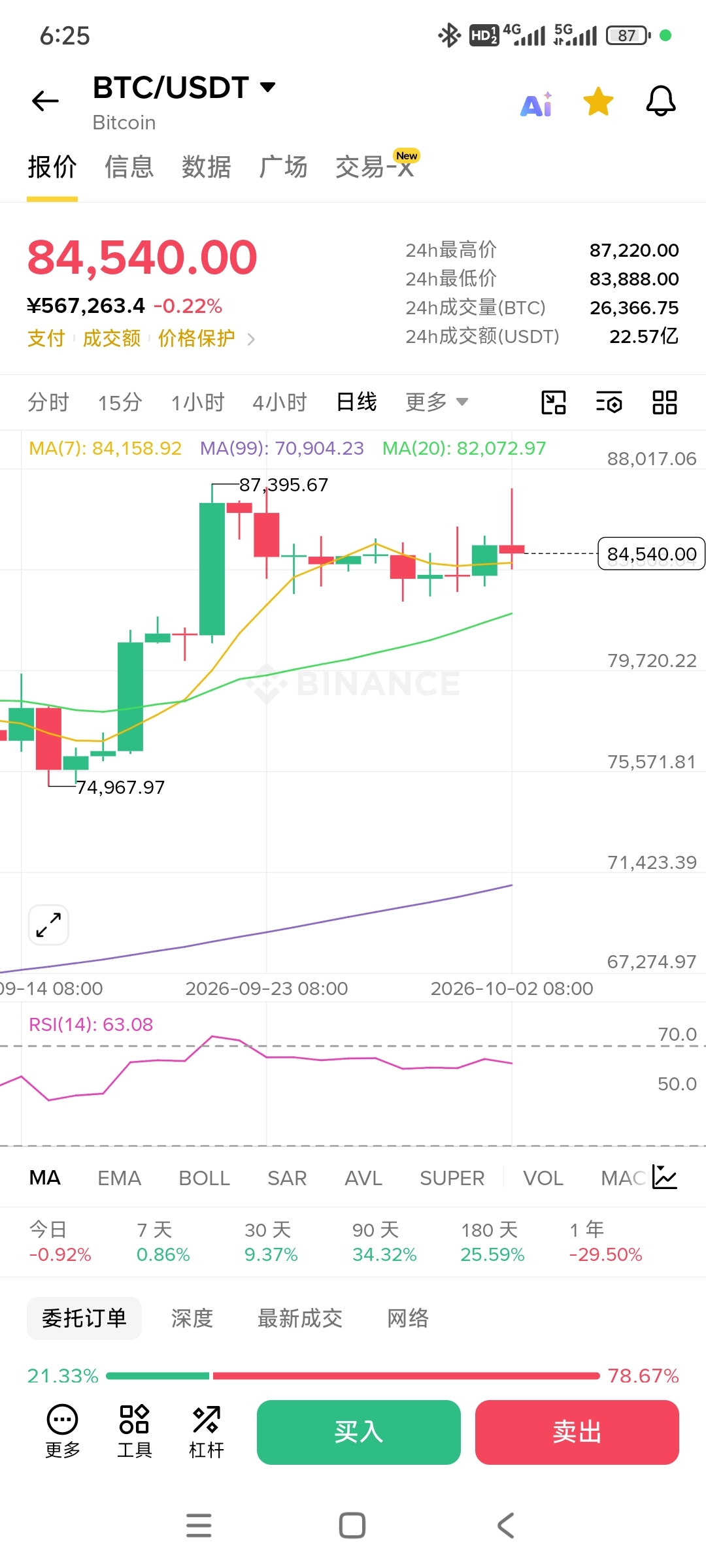
No running today, make a cup of jasmine tea, then lie back down for a bit. These past few days, I’ve added a few custom coins to my watchlist—using them from multiple angles as a basis to observe the overall market.
Bitcoin is currently experiencing a slight consolidation. The daily price is holding steadily above the MA7 and MA20 lines. The MA99 on the medium-to-long term continues to slope upward, providing ongoing support from below, and the trend on the larger timeframes remains favorable. The daily RSI is around 63, sitting in a neutral-to-strong range without entering an extremely overheated state. In the short term, the long/short battle is relatively balanced, and of course Bitcoin’s path is the wind vane for the whole market. SUI is seeing a pullback today; the 24-hour decline is relatively large and it’s moving in line with the broader market sector, coming under synchronized pressure. On the daily chart, we’ll need to keep an eye on whether the short-term moving averages can continue to provide support. MINA has been performing impressively recently, so I’ve added it to my watchlist for ongoing tracking.
The market keeps rotating. During downtime, I filter a few projects with solid fundamentals, add them to my watchlist, and feel out the market’s rhythm. On rest/run-break days, I slow down, watch the chart calmly, and sort out how the market is moving.
$BTC $SUI
Bitcoin is currently experiencing a slight consolidation. The daily price is holding steadily above the MA7 and MA20 lines. The MA99 on the medium-to-long term continues to slope upward, providing ongoing support from below, and the trend on the larger timeframes remains favorable. The daily RSI is around 63, sitting in a neutral-to-strong range without entering an extremely overheated state. In the short term, the long/short battle is relatively balanced, and of course Bitcoin’s path is the wind vane for the whole market. SUI is seeing a pullback today; the 24-hour decline is relatively large and it’s moving in line with the broader market sector, coming under synchronized pressure. On the daily chart, we’ll need to keep an eye on whether the short-term moving averages can continue to provide support. MINA has been performing impressively recently, so I’ve added it to my watchlist for ongoing tracking.
The market keeps rotating. During downtime, I filter a few projects with solid fundamentals, add them to my watchlist, and feel out the market’s rhythm. On rest/run-break days, I slow down, watch the chart calmly, and sort out how the market is moving.
$BTC $SUI

燕寶Melissa
·
--
Bearish🚨 CZ Responds to SBF: If a single tweet could destroy a company, then it was never really a company!
Can one tweet really make a billion-dollar enterprise go bankrupt?
In the latest interview for 《When Shift Happens》, Binance founder CZ once again addressed the controversy surrounding the FTX collapse, pointing to a core issue:
If a competitor’s tweet is enough to bring down a company, then the problem may never have been with that tweet at all.
Regarding SBF’s claim that the FTX collapse was caused by CZ’s announcement to liquidate FTT back then, CZ said that when companies fail, there are often multiple contributing factors, and it’s not something that can be blamed on a single piece of social media commentary.
He also gave the example of an AI chip company:
Even if industry leaders publicly express negative views, a company’s stock price may fluctuate as a result, but as long as it has real products, real customers, and the ability to manage cash prudently, it won’t disappear because of just one tweet.
💡 These remarks by CZ are worth every entrepreneur and investor thinking about.
🔹 1. Market sentiment can trigger volatility, but fundamentals determine a company’s resilience
🔹 2. Liquidity is the most important line of defense for a company facing a crisis
🔹 3. Real business is the foundation for long-term development
🔹 4. Lessons from the FTX incident: don’t simply attribute operating risks to external factors
CZ believes that the problems at FTX were not just something that could be explained by market sentiment or a single tweet.
From an investor’s perspective, when evaluating a company, besides looking at the founder’s influence and market visibility, it’s also necessary to examine its financial transparency, capital management, risk controls, and governance mechanisms.
#比特币站上8.6万美元涨2.99%
$BTC
$ETH
$BNB
Can one tweet really make a billion-dollar enterprise go bankrupt?
In the latest interview for 《When Shift Happens》, Binance founder CZ once again addressed the controversy surrounding the FTX collapse, pointing to a core issue:
If a competitor’s tweet is enough to bring down a company, then the problem may never have been with that tweet at all.
Regarding SBF’s claim that the FTX collapse was caused by CZ’s announcement to liquidate FTT back then, CZ said that when companies fail, there are often multiple contributing factors, and it’s not something that can be blamed on a single piece of social media commentary.
He also gave the example of an AI chip company:
Even if industry leaders publicly express negative views, a company’s stock price may fluctuate as a result, but as long as it has real products, real customers, and the ability to manage cash prudently, it won’t disappear because of just one tweet.
💡 These remarks by CZ are worth every entrepreneur and investor thinking about.
🔹 1. Market sentiment can trigger volatility, but fundamentals determine a company’s resilience
🔹 2. Liquidity is the most important line of defense for a company facing a crisis
🔹 3. Real business is the foundation for long-term development
🔹 4. Lessons from the FTX incident: don’t simply attribute operating risks to external factors
CZ believes that the problems at FTX were not just something that could be explained by market sentiment or a single tweet.
From an investor’s perspective, when evaluating a company, besides looking at the founder’s influence and market visibility, it’s also necessary to examine its financial transparency, capital management, risk controls, and governance mechanisms.
#比特币站上8.6万美元涨2.99%
$BTC
$ETH
$BNB


AbdullRauf
·
--
57+69=?🎁💐😉


Mahi_玛希BNB
·
--
🚀 **$ETH — More Than Just a Token!**
Ethereum continues to power a huge part of the **Web3 ecosystem**, from smart contracts to DeFi and beyond. 🔥
The market is always moving, and ETH** remains one of the tokens worth keeping on your radar. 👀
Are you watching the next ETH move? 📈
$BNB $BTC
#ETH #Ethereum #Crypto #Web3 #defi #BinanceSquare #ETHArmy #CryptoCommunity #blockchain
Ethereum continues to power a huge part of the **Web3 ecosystem**, from smart contracts to DeFi and beyond. 🔥
The market is always moving, and ETH** remains one of the tokens worth keeping on your radar. 👀
Are you watching the next ETH move? 📈
$BNB $BTC
#ETH #Ethereum #Crypto #Web3 #defi #BinanceSquare #ETHArmy #CryptoCommunity #blockchain


Lucy法拉
·
--
Bitcoin’s October is almost here—and a massive surge may be imminent. I have to take action decisively!
I can’t find a single convincing reason to be bearish. The long-standing pattern in the crypto world is: a bull market lasts 3 years, and a bear market lasts 1 year. This bear cycle began last October and, as of now, it’s already nearing the end. After that, the bigger trend can only move upward—any pullbacks are opportunities to get on board.
What’s more, October itself is a critical window in Bitcoin’s history for the restart of bull runs: past data shows that BTC’s average return rate and the median percentage increase in October are both close to 20%. If this time also repeats history, this cycle’s peak could very well reach as high as $95,000.
The only potential downside I can find, strangely enough, looks more like the biggest potential upside: the Nasdaq has returned to its prior high range after half a year, and it’s now poised to break through. If U.S. stocks successfully open up more upside room and enter a new leg of the main rally, global risk assets—including the crypto market—will directly benefit.
Of course, this is also the biggest risk: if the Nasdaq fails to complete the breakout and instead turns down to form a double-top structure, leading to a major pullback, the crypto market would inevitably be dragged down as well—this is the worst scenario we can currently foresee.
But my personal judgment is that the probability of the U.S. stock market breaking upward this time is higher—after all, it’s been consolidating for nearly half a year, and the earlier profit-taking has already been digested relatively thoroughly, so the upward momentum is stronger. Therefore, after we successfully escaped the top at around $87,000 last Tuesday, I have already re-entered a portion of my position near $83,000. I will keep the remaining position to build the rest around the key support at $80,000 and put in place comprehensive risk hedging.
For short-term trading, just keep doing range-based swings within ETH’s band: below the $2,750 resistance level—for example around $2,735—take profits on highs; above the $2,650 support level—for example around $2,670—buy back on dips. But one more reminder: the longer the market oscillates, the stronger the eventual one-way breakout power. After you earn profits from short-term swings, be sure to take them off the table in time.
I can’t find a single convincing reason to be bearish. The long-standing pattern in the crypto world is: a bull market lasts 3 years, and a bear market lasts 1 year. This bear cycle began last October and, as of now, it’s already nearing the end. After that, the bigger trend can only move upward—any pullbacks are opportunities to get on board.
What’s more, October itself is a critical window in Bitcoin’s history for the restart of bull runs: past data shows that BTC’s average return rate and the median percentage increase in October are both close to 20%. If this time also repeats history, this cycle’s peak could very well reach as high as $95,000.
The only potential downside I can find, strangely enough, looks more like the biggest potential upside: the Nasdaq has returned to its prior high range after half a year, and it’s now poised to break through. If U.S. stocks successfully open up more upside room and enter a new leg of the main rally, global risk assets—including the crypto market—will directly benefit.
Of course, this is also the biggest risk: if the Nasdaq fails to complete the breakout and instead turns down to form a double-top structure, leading to a major pullback, the crypto market would inevitably be dragged down as well—this is the worst scenario we can currently foresee.
But my personal judgment is that the probability of the U.S. stock market breaking upward this time is higher—after all, it’s been consolidating for nearly half a year, and the earlier profit-taking has already been digested relatively thoroughly, so the upward momentum is stronger. Therefore, after we successfully escaped the top at around $87,000 last Tuesday, I have already re-entered a portion of my position near $83,000. I will keep the remaining position to build the rest around the key support at $80,000 and put in place comprehensive risk hedging.
For short-term trading, just keep doing range-based swings within ETH’s band: below the $2,750 resistance level—for example around $2,735—take profits on highs; above the $2,650 support level—for example around $2,670—buy back on dips. But one more reminder: the longer the market oscillates, the stronger the eventual one-way breakout power. After you earn profits from short-term swings, be sure to take them off the table in time.
灼见Cryptosighted
·
--
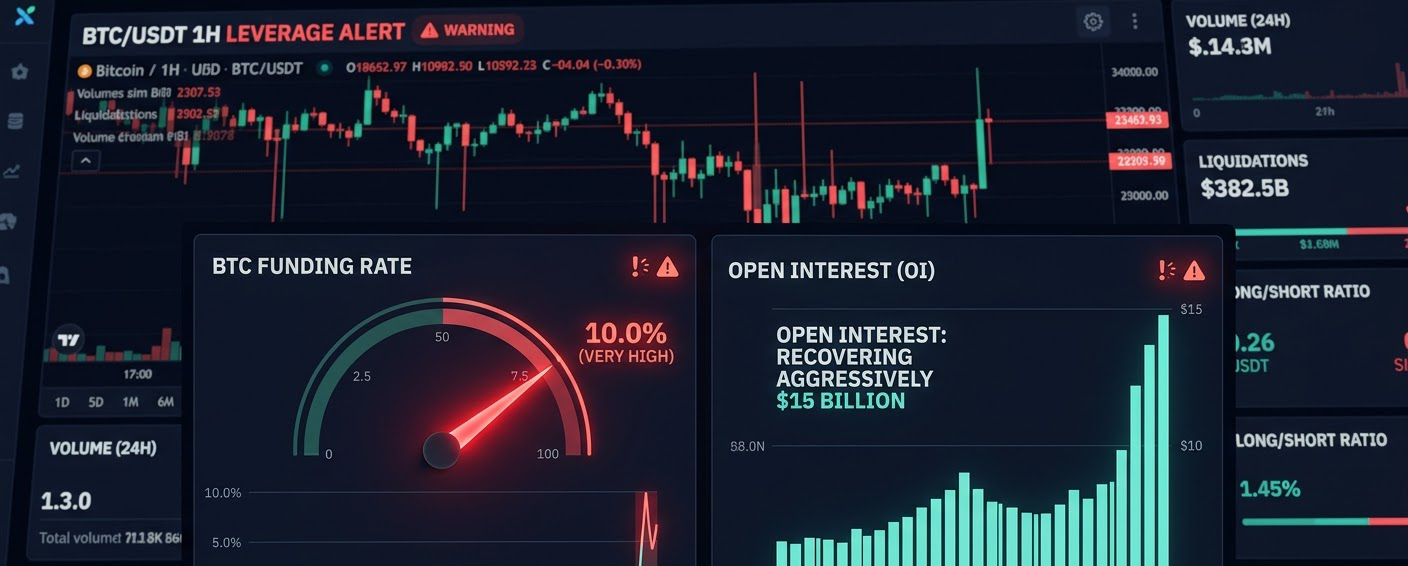
Bitcoin Funding Rate Hits 10% as Open Interest Rebounds
🚨 Warning: Leverage is maxed out! BTC funding rate has surged to 10%, open interest has skyrocketed—big breakout/turning point countdown!
Many people only watch K-line charts for bullish or bearish moves, but they ignore the derivatives market that’s going off like an alarm.
At the moment, Bitcoin’s funding rate has already surged to an astonishing 10% (annualized). At the same time, open interest (OI) is showing a sharp, straight-line rebound. When these two figures are combined, it’s basically telling the entire market one thing: crazy off-exchange capital is going long at any cost with high leverage, and retail investors’ FOMO has reached its peak.
Many people only watch K-line charts for bullish or bearish moves, but they ignore the derivatives market that’s going off like an alarm.
At the moment, Bitcoin’s funding rate has already surged to an astonishing 10% (annualized). At the same time, open interest (OI) is showing a sharp, straight-line rebound. When these two figures are combined, it’s basically telling the entire market one thing: crazy off-exchange capital is going long at any cost with high leverage, and retail investors’ FOMO has reached its peak.

MAYA_
·
--
🎁🎁 GIFT BOX 🎁🎁
🎁🎁🎁🎁🎁🎁
🎁🎁🎁🎁🎁
🎁🎁🎁🎁🎁🎁
🎁🎁🎁🎁🎁


Sonu7856
·
--
‼️$DOGE 🧧 Reward is here ‼️
I’m sharing $DOGE 🧧 rewards with the community as a Bigger thank-you.
✨ Just claim your reward and enjoy! ✨
Claim it. Get rewarded
@DOGE_ $DOGE #DOGE
I’m sharing $DOGE 🧧 rewards with the community as a Bigger thank-you.
✨ Just claim your reward and enjoy! ✨
Claim it. Get rewarded
@DOGE_ $DOGE #DOGE


CJ_GraceWang1688
·
--
🎁🎁🎁
$BTC
#比特币资金费率升至10%未平仓合约回升
Short-term bias: bullish. Prices are rising alongside a rebound in open interest. Funding rates have risen to around 10% annualized, indicating that new leveraged long positions are covering from lower levels and supporting the market. However, the rate has only returned to the normal benchmark range rather than reaching extreme crowding levels, so this alone cannot be used to conclude that prices will definitely keep rising. During pullbacks, long liquidations are also likely to be triggered.
$BTC
#比特币资金费率升至10%未平仓合约回升
Short-term bias: bullish. Prices are rising alongside a rebound in open interest. Funding rates have risen to around 10% annualized, indicating that new leveraged long positions are covering from lower levels and supporting the market. However, the rate has only returned to the normal benchmark range rather than reaching extreme crowding levels, so this alone cannot be used to conclude that prices will definitely keep rising. During pullbacks, long liquidations are also likely to be triggered.

奋斗Hustle-1688
·
--
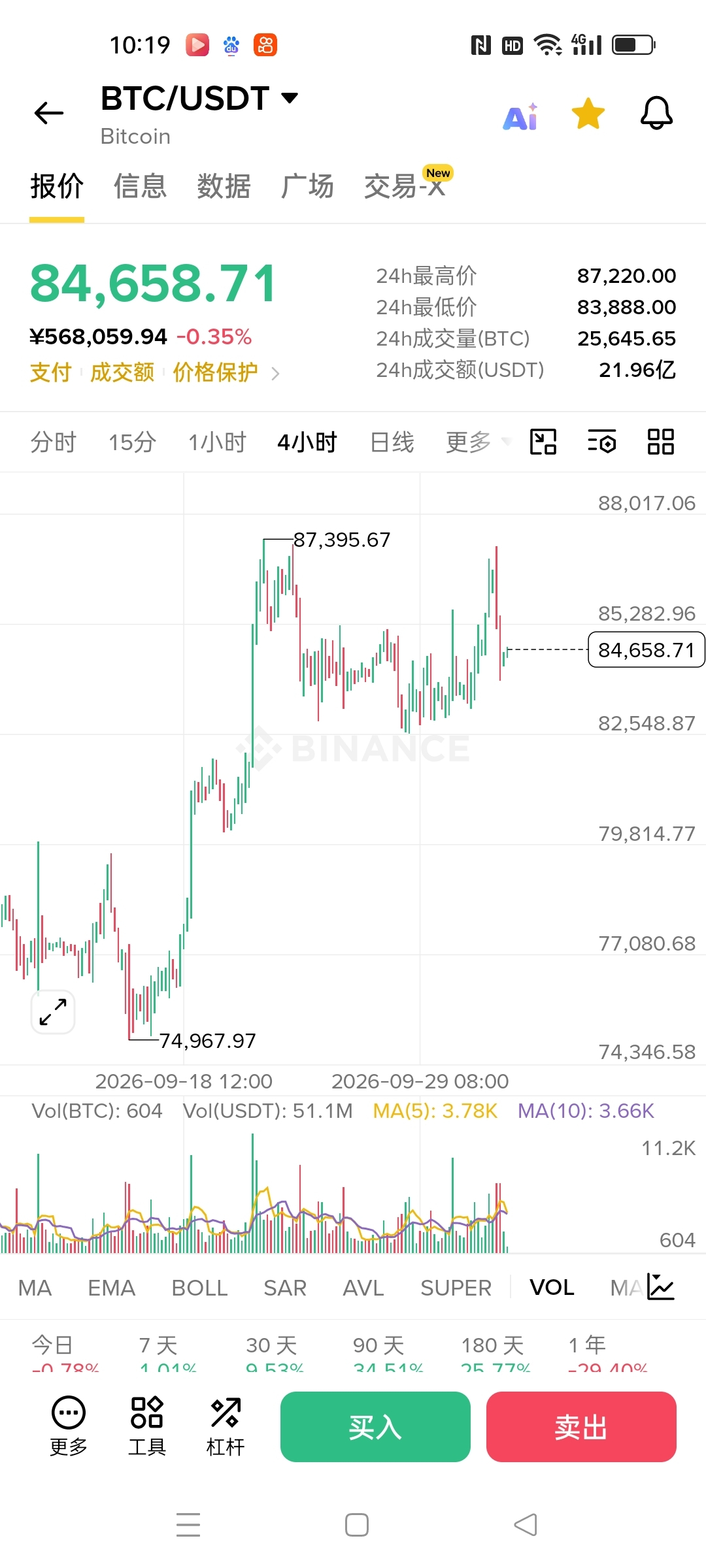
$BTC Buffett has a saying that roughly means: in one lifetime, if you get two things right in investing, you can become very wealthy. Most people lose badly—not because they aren’t hardworking, but because they love to be busy doing the wrong things: chasing whatever’s hot today, switching tracks tomorrow, treating investing like a casino. Buffett and Munger can go for years without buying anything at all; they simply read and think quietly. In their lives, they actually got two things right:
First, they found hard-core businesses that can stand the test of time. The simpler the structure, the better—ideally something essential, with monopolistic advantages, and tied to the lifeblood of national economy and people’s livelihoods. You don’t have to be especially smart; what matters is that the level of certainty is extremely high.
Second, after buying, they hold on tightly. Compounding gains build up slowly over time—like brewing wine. If you open the lid today to take a look, and then tomorrow lift it again to taste it, you’ll never brew good wine.
But most people want to sell when prices rise, get panicked and cut when prices fall, and stare at the charts every day—till they get more and more carried away, and end up handing over fees to the brokers for nothing. People who trade frequently often end up driving a Ferrari into the ditch and getting out on a bicycle. The ones who truly make big money in the market are never the fastest madmen, but the most patient hunters. The core difference between the rich and the poor isn’t who’s smarter—it’s who can endure better. Do fewer useless actions, stand in the right position, and calmly wait for compounding to explode.
First, they found hard-core businesses that can stand the test of time. The simpler the structure, the better—ideally something essential, with monopolistic advantages, and tied to the lifeblood of national economy and people’s livelihoods. You don’t have to be especially smart; what matters is that the level of certainty is extremely high.
Second, after buying, they hold on tightly. Compounding gains build up slowly over time—like brewing wine. If you open the lid today to take a look, and then tomorrow lift it again to taste it, you’ll never brew good wine.
But most people want to sell when prices rise, get panicked and cut when prices fall, and stare at the charts every day—till they get more and more carried away, and end up handing over fees to the brokers for nothing. People who trade frequently often end up driving a Ferrari into the ditch and getting out on a bicycle. The ones who truly make big money in the market are never the fastest madmen, but the most patient hunters. The core difference between the rich and the poor isn’t who’s smarter—it’s who can endure better. Do fewer useless actions, stand in the right position, and calmly wait for compounding to explode.

Noor221
·
--
Bullishwhich one is best for Holding $TAO or $ZEC

Sara_ k
·
--
AI Tokens and What They Do:
.
claim here 👈🧧🧧🧧🧧🧧
.
claim 2 👈🧧🧧🧧🧧🧧
.
$TAO $FET $VIRTUAL
.
claim here 👈🧧🧧🧧🧧🧧
.
claim 2 👈🧧🧧🧧🧧🧧
.
$TAO $FET $VIRTUAL


HUMAIR JAN
·
--
$BTC 🤳🤳🤳

Log in to explore more content