


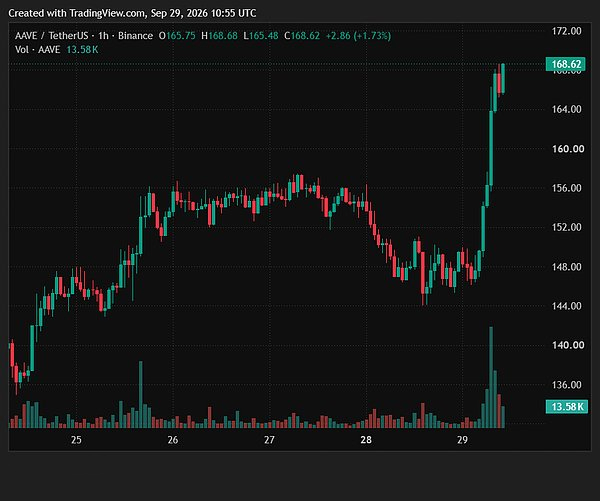
Amid the recent divergence in the DeFi sector, AAVE has carved out an independent upward move and become the market’s focus. This rally is not driven purely by short-term speculative capital; rather, it is propelled jointly by product deployment, the RWA narrative, token-economy upgrades, and the simultaneous resonance of market sentiment. As a leading protocol in the decentralized lending space, Aave is transitioning from traditional crypto-asset lending toward becoming an on-chain real-world asset credit platform. This is also the core underlying logic behind the strength in the coin’s price this round.
The most direct catalyst for this round of market action is that Aave V4 went live on the Base chain with Equities Hub, officially incorporating tokenized U.S. stocks into the DeFi collateral framework. Users can deposit seven tokenized U.S. stocks issued by Coinbase—such as Apple, Nvidia, and Tesla—as collateral, and borrow USDC, thereby obtaining liquidity without selling their stock positions. Before this, DeFi lending collateral was basically limited to native crypto assets like ETH, BTC, and stablecoins, which naturally constrained the size of asset pools. With the onboarding of tokenized stocks, trillions of dollars’ worth of traditional equities assets now have the opportunity to enter the on-chain credit market. For the Aave protocol, this suggests fresh growth potential in borrowing demand, interest income, and total value locked (TVL). Equities Hub uses a Hub-and-Spoke risk isolation architecture, together with Chainlink oracles for price feeds. It isolates risk separately so it won’t spill over to Aave’s main market—reducing systemic bad-debt risk introduced by new collateral assets, and also demonstrating to institutional capital that RWA lending is feasible in practice.
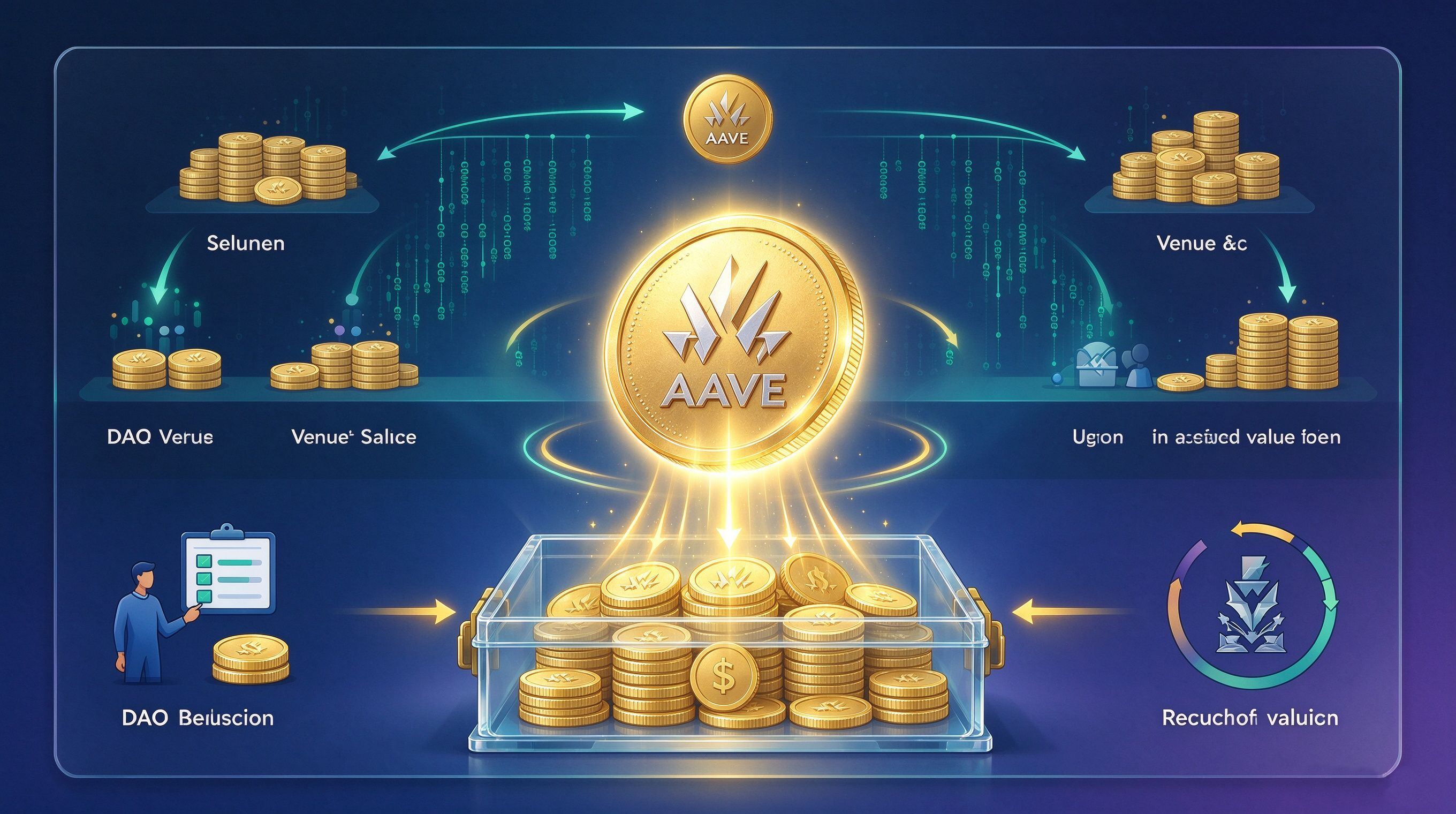
Beyond the product side, the tokenomics upgrade is another important pillar pushing up expectations for AAVE valuation. Aave founder Stani Kulechov proposed an Aavenomics 3.0 plan, which includes adding a token burn mechanism on top of the existing protocol buyback program. Previously, Aave relied on protocol fee revenue to buy back AAVE tokens; the tokens after buyback were deposited into the DAO treasury, representing a transfer of existing assets. However, once the burn mechanism is implemented through a governance vote, the bought-back AAVE tokens will be permanently destroyed, directly reducing circulating supply and creating sustained deflation. Market estimates suggest that Aave’s annualized revenue from the protocol is substantial. If part of the revenue is continuously used for buyback-and-burn, the token’s value-capture ability would be significantly strengthened.
It should be noted that reETH previously suffered a security incident that resulted in bad debt, and Aave temporarily paused buybacks and prioritized using protocol revenue to cover the bad debt. Now that the bad debt has been gradually worked through, market expectations are that the buyback mechanism will resume—combined with the approval of the burn proposal—and the token’s cash-flow value narrative is being repriced. At the same time, Aave Labs has proposed a revenue framework reform: all product revenues under its umbrella are to be paid into the DAO treasury, and protocol profits can no longer be intercepted by the development team. Token holders can then share the protocol’s growth benefits more completely, further reinforcing the narrative of AAVE as “equity in a DeFi lending platform.”
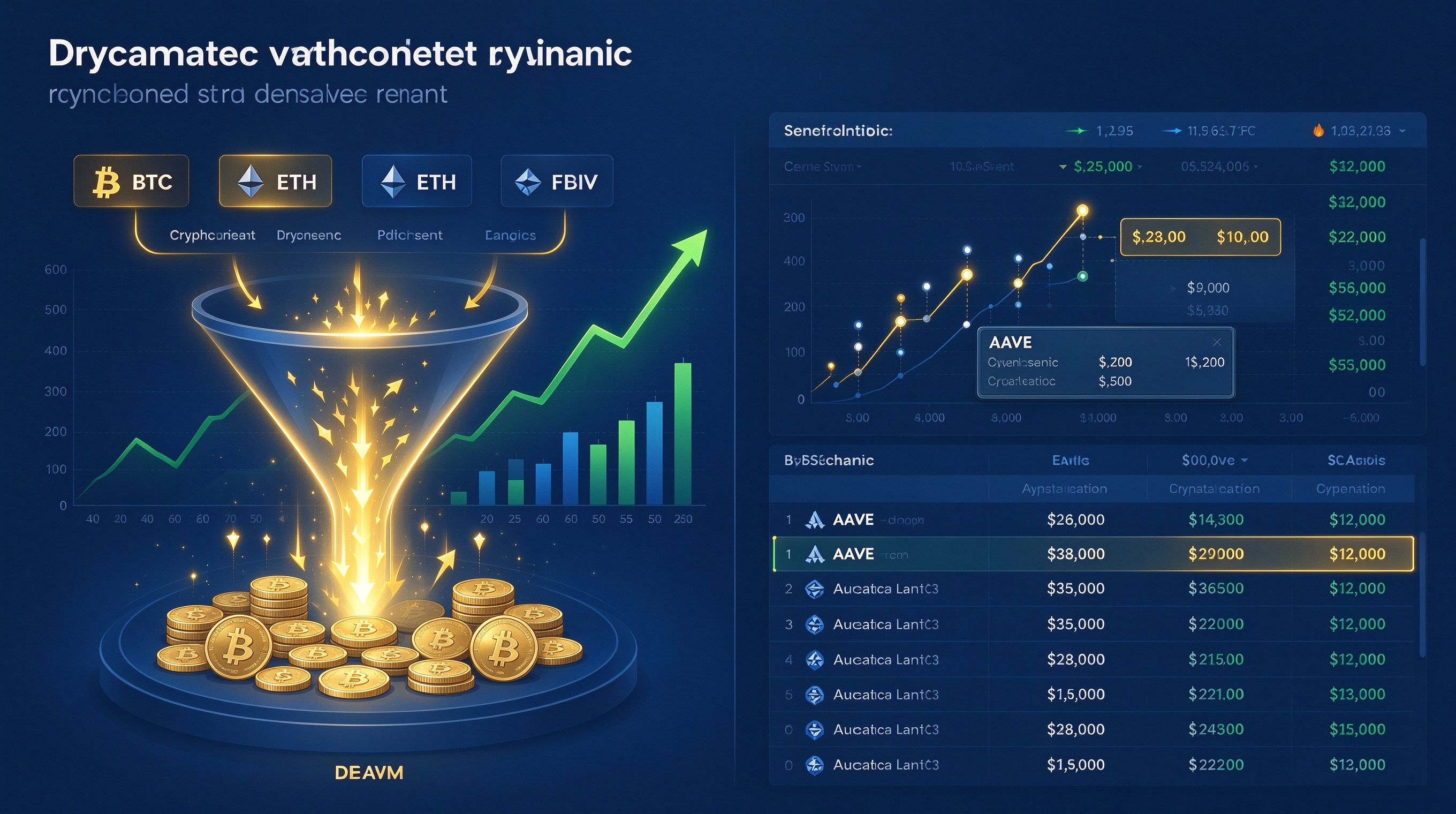
Looking at the competitive landscape within the lending track, competition in decentralized lending is intensifying. Morpho and Spark have continued to take market share, and Aave’s market share in native crypto asset lending has declined somewhat. Under this kind of pressure, Aave is accelerating its bet on RWA to find a second growth curve. RWA has long been a main theme in the Web3 industry, but most projects remain at the concept stage. This time, Aave directly connects U.S.-stock tokens to its lending system, making it one of the few truly implemented RWA credit use cases. Market capital is willing to pay a premium for such a real-world outcome, believing that Aave can use RWA to widen the gap versus other DeFi lending protocols. The V4 version’s architecture upgrades also shouldn’t be ignored: V4 uses a modular design, enabling rapid construction of separate asset markets. In addition to tokenized stocks, in the future, real-world assets such as bonds and commodities can also be quickly integrated, leaving room for long-term expansion.
Macro conditions and liquidity also provide a boost. Recently, overall liquidity in the crypto market has been recovering. BTC and ETH spot ETFs have continued to record net inflows, and institutional capital is gradually returning to the crypto sector. DeFi blue-chip tokens are a relatively moderate-risk segment; when the broader market stabilizes, funds tend to prioritize leading assets with new story-driven catalysts in their fundamentals. As a top-tier DeFi lending asset, AAVE naturally has strong liquidity. Large investors and institutions can enter and exit easily, and combined with the Equities Hub news catalyst, it draws a large amount of trading capital in, leading to a short-term price breakout.
But amid the heated rally, the risks must not be overlooked. First, Equities Hub is currently still small in scale, and both collateral and borrowing limits are capped, meaning its near-term contribution to total protocol revenue is limited. Large-scale RWA implementation still needs time to be validated. Second, the token burn plan is still in the community discussion stage and hasn’t completed the governance vote yet, leaving a possibility that the proposal could be rejected. Tokenized stocks themselves also involve risks such as issuer risk, regulatory policy risk, and asset redemption risk. If U.S. stocks or tokenized assets experience sharp volatility, it could lead to liquidation risk. In addition, Aave has encountered bad debt events in the past, and DeFi lending protocols always face oracle risk and smart contract vulnerability risk—these underlying issues won’t disappear just because the product has a new narrative.
In summary, the reason for AAVE’s current rally is essentially a market reassessment of Aave’s value—shifting from crypto lending to on-chain RWA finance. In the short term, the upside is driven by the launch of Equities Hub and expectations for token burning. In the medium to long term, it depends on whether tokenized asset lending can continue to expand in scale, whether Aavenomics 3.0 can be successfully implemented, and whether protocol revenue can keep growing. Market hype is easy, but getting the business to land requires a long cycle. For participants, it’s important to distinguish between short-term narrative speculation and genuine improvements in fundamentals, and to view price fluctuations rationally.