

易琳Ten
172 Posts

易琳Ten
交易是修行,盈利是结果,纪律是信仰。🐺📈
69 Following
22.1K+ Followers
8.9K+ Liked
Posts
All
Quotes
Videos

PINNED

易琳Ten
·
--
Many people are trying to describe the major drawdown at the beginning of 2023,
attempting to fit today’s market conditions using historical price action.
But what I want to say is:
History can rhyme, but it doesn’t simply repeat.
I’m more inclined to believe that we are still in Stage D.
However, before the target area is fully reached, the market may not necessarily replicate that year’s deep drawdown.
So, you can reference history, but don’t let it constrain you.
Past price action can help us understand the market’s rhythm,
but it cannot become a script for predicting the future.
Price movements may look similar, but the rhythm may not be the same;
structure can be replicated, but the path won’t be exactly repeated.
What truly matters in trading isn’t finding a historical copy,
but continuously adjusting your judgment based on current price, structure, and changes in capital.
attempting to fit today’s market conditions using historical price action.
But what I want to say is:
History can rhyme, but it doesn’t simply repeat.
I’m more inclined to believe that we are still in Stage D.
However, before the target area is fully reached, the market may not necessarily replicate that year’s deep drawdown.
So, you can reference history, but don’t let it constrain you.
Past price action can help us understand the market’s rhythm,
but it cannot become a script for predicting the future.
Price movements may look similar, but the rhythm may not be the same;
structure can be replicated, but the path won’t be exactly repeated.
What truly matters in trading isn’t finding a historical copy,
but continuously adjusting your judgment based on current price, structure, and changes in capital.



帮帮Bonnie
·
--
Live with open‑heartedness, stay calm and self‑consistent.
Live with open‑heartedness, stay calm and self‑consistent.
#比特币升破85200美元
Live with open‑heartedness, stay calm and self‑consistent.
#比特币升破85200美元


RCB signal
·
--
.$ZEC
.
claim 🎁🎁🎁🎁👈
.
claim 2, 🎁🎁🎁🎁👈
.
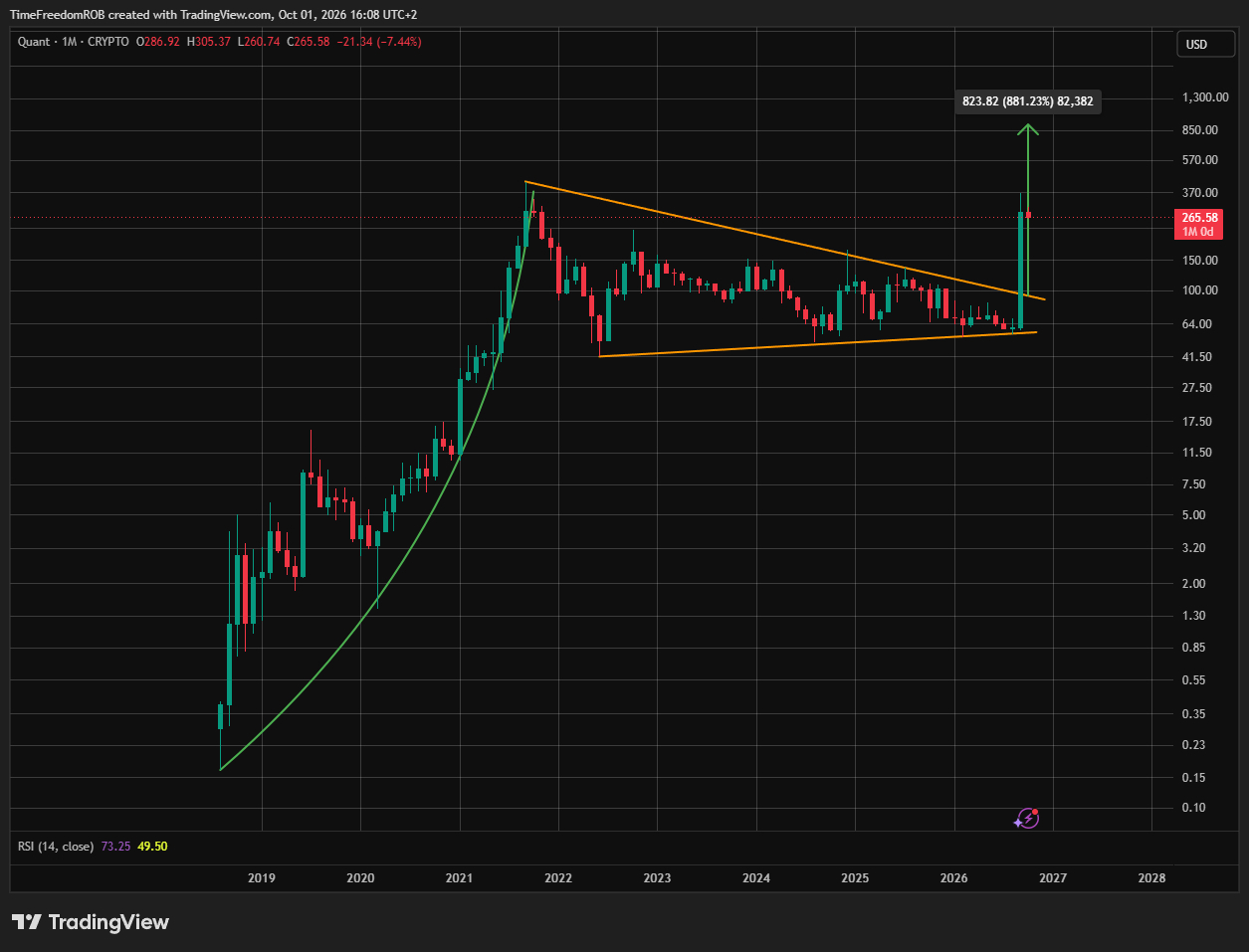
Most still treat $QNT like another 2018 leftover that never woke up.
They skipped the chapter where it listed into a graveyard, printed $0.16, then they burned millions of unsold tokens and left only 14.6M standing.
Years of looking dead.
Now it’s gone parabolic over $300.
That’s not a random green candle.
That’s what happens when forgotten supply finally meets a bid.
We all know what happens next.
.
claim 🎁🎁🎁🎁👈
.
claim 2, 🎁🎁🎁🎁👈
.
Most still treat $QNT like another 2018 leftover that never woke up.
They skipped the chapter where it listed into a graveyard, printed $0.16, then they burned millions of unsold tokens and left only 14.6M standing.
Years of looking dead.
Now it’s gone parabolic over $300.
That’s not a random green candle.
That’s what happens when forgotten supply finally meets a bid.
We all know what happens next.


橙子Joyce
·
--
BullishThe Fed’s hawkish cry is back! U.S. Treasury yields surge—where will the stock market go next?
U.S. stocks ended Wednesday with mixed performance. Although cooler PCE data briefly boosted the broader market, as Fed officials collectively released “hawkish” signals, both Treasury yields and the U.S. dollar index strengthened, weighing again on equities.
🚨 Fed turns uniformly hawkish: Is rate hikes not at the end?
Kashkari (President of the Minneapolis Fed): Inflation is still about 3%, far above the 2% goal. The neutral interest rate may be higher than previously expected. He expects another rate hike this year and another in 2027. He also cautioned about risks of long-term supply shocks stemming from the situation in Iran.
Lisa Cook (Federal Reserve Board Governor): Inflation has been above target for more than five and a half years. She supports a 25-basis-point rate hike in September and emphasized how high energy and housing costs in rural areas squeeze household budgets.
Goolsbee (President of the Chicago Fed): He bluntly said that maintaining high inflation for a long time is “playing with fire.” Large fiscal deficits and market expectations of AI-driven productivity gains could both lead to the economy overheating.
📈 Market reaction: Treasury yields hit multi-year highs, and the dollar strengthens
Treasury yields leap higher: The intraday yield on the 10-year Treasury broke above 5.3%, while the 30-year rose to around 5.64%, both at the highest levels since 2002.
U.S. stocks whipsaw: The Dow fell by more than 440 points in a single day, and the S&P 500 closed lower. Only the Nasdaq ended higher against the trend, supported by technology stocks.
The dollar index holds firm: The dollar rose nearly 2% in September, posting its best monthly performance in half a year. The market has basically priced in a December rate hike. It is now expected that total tightening over the next 12 months will be about 90 basis points.
💡 Key observations and takeaways
1. Pressure on the transmission of borrowing costs: With 10- and 30-year Treasury yields serving as pricing anchors, their persistent surge is broadly lifting mortgage and corporate financing costs, creating clear drag on the real economy and equity valuations.
2. “Term premium” returns: Strong GDP data and the expansion of fiscal deficits have pushed investors to demand higher yields from long-term Treasuries. Safe-haven and high-yield Treasury assets have siphoned off some capital from parts of the crypto and equity markets.
#美联储会议
#币安广场
$NVDA.US
$SPCX.US
$AMZN.US
U.S. stocks ended Wednesday with mixed performance. Although cooler PCE data briefly boosted the broader market, as Fed officials collectively released “hawkish” signals, both Treasury yields and the U.S. dollar index strengthened, weighing again on equities.
🚨 Fed turns uniformly hawkish: Is rate hikes not at the end?
Kashkari (President of the Minneapolis Fed): Inflation is still about 3%, far above the 2% goal. The neutral interest rate may be higher than previously expected. He expects another rate hike this year and another in 2027. He also cautioned about risks of long-term supply shocks stemming from the situation in Iran.
Lisa Cook (Federal Reserve Board Governor): Inflation has been above target for more than five and a half years. She supports a 25-basis-point rate hike in September and emphasized how high energy and housing costs in rural areas squeeze household budgets.
Goolsbee (President of the Chicago Fed): He bluntly said that maintaining high inflation for a long time is “playing with fire.” Large fiscal deficits and market expectations of AI-driven productivity gains could both lead to the economy overheating.
📈 Market reaction: Treasury yields hit multi-year highs, and the dollar strengthens
Treasury yields leap higher: The intraday yield on the 10-year Treasury broke above 5.3%, while the 30-year rose to around 5.64%, both at the highest levels since 2002.
U.S. stocks whipsaw: The Dow fell by more than 440 points in a single day, and the S&P 500 closed lower. Only the Nasdaq ended higher against the trend, supported by technology stocks.
The dollar index holds firm: The dollar rose nearly 2% in September, posting its best monthly performance in half a year. The market has basically priced in a December rate hike. It is now expected that total tightening over the next 12 months will be about 90 basis points.
💡 Key observations and takeaways
1. Pressure on the transmission of borrowing costs: With 10- and 30-year Treasury yields serving as pricing anchors, their persistent surge is broadly lifting mortgage and corporate financing costs, creating clear drag on the real economy and equity valuations.
2. “Term premium” returns: Strong GDP data and the expansion of fiscal deficits have pushed investors to demand higher yields from long-term Treasuries. Safe-haven and high-yield Treasury assets have siphoned off some capital from parts of the crypto and equity markets.
#美联储会议
#币安广场
$NVDA.US
$SPCX.US
$AMZN.US


Bilverse
·
--
🚨 BILVERSEARMY — THE RED PACKET IS LIVE! 🔴🧧
We’re dropping a MASSIVE ETH GIVEAWAY for all the followers ⚡️💎
Claiming is simple:
1️⃣ Follow me
2️⃣ Like this post ❤️
3️⃣ Comment “ETH” below 👇
That’s it. You’re in! 🫡🔥
Let’s make some noise and show the world what #BilverseArmy is all about. 🚀
RED PACKET ACTIVATED. 🧧🔴 ETH LOADING…
#ETH #RedPacketMission #Bilverse #Giveaway
We’re dropping a MASSIVE ETH GIVEAWAY for all the followers ⚡️💎
Claiming is simple:
1️⃣ Follow me
2️⃣ Like this post ❤️
3️⃣ Comment “ETH” below 👇
That’s it. You’re in! 🫡🔥
Let’s make some noise and show the world what #BilverseArmy is all about. 🚀
RED PACKET ACTIVATED. 🧧🔴 ETH LOADING…
#ETH #RedPacketMission #Bilverse #Giveaway


aley-jutt-99
·
--
🔥 ETHEREUM IS MORE THAN JUST A COIN
When people hear Ethereum, they often think about $ETH and its price. 💰
But Ethereum is much bigger than that. 👀
🌐 A platform for Web3
🤖 Smart contracts can run automatically without a traditional middleman.
💎 DeFi applications are built on Ethereum.
🎨 NFTs and digital assets have used its network.
🏗️ Thousands of developers continue building on its ecosystem.
And that’s what makes Ethereum interesting —$ETH isn’t only something people trade; it also powers activity across a large blockchain ecosystem.
The real question isn’t just:
“Where will $ETH ’s price go?” 📈
It’s also:
“How much of the future digital economy will be built on Ethereum?” 🚀
DYOR. Learn first. Trade responsibly.
#Ethereum #Crypto #Binance #Web3 #Blockchain
When people hear Ethereum, they often think about $ETH and its price. 💰
But Ethereum is much bigger than that. 👀
🌐 A platform for Web3
🤖 Smart contracts can run automatically without a traditional middleman.
💎 DeFi applications are built on Ethereum.
🎨 NFTs and digital assets have used its network.
🏗️ Thousands of developers continue building on its ecosystem.
And that’s what makes Ethereum interesting —$ETH isn’t only something people trade; it also powers activity across a large blockchain ecosystem.
The real question isn’t just:
“Where will $ETH ’s price go?” 📈
It’s also:
“How much of the future digital economy will be built on Ethereum?” 🚀
DYOR. Learn first. Trade responsibly.
#Ethereum #Crypto #Binance #Web3 #Blockchain


TradeMaster_PK
·
--
BullishReceived USDT Rewards Gift 🎁🎁🎁🎁🎁🎁🎁🧧🧧🧧🧧🧧🎁🎁🎁🎁
1 follow me
2 like
3 repos
#Ether ETFs extend inflow streak today
#USStrikesTargetsNearHormuzAndJask
1 follow me
2 like
3 repos
#Ether ETFs extend inflow streak today
#USStrikesTargetsNearHormuzAndJask

king Gulfam
·
--
Bullish#EarningsSeason
@ZEC @BNC @NEAR
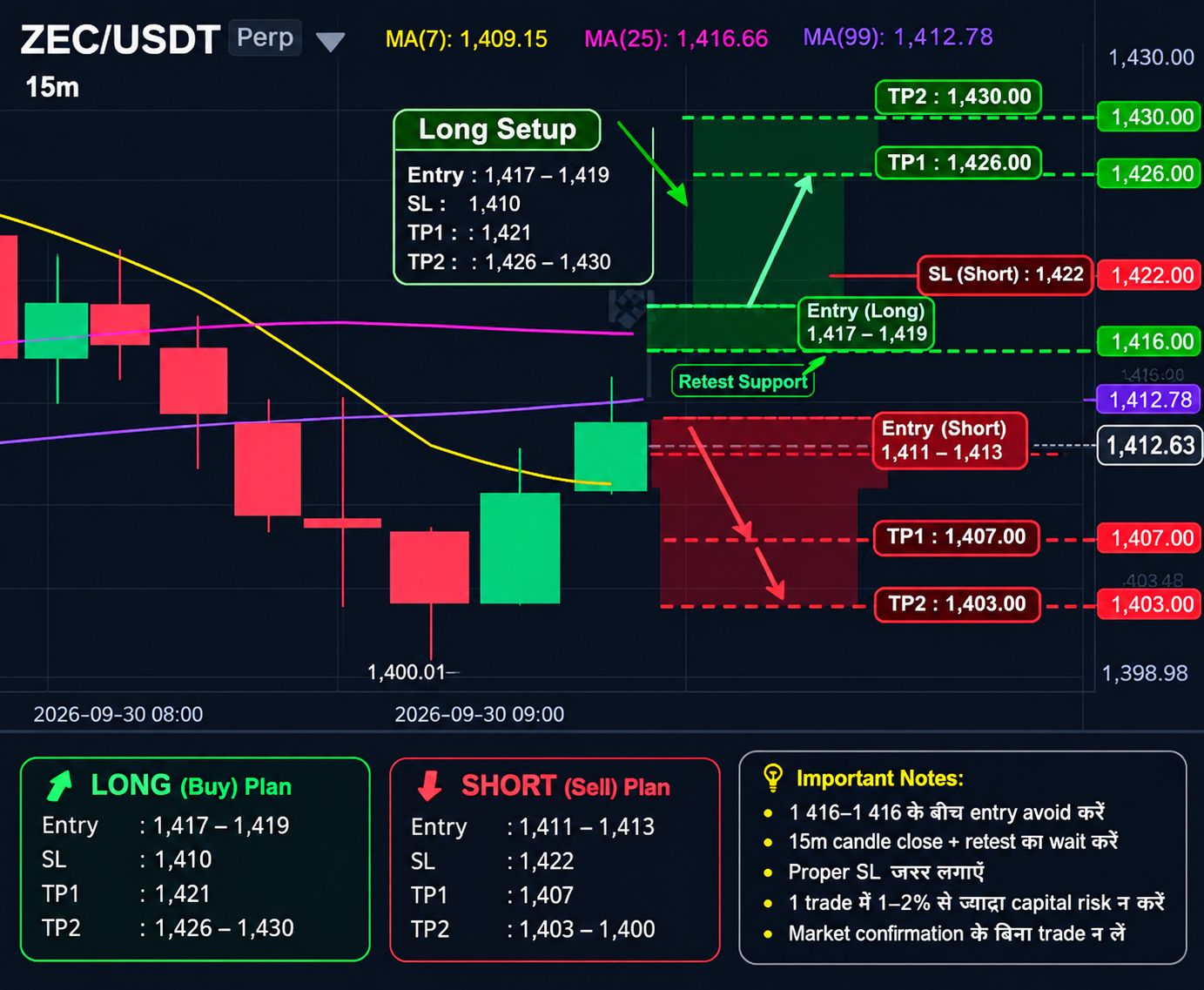
$ZEC
🟢 Long setup:
If we get a close above 1416.7 on the 15m candle and it holds on retest →
Entry: 1417–1419
SL: 1410
TP1: 1421
TP2: 1426–1430
🔴 Short setup:
If we see a strong rejection from the 1416–1421 zone and price closes below 1412 →
Entry: 1411–1413
SL: 1422
TP1: 1407
TP2: 1403–1400
Right now, it’s better to avoid entries between 1412–1416 because price is trapped between moving averages.
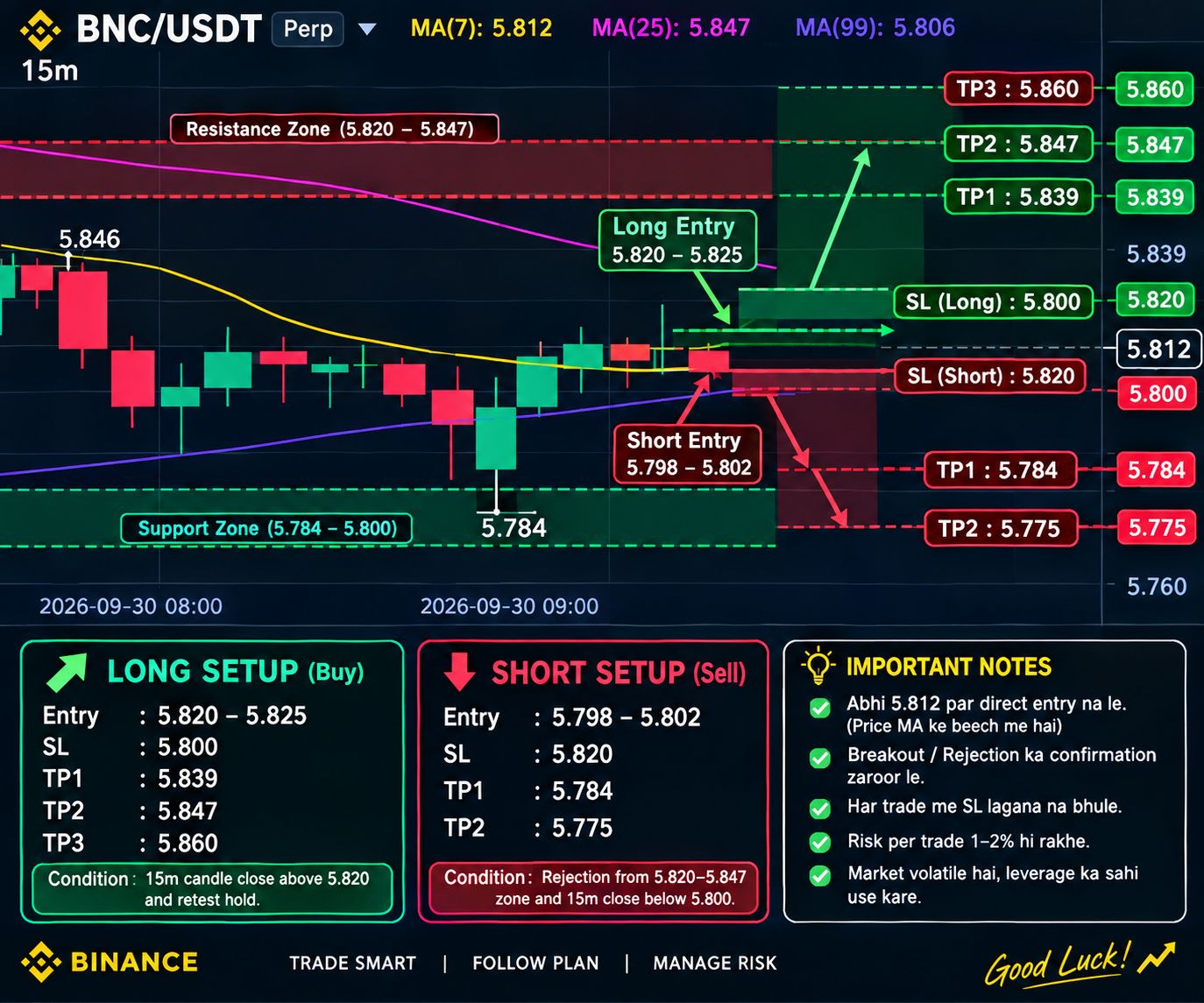
$BNC
🟢 LONG — after confirmation
If the 15m candle closes above 5.820 and holds on retest:
Entry: 5.820–5.825
SL: 5.800
TP1: 5.839
TP2: 5.847
TP3: 5.860
🔴 SHORT — after rejection
If we get rejection from the 5.820–5.847 zone and price closes 15m below 5.800:
Entry: 5.798–5.802
SL: 5.820
TP1: 5.784
TP2: 5.775
$NEAR
LONG setup:
15m candle closes above 5.00 + retest
SL: 4.94
TP1: 5.03
TP2: 5.08–5.12
SHORT setup:
If we get strong rejection from 4.98–5.00
Entry: 4.96–4.98
SL: 5.04
TP1: 4.93
TP2: 4.89
@ZEC @BNC @NEAR
$ZEC
🟢 Long setup:
If we get a close above 1416.7 on the 15m candle and it holds on retest →
Entry: 1417–1419
SL: 1410
TP1: 1421
TP2: 1426–1430
🔴 Short setup:
If we see a strong rejection from the 1416–1421 zone and price closes below 1412 →
Entry: 1411–1413
SL: 1422
TP1: 1407
TP2: 1403–1400
Right now, it’s better to avoid entries between 1412–1416 because price is trapped between moving averages.
$BNC
🟢 LONG — after confirmation
If the 15m candle closes above 5.820 and holds on retest:
Entry: 5.820–5.825
SL: 5.800
TP1: 5.839
TP2: 5.847
TP3: 5.860
🔴 SHORT — after rejection
If we get rejection from the 5.820–5.847 zone and price closes 15m below 5.800:
Entry: 5.798–5.802
SL: 5.820
TP1: 5.784
TP2: 5.775
$NEAR
LONG setup:
15m candle closes above 5.00 + retest
SL: 4.94
TP1: 5.03
TP2: 5.08–5.12
SHORT setup:
If we get strong rejection from 4.98–5.00
Entry: 4.96–4.98
SL: 5.04
TP1: 4.93
TP2: 4.89

WOLF 狼
·
--
BullishAlert Claim BNB Reward Fast Claim 🎉 🧧
The yellow check mark is officially back after 2 months today is a double win because of all of you.🎉
Two months is a long time to wait, but patience always pays off. Having the yellow check mark back today has me feeling pumped up and ready for what's next.⚡️🔥
Success is always better when it's shared. To celebrate today's incredible vibe, a reward is waiting for you all! Grab yours before it runs out.✨
Go claim your red packet now and celebrate with the family.🧧🎁
$BNB
The yellow check mark is officially back after 2 months today is a double win because of all of you.🎉
Two months is a long time to wait, but patience always pays off. Having the yellow check mark back today has me feeling pumped up and ready for what's next.⚡️🔥
Success is always better when it's shared. To celebrate today's incredible vibe, a reward is waiting for you all! Grab yours before it runs out.✨
Go claim your red packet now and celebrate with the family.🧧🎁
$BNB


奕泽YIZZE
·
--
Follow, like, and share to get a red envelope🧧🧧🧧🧧
Follow, like, and share to claim your red envelope!🧧🧧🧧🧧
LUCiC, value begins with consensus; the future begins with persistence.
Follow, like, and share to claim your red envelope!🧧🧧🧧🧧
LUCiC, value begins with consensus; the future begins with persistence.


Sara_ k
·
--
.
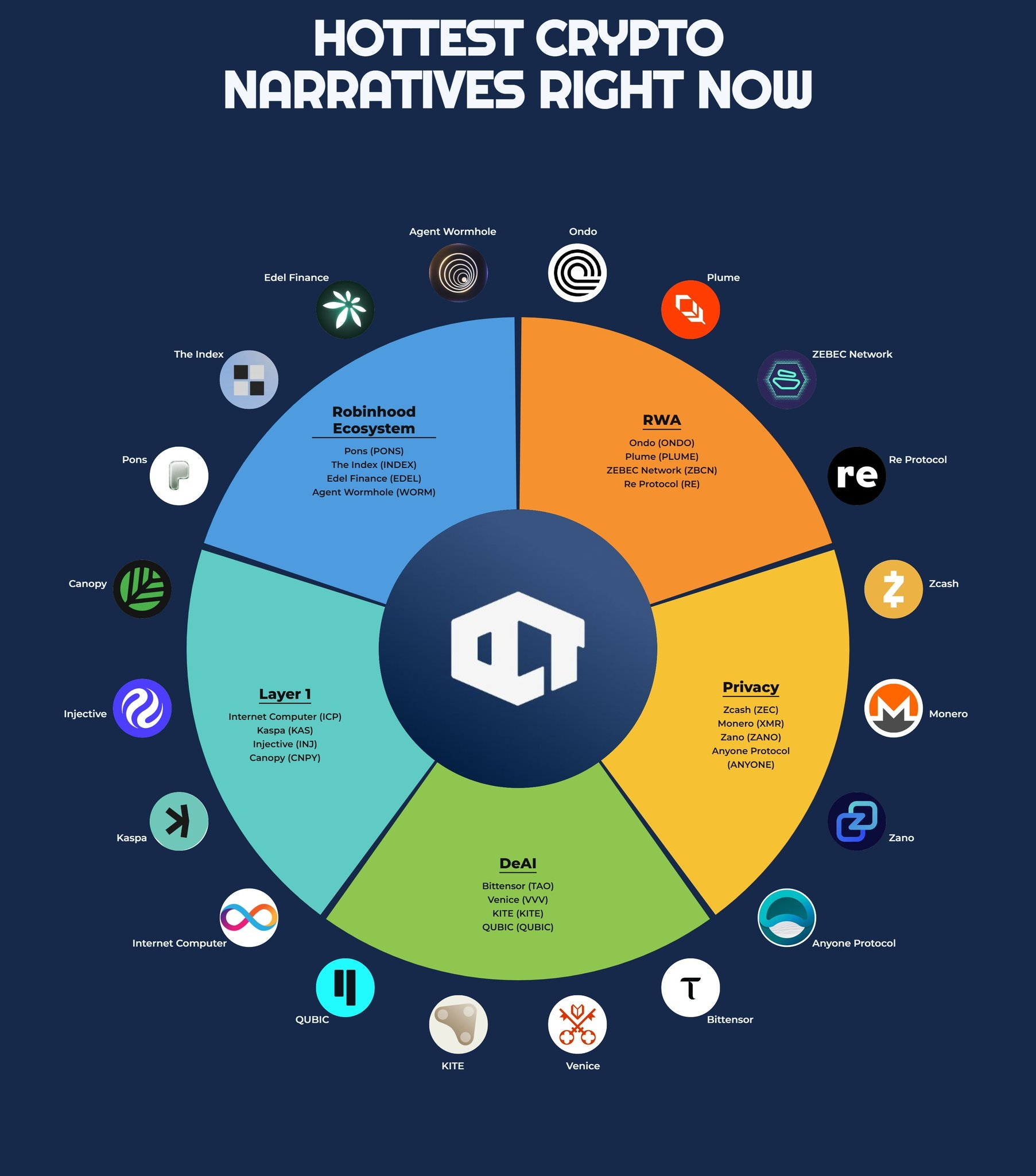
HOTTEST CRYPTO NARRATIVES RIGHT NOW
.
claim 🎁🧧🧧🧧👈
.
claim 2 🧧🧧🧧🧧🧧👈
.
$ZEC $QNT $XMR
HOTTEST CRYPTO NARRATIVES RIGHT NOW
.
claim 🎁🧧🧧🧧👈
.
claim 2 🧧🧧🧧🧧🧧👈
.
$ZEC $QNT $XMR

@大丽7613
is speaking[LIVE] 🎙️ Together: Real-World Trading SGY On-Chain Singularity AMA
6.1k listens

奋斗Hustle1688
·
--
Wishing everyone a happy National Day and big money—take a break today.


周周1688
·
--
🇨🇳 October 1|Crypto Market Brief
$BNB 🧧
🎬 With Q4 starting off, there’s no “Uptober”—the market begins pricing in risks first
BTC is currently around $83.4–84.3K, ETH around $2.7K, SOL around $119.
Yesterday’s PCE data came in below expectations: Headline 3.4% YoY, Core 3.0%.
BTC briefly surged to $85.5K, but then pulled back to around $84K. Elevated U.S. Treasury yields continue to weigh on risk assets.
🔴 Nine straight days of ETF gains end
September 30: BTC ETF −$148.7M, ETH ETF −$59.6M, SOL ETF −$12.5M
Total: about −$221M.
Strong inflows have cooled temporarily, but it’s not yet enough to suggest the institutional trend has reversed.
🏛 CFTC eyes prediction markets
The CFTC submitted two draft rule proposals to OIRA, covering event contracts and their regulatory scope.
The key question is straightforward: for prediction markets like Kalshi and Polymarket, should regulation fall under the federal CFTC or state-level regulators?
For now, it’s only in the rulemaking stage—not the final rules.
⚠️ MetaMask pauses some validators
After detecting a security incident affecting infrastructure, MetaMask began exiting some impacted Ethereum staking validators.
No direct threats to users’ wallets have been found at this time. The company is treating the related actions as a precaution.
💥 Gate encounters a BEN trading error
Due to ticker confusion from the same token name, Gate mishandled BENUSDT perpetual funding-related adjustments, impacting about 200 accounts.
Gate says it will restore the related balances and take responsibility for the losses caused by the incident.
📊 Market Snapshot
BTC ≈ $83.4–84.3K
ETH ≈ $2.68–2.72K
SOL ≈ $118–119
BTC Dominance ≈ 58%
Fear & Greed ≈ 68–74
🎯 On the first day of October, the market is waiting for a new direction.
PCE has given interest-rate-cut expectations a bit of room, but ETF flows have cooled temporarily, and Treasury yields remain elevated.
And tomorrow, the market will shift its focus to U.S. nonfarm payroll employment data.
Q4 has just begun.
#1688家族family #crypto #RWA赛道 #defi $MOVR
$BNB 🧧
🎬 With Q4 starting off, there’s no “Uptober”—the market begins pricing in risks first
BTC is currently around $83.4–84.3K, ETH around $2.7K, SOL around $119.
Yesterday’s PCE data came in below expectations: Headline 3.4% YoY, Core 3.0%.
BTC briefly surged to $85.5K, but then pulled back to around $84K. Elevated U.S. Treasury yields continue to weigh on risk assets.
🔴 Nine straight days of ETF gains end
September 30: BTC ETF −$148.7M, ETH ETF −$59.6M, SOL ETF −$12.5M
Total: about −$221M.
Strong inflows have cooled temporarily, but it’s not yet enough to suggest the institutional trend has reversed.
🏛 CFTC eyes prediction markets
The CFTC submitted two draft rule proposals to OIRA, covering event contracts and their regulatory scope.
The key question is straightforward: for prediction markets like Kalshi and Polymarket, should regulation fall under the federal CFTC or state-level regulators?
For now, it’s only in the rulemaking stage—not the final rules.
⚠️ MetaMask pauses some validators
After detecting a security incident affecting infrastructure, MetaMask began exiting some impacted Ethereum staking validators.
No direct threats to users’ wallets have been found at this time. The company is treating the related actions as a precaution.
💥 Gate encounters a BEN trading error
Due to ticker confusion from the same token name, Gate mishandled BENUSDT perpetual funding-related adjustments, impacting about 200 accounts.
Gate says it will restore the related balances and take responsibility for the losses caused by the incident.
📊 Market Snapshot
BTC ≈ $83.4–84.3K
ETH ≈ $2.68–2.72K
SOL ≈ $118–119
BTC Dominance ≈ 58%
Fear & Greed ≈ 68–74
🎯 On the first day of October, the market is waiting for a new direction.
PCE has given interest-rate-cut expectations a bit of room, but ETF flows have cooled temporarily, and Treasury yields remain elevated.
And tomorrow, the market will shift its focus to U.S. nonfarm payroll employment data.
Q4 has just begun.
#1688家族family #crypto #RWA赛道 #defi $MOVR


燕寶Melissa
·
--
BullishA statement by Mist Founder Yu Xian (Cos) has revealed a major real-world challenge in anti-money laundering (AML) in the crypto industry.
After tracking Bitget hackers’ money-laundering activities for hours, Cos found that cross-chain bridges such as Chainflip are not necessarily taking no interception action—but rather their AML/KYT response speed may already be too slow to keep up with the pace of hackers’ automated laundering.
How complex are hackers’ laundering paths?
🔴 Step 1: Automated splitting of funds
Quickly break stolen assets into many smaller amounts, increasing the difficulty of tracing and identification.
🔴 Step 2: Multi-chain cross-bridge transfers
Use different cross-chain bridges to distribute and move funds across multiple blockchains. Once a route is blocked by risk controls or funds are reverted, they immediately switch to another route.
🔴 Step 3: Convert to Bitcoin
Continuously transfer assets via various on-chain channels, and ultimately convert the funds into BTC, further increasing the complexity of tracking.
🔴 Step 4: CoinJoin coin-mixing
Use the CoinJoin transaction mixing mechanism to obscure links between funds, making subsequent tracing and identification harder.
⚠️ What’s truly worth关注 is not just how hackers launder money, but the speed gap between attack and defense.
When hackers use automation programs to quickly split assets and switch cross-chain routes, risk identification, address tagging, and manual coordination-based risk control systems may fail to complete responses in time.
This also means that simply blocking funds via a single cross-chain bridge is no longer enough to deal with highly automated, cross-chain coordinated laundering.
Security competition in the crypto industry is shifting from purely technical defenses to a comprehensive contest involving on-chain intelligence, real-time monitoring, automated risk control, and cross-platform collaboration.
In the future, what deserves real attention is not only whether projects can recover funds after a hack, but also whether—during the critical window when funds are moving across chains—they can promptly identify risks and take action.
#以太坊三季度涨70.9%
$BTC
$ETH
$BNB
After tracking Bitget hackers’ money-laundering activities for hours, Cos found that cross-chain bridges such as Chainflip are not necessarily taking no interception action—but rather their AML/KYT response speed may already be too slow to keep up with the pace of hackers’ automated laundering.
How complex are hackers’ laundering paths?
🔴 Step 1: Automated splitting of funds
Quickly break stolen assets into many smaller amounts, increasing the difficulty of tracing and identification.
🔴 Step 2: Multi-chain cross-bridge transfers
Use different cross-chain bridges to distribute and move funds across multiple blockchains. Once a route is blocked by risk controls or funds are reverted, they immediately switch to another route.
🔴 Step 3: Convert to Bitcoin
Continuously transfer assets via various on-chain channels, and ultimately convert the funds into BTC, further increasing the complexity of tracking.
🔴 Step 4: CoinJoin coin-mixing
Use the CoinJoin transaction mixing mechanism to obscure links between funds, making subsequent tracing and identification harder.
⚠️ What’s truly worth关注 is not just how hackers launder money, but the speed gap between attack and defense.
When hackers use automation programs to quickly split assets and switch cross-chain routes, risk identification, address tagging, and manual coordination-based risk control systems may fail to complete responses in time.
This also means that simply blocking funds via a single cross-chain bridge is no longer enough to deal with highly automated, cross-chain coordinated laundering.
Security competition in the crypto industry is shifting from purely technical defenses to a comprehensive contest involving on-chain intelligence, real-time monitoring, automated risk control, and cross-platform collaboration.
In the future, what deserves real attention is not only whether projects can recover funds after a hack, but also whether—during the critical window when funds are moving across chains—they can promptly identify risks and take action.
#以太坊三季度涨70.9%
$BTC
$ETH
$BNB


白鲨观点马来西亚
·
--
Tell a set of very interesting comparison data:
Mid-September (three weeks ago):
Fear & Greed Index: 48 (neutral, slightly fearful) BTC price: ~$72,000 ETF flows: continuous outflows Market sentiment: "The bear market isn’t over yet""It’s going to drop to 60,000"
Today (September 26):
Fear & Greed Index: 74 (greedy) BTC price: ~$84,000 ETF flows: net inflows for 4 consecutive days, cumulative exceeding $2.8 billion Market sentiment: "The bull market is coming""Expect 100,000+ by year-end"
Over three weeks, the price rose 17%. Sentiment shifted from fear to greed, and the narrative changed from "the end of the bear market" to "the beginning of the bull market".
Is the price change big? Actually, it’s not that big—17% is nothing in crypto.
Is the sentiment change big? It’s a complete turnaround.
That’s the most interesting—and most dangerous—part of the crypto market:
When the price doesn’t move much, people’s minds have already gone through several rounds.
People who were still saying "everything is about to collapse" last week may be shouting "all in" this week.
Price is just the surface; sentiment is the amplifier.
The hardest part of investing isn’t figuring out the market direction—
it’s keeping your own rhythm
amid the noise of emotions.
Mid-September (three weeks ago):
Fear & Greed Index: 48 (neutral, slightly fearful) BTC price: ~$72,000 ETF flows: continuous outflows Market sentiment: "The bear market isn’t over yet""It’s going to drop to 60,000"
Today (September 26):
Fear & Greed Index: 74 (greedy) BTC price: ~$84,000 ETF flows: net inflows for 4 consecutive days, cumulative exceeding $2.8 billion Market sentiment: "The bull market is coming""Expect 100,000+ by year-end"
Over three weeks, the price rose 17%. Sentiment shifted from fear to greed, and the narrative changed from "the end of the bear market" to "the beginning of the bull market".
Is the price change big? Actually, it’s not that big—17% is nothing in crypto.
Is the sentiment change big? It’s a complete turnaround.
That’s the most interesting—and most dangerous—part of the crypto market:
When the price doesn’t move much, people’s minds have already gone through several rounds.
People who were still saying "everything is about to collapse" last week may be shouting "all in" this week.
Price is just the surface; sentiment is the amplifier.
The hardest part of investing isn’t figuring out the market direction—
it’s keeping your own rhythm
amid the noise of emotions.


湖南交易员之家
·
--
Bullish#股票财报季 $NVDAB Happy National Day to everyone!

白鲨观点VN
·
--
Purchase plan #Spot . Guys, please refer!
$NFLX — 5% entry 55.56 (5% DCA reserve)
$ORCL — 5% entry 112.8 (5% DCA reserve)
$HK1810 (xiaomi) — 5% entry 16.2 (5% DCA reserve)
Within 3 days 6/10 - 7/10 - 8/10, spot these 3 coins
#zen — 5% (5% DCA reserve)
#BTC — 15% (15% DCA reserve)
#TAO — 5% (5% DCA reserve)
Total allocated capital:
- BTC 30%
- Stocks: 30%
- Altcoins: 20%
- Futures: 20%
The DCA levels will be announced later
#baisha
$NFLX — 5% entry 55.56 (5% DCA reserve)
$ORCL — 5% entry 112.8 (5% DCA reserve)
$HK1810 (xiaomi) — 5% entry 16.2 (5% DCA reserve)
Within 3 days 6/10 - 7/10 - 8/10, spot these 3 coins
#zen — 5% (5% DCA reserve)
#BTC — 15% (15% DCA reserve)
#TAO — 5% (5% DCA reserve)
Total allocated capital:
- BTC 30%
- Stocks: 30%
- Altcoins: 20%
- Futures: 20%
The DCA levels will be announced later
#baisha

Log in to explore more content